

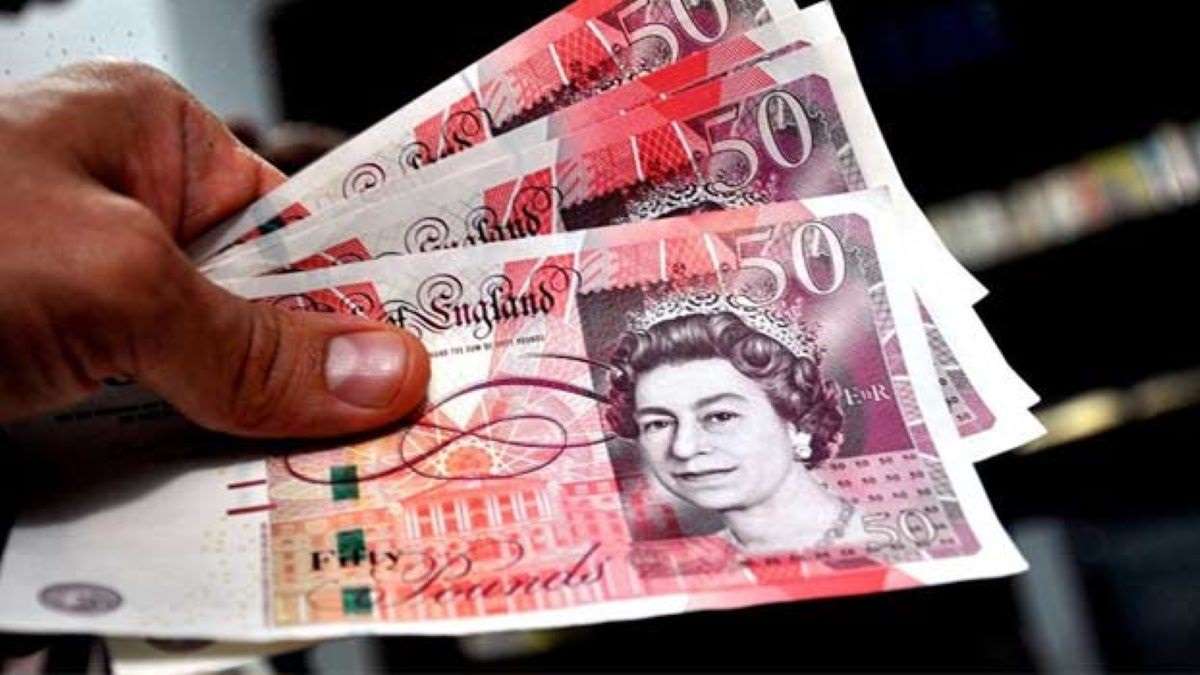
British Pound Strengthens as UK Economy Beats Expectations
The British pound or the sterling edge higher to around $1.333 on Friday, its strongest level since September 2026 following a stronger-than-expected UK economic data.
Sterling sits stronger versus US dollar which pulled back from 2 week high, the Euro and some of the other crosses as macro shit redirect bearish market expectation about UK economy and rate outlook.
The Office for National Statistics (ONS) reported a 0.1% increase in gross domestic product in August. The annual growth rate picked up to 2.1%, the highest reading since October 2022.
For the better part of three weeks, sterling has been in a roughly $1.3180-$1.3333 trading range. The lower end held on Monday, and sterling reached almost $1.3260 Tuesday.
GBP gain extended to $1.3275 between Wednesday and Thursday – a push above the 20-day moving average of $1.3265, which it has not settled above since late August.
Traders said UK economic data reinforced expectations of a possible Bank of England rate increase next month. UK gross domestic product (GDP) grew 0.1% in August following July’s 0.4% expansion, beating forecasts of a contraction.
Statistic office data revealed that UK output rose 0.7% over the three months to August. The AI investment boom lifted the British economy, underlining the technology’s potential to drive growth beyond the U.S. and East Asia.
AI-related spending contributed as much as a third of growth in the first seven months of the year, helped in particular by a jump in computer consultancy services, according to analysis by Deutsche Bank economists.
The economy’s resilience has strengthened the case for tighter monetary policy, with markets still largely anticipating a 25-basis-point hike on November 5, although expectations have eased slightly.
Governor Andrew Bailey said there was limited evidence that higher energy costs were feeding into wages and broader prices, but warned it was too early to assess the full impact.
