

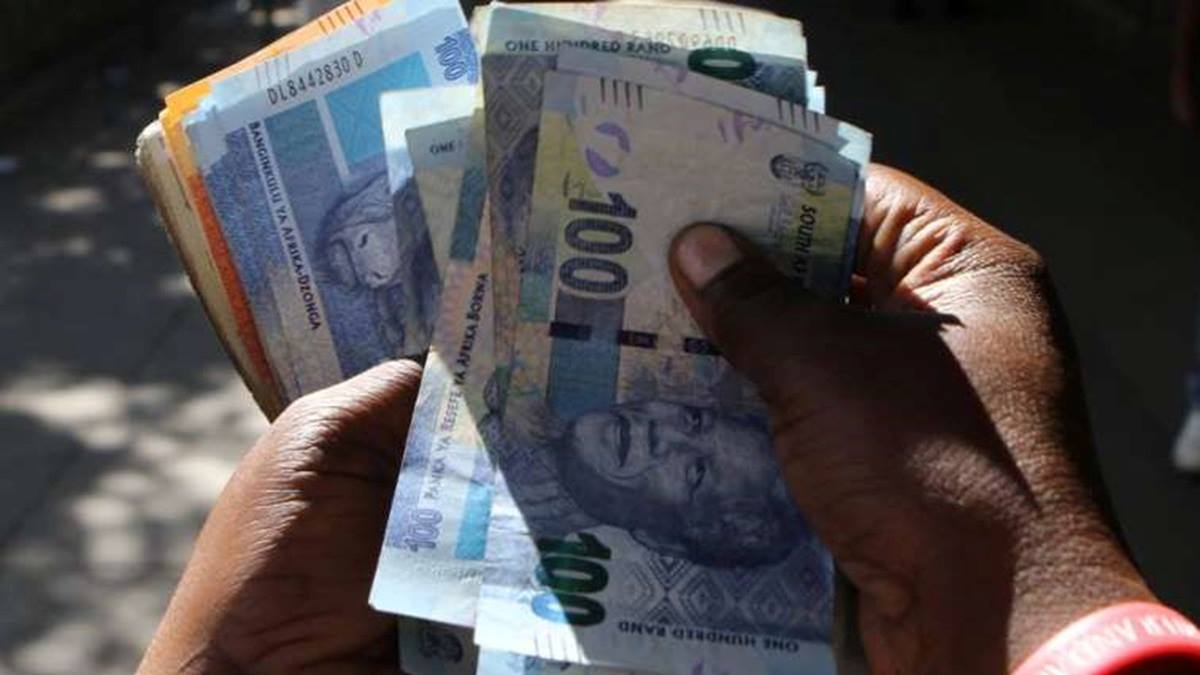
South African Rand Dips on Weak Macro Indicators, US Fed Tone
The South African rand dipped against Western currencies following a spike in the headline inflation rate to 4.5% in May, weaker retail sales growth, and a hawkish tone from the US Federal Reserve.
Much like its emerging-market peers, the rand has weakened overnight following the US Federal Reserve’s decision to hold rates while adopting a hawkish tone, strengthened the dollar broadly.
The rand is trading at R16.32 to the US dollar, R18.80 to the euro, and R21.72 to the pound, First National Bank (FNB) said in a brief on Thursday.
The bank said the softer-than-expected domestic consumer price index in yesterday’s print provided some intraday support, but it was ultimately overwhelmed by the hawkish Fed tone.
South Africa’s retail sales growth slowed to 1.3% year-on-year (y/y) in April, down from a revised 2.5% in March and well below market expectations.
While sales volumes rose 0.9% month-on-month (m/m), the underlying trend points to broad-based moderation in spending, with all but one retail category recording slower annual growth.
Discretionary segments such as clothing and footwear declined, while general dealers and pharmaceutical retailers softened as well. Furniture and “other” retailers remained more resilient, but overall momentum is clearly cooling as consumers respond to higher costs and uncertainty.
Brent crude has slipped to $77.81 per barrel, extending losses triggered by the interim US-Iran peace deal that envisions a rapid reopening of the Strait of Hormuz.
Around 31 super tankers carrying approximately 62 million barrels are set to sail from the Persian Gulf once the waterway opens, signalling a significant near-term supply surge.
Gold has retreated this morning, trading at $4 310 per ounce, ending a four-day winning streak.
The pullback is driven by the US Federal Reserve’s hawkish stance, as Fed Chair Kevin Warsh emphasised the Fed’s commitment to fighting inflation, sparking speculation of near-term rate hikes, which lifted real yields and the dollar, both of which are headwinds for gold.
