

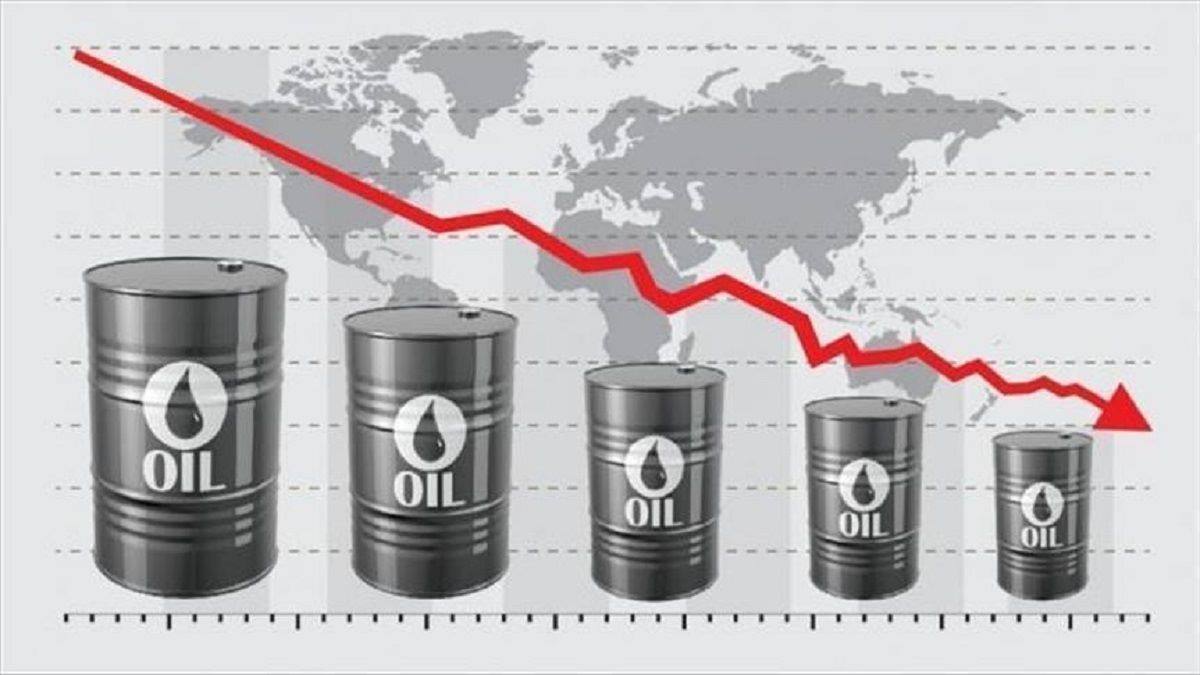
Oil Prices Retreat as Israel, Iran Halt Attacks
Oil prices retreated on Tuesday after Iran and Israel announced a halt to attacks, while comments from US President Donald Trump signalling progress in negotiations with Tehran eased supply disruption concerns.
Brent crude traded at $93.13 per barrel, down around 1.19% from the previous close of $94.25. US benchmark West Texas Intermediate (WTI) decreased about 1.65% to $89.79 per barrel, compared with $91.3 in the previous session.
Oil prices had surged as much as 5% in the previous session after renewed Israeli strikes on Iran and attacks in Lebanon dimmed hopes for an imminent ceasefire, but pared gains as diplomatic signals emerged.
Regional tensions have escalated since the US and Israel launched airstrikes on Iran on Feb. 28. A fragile ceasefire brokered in April had its strongest test to date on Sunday when Israel bombed the Lebanese capital Beirut, despite another ceasefire in the country.
The Israeli strike prompted Iran to launch missiles toward northern Israel in response, while Israel carried out several waves of airstrikes against Iran.
Iran’s military said early Monday that it was halting attacks on Israel while warning of a “crushing” response if Israeli attacks on Lebanon continued. Israeli media, citing unnamed officials, reported that Israel had agreed to halt airstrikes on Iran but would continue military operations in southern Lebanon.
Prices retreated after Iran and Israel announced the end of attacks, easing immediate fears of a wider regional conflict.
Losses deepened following remarks by Trump late Monday, who said the United States will declare “total victory” over Iran within the next two weeks, signalling confidence that the conflict was nearing its end.
Prices fell further after Trump said early Tuesday morning that talks between Washington and Tehran had continued despite the recent escalation in violence, raising expectations of a diplomatic resolution and reducing concerns over potential supply disruptions.
“The Strait (of Hormuz) will open up right away, it’ll open up immediately upon signing, which could be in two or three days,” Trump added.
Despite Tuesday’s decline, prices remain elevated compared with pre-conflict levels, as uncertainties persist over the situation in the Strait of Hormuz, through which around a fifth of the world’s crude oil supply typically passes.
Meanwhile, seven OPEC+ member countries announced early in the week a production adjustment of 188,000 barrels per day (bpd) in July. Saudi Arabia, Russia, Iraq, Kuwait, Kazakhstan, Algeria, and Oman met virtually to review global market conditions and outlook.
In their collective commitment to support oil market stability, the seven participating countries decided to implement a production adjustment of 188,000 barrels per day, in addition to the voluntary adjustments announced in April 2023.
This adjustment will be implemented in July, the group said. The additional voluntary adjustments announced in April 2023 may be returned in part or in full, subject to evolving market conditions and in a gradual manner, according to the announcement.
“The countries will continue to closely monitor and assess market conditions, and in their continuous efforts to support market stability, they reaffirmed the importance of adopting a cautious approach and retaining full flexibility to increase, pause or reverse the phase out of the voluntary production adjustments, including reversing the previously implemented voluntary adjustments announced in November 2023,” OPEC said. The seven countries are scheduled to meet again on July 5.
