

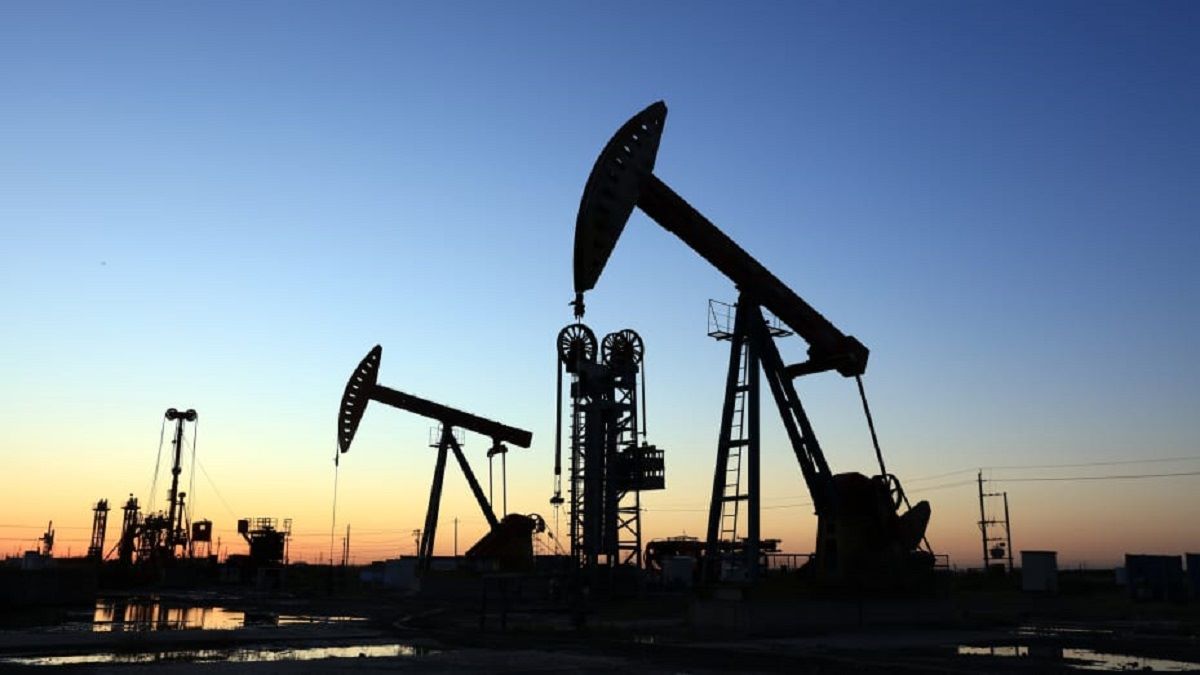
Oil Prices Climb Amidst U.S Fed Rate Cut Expectations
In the global commodity market, prices of crude oil climbed on Tuesday amidst growing expectations that the US Federal Reserve may cut interest rates in September, amid signs of a softening labour market in the United States.
International benchmark Brent crude was trading at $69.48 per barrel, up 0.30% from the previous session’s close of $69.27. The American benchmark West Texas Intermediate (WTI) crude rose 1.86% to $66.77 per barrel, from $65.55 in the previous session.
Markets were buoyed by comments from San Francisco Fed President Mary Daly, who said the time for rate cuts is approaching, citing mounting evidence of a weakening US labor market and the absence of persistent inflationary pressures, including from tariffs.
Analysts noted that a potential rate cut could weaken the US dollar, bolster investor sentiment, and support global energy demand by encouraging economic activity. However, concerns are also mounting that faster-than-expected rate cuts by the Fed could further fuel inflationary pressures.
The employment report released on August 1, while not signaling a recession, showed that companies are seeking more certainty regarding economic policies. This has reinforced expectations of a Fed rate cut and reflected some of Fed Chair Jerome Powell’s earlier warnings that tariffs could slow down the economy and create too much uncertainty for small businesses’ hiring plans.
Meanwhile, Organization of the Petroleum Exporting Countries (OPEC) and its allies, known as OPEC+, announced on August 3 that eight member countries will raise oil output by a combined 547,000 barrels per day in September compared to August, as part of efforts to regain global market share.
Despite a weak demand outlook, the OPEC+ group’s decision to implement another large production increase and the failure of US policies to significantly curb Russian oil trade have further stoked concerns over a supply surplus. However, these developments were not enough to limit the rise in prices.
The decision was said to be based on low inventory levels and robust economic data. While the move raises the risk of oversupply in the markets, it has also put a cap on price gains.
Geopolitical developments continue to weigh on markets. US President Donald Trump stated that India is not only purchasing large volumes of Russian oil but also reselling much of it at high profit margins. Trump announced plans to “significantly” increase tariffs on India in response.
In a social media post, Trump wrote, “India is not only buying massive amounts of Russian Oil, they are then, for much of the Oil purchased, selling it on the open market for big profits. They don’t care how many people in Ukraine are being killed by the Russian war machine.”
“Because of this, I will be substantially raising the tariff paid by India to the USA,” he added. Elsewhere, India will keep purchasing oil from Russia despite US President Trump’s threats of penalties, two Indian government sources said, not wishing to be identified due to the sensitivity of the matter.
“These are long-term oil contracts,” one of the sources said. “It is not so simple to just stop buying overnight.”
Trump last month indicated in a Truth Social post that India would face additional penalties for purchases of Russian arms and oil. On Friday, Trump told reporters that he had heard that India would no longer be buying oil from Russia.
The New York Times on Saturday quoted two unnamed senior Indian officials as saying there had been no change in Indian government policy, with one official saying the government had “not given any direction to oil companies” to cut back imports from Russia. #Oil Prices Climb Amidst U.S Fed Rate Cut Expectations NSIA Announces Winners of $220,000 Prize for Innovation
