
Close Menu
MarketForces AfricaMarketForces Africa
    What's Hot

    South African Rand Softens as Markets Digest US Economic Data

    July 17, 2026

    Abia, Investors Partner on $145m Solar Manufacturing Plant

    July 17, 2026

    Earnings Surged as Subscribers Watch Netflix for 97 billion Hours

    July 17, 2026
    Facebook X (Twitter) Instagram
    Trending
    • South African Rand Softens as Markets Digest US Economic Data
    • Abia, Investors Partner on $145m Solar Manufacturing Plant
    • Earnings Surged as Subscribers Watch Netflix for 97 billion Hours
    • Oil Prices Edge Higher Over Escalating US-Iran Conflict
    • US, European, Asian Equities Mixed – Alphabet Compounds Sell Pressure
    • Nigerian Treasury Bills Yields Soften as Investors Boost Positions
    • Money Market Rates Mixed as System Liquidity Shrinks
    • SEC Deepens Investor Protection Drive with Nationwide Campaign on Unclaimed Funds
    • Home
    • About Us
    Facebook X (Twitter) Instagram LinkedIn WhatsApp TikTok Telegram
    MarketForces AfricaMarketForces Africa
    Subscribe
    Friday, July 17
    • Home
    • News
    • Analysis
    • Economy
    • Mobile Banking
    • Entrepreneurship
    MarketForces AfricaMarketForces Africa
    MarketForces Africa » Inside Africa » Ghana’s Widening Tax Base to Reduce Fiscal Shortfall

    Ghana’s Widening Tax Base to Reduce Fiscal Shortfall

    Julius AlagbeBy Julius AlagbeAugust 8, 2022Updated:October 13, 2025 Inside Africa No Comments5 Mins Read
    Ghana’s Widening Tax Base to Reduce Fiscal Shortfall
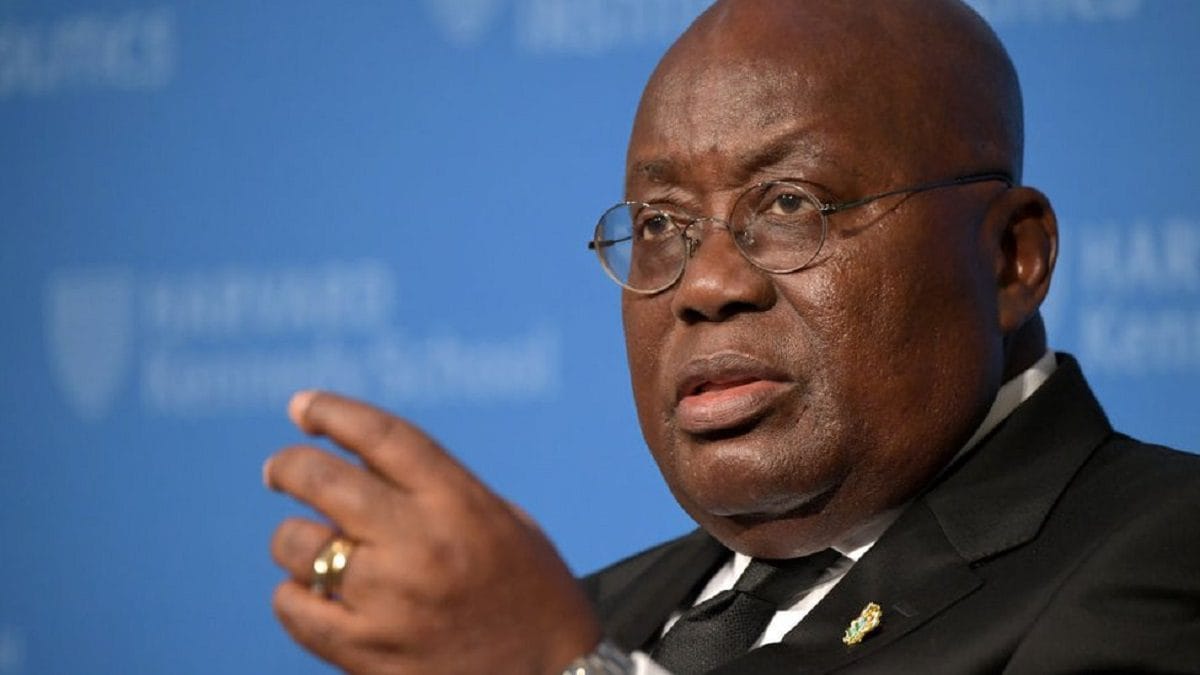
    President Nana Akufo-Addo, Ghana
    Share
    Facebook Twitter LinkedIn Pinterest Email Tumblr Reddit Telegram WhatsApp Copy Link

    Ghana’s Widening Tax Base to Reduce Fiscal Shortfall

    Ghana’s widening tax base and stronger oil receipt will reduce her fiscal shortfall amidst uncertainties in the economy, according to macroeconomic report by Fitch Solutions. Due to the expected increase in government receipts, analysts at the firm said they expect Ghana’s fiscal deficit to narrow to 8.5% of gross domestic product (GDP) in 2022, from 9.3% in 2021.

    “We have revised our 2021 deficit from 11.3% previously on the back of full-year data published by the Ministry of Finance, which shows higher-than-expected revenues of GHS70.1 billion, while total public expenditure rose to GHS109.3 billion”, it said.

    Looking to 2022, Fitch Solutions analysts said they expect that measures to widen Ghana’s tax base and higher oil revenues will reduce the country’s fiscal shortfall, although spending will remain elevated given high interest expenditure and an inflated public wage bill.

    At 8.5% of GDP, the fiscal deficit will remain larger than the 2010-2019 average of 4.9%. The report reads that revenue growth will remain above trend, but miss official targets. READ: Nigeria’s government runs fiscal deficits for 6-Year straight

    “We forecast public revenue to expand by 27.0%, above the 10-year pre-pandemic average of 23.4%”. Improving consumer activity on account of looser Covid-19 restrictions will support value-added tax (VAT) receipts, which prior to the pandemic accounted for roughly 20.0% of tax revenue.

    Analysts projected that household expenditure growth to accelerate to 4.0% in 2022, from 0.8% in 2021 while anticipating an increase in oil revenues due to rising global energy prices following Russia’s invasion of Ukraine.

    Brent crude price is forecasted to increase by 40.9% over 2022 to an average of USD100.0 barrels per litre. The report said the recent implementation of the e-levy – a 1.5% tax on all electronic transactions – will further support revenue growth over the year.

    However, analysts believe it will fall short of the GHS7.0 billion (6.9% of the total 2022 budget) projected by the government, for two reasons.  First, it said the government had initially proposed a 1.75% tax on electronic financial transactions, but lowered it to 1.5% following pushback from the opposition.

    Second, authorities had planned for the tax to come into force on January 1 2022. However, the e-levy only took effect on May 1, five months after the start of Ghana’s fiscal year. Furthermore, government revenues typically undershoot official targets in Ghana and were already 13.6% below the target in the first quarter of 2022. 

    As such, Fitch Solutions forecasted total revenues to reach GHS89.0 billion, below the official target of GHS100.5 billion. Despite some fiscal consolidation efforts, the firm noted that public expenditure will remain elevated, preventing a more substantial narrowing of the deficit.

    In the 2022 budget, the government states that it will commit to ‘expenditure rationalisation and reforms’ in order to improve its fiscal position and maintain debt sustainability.

    However, analysts expressed a view that due to the rigid nature of Ghana’s expenditures, there will be limited room to significantly restructure spending over the short term.

    Ghana’s public wage bill and debt servicing costs accounted for 67.4% of total spending over Q1-2022. Accelerating consumer price inflation will raise the cost of living and likely prompt the government to raise public wages in order to limit risks of social discontent.

    Analysts said headline inflation rate reached 23.6% in April 2022.  Similarly, a weakening of the cedi and rising investor concerns over Ghana’s slow fiscal consolidation will push up borrowing costs over 2022. Taking these factors into account, Fitch Solutions analysts said they expect public expenditure to rise by 23.6% to GHS135.0bn in 2022.

    Fiscal Shortfall to Narrow in 2023

    The budget deficit will narrow further in 2022, albeit to a still-wide 7.5% of GDP. Accelerating economic growth – to a forecast of 4.8% in 2023, from 4.4% in 2022 – will increase tax collection.

    In addition, the e-levy will be in place for the full year, further supporting revenue growth. Meanwhile, we see public expenditure fall to 23.8% of GDP, from 25.2% in 2022, in line with the government’s medium-term fiscal consolidation objectives.

    Analysts expect that public borrowing will continue to rise to cover the still-large deficits in the coming quarters and forecast total public debt rising from 79.0% of GDP in 2021 to 83.0% in 2022, and 84.5% in 2023. Recalled that Ghana has effectively been cut off from international capital markets, which means the country will have to rely on domestic debt issuance over the short term.

    The country’s domestic debt market is relatively shallow, according to analysts and banks are already highly exposed to government debt. As such, a rise in domestic debt issuance over the coming quarters could crowd out the private sector, weighing on growth.

    “Against this backdrop, we believe that authorities will likely seek a new financial package from the IMF in Q422 or 2023 – despite the government having stated it will not do so – to finance its deficits at a lower cost and restore market confidence”, Fitch Solutions. #Ghana’s Widening Tax Base to Reduce Fiscal Shortfall

    Share. Facebook Twitter Pinterest LinkedIn Tumblr Email
    Julius Alagbe
    • Website
    • LinkedIn

    Julius Alagbe is a senior financial journalist and Editor at MarketForces Africa with nearly two decades of experience in finance, accounting, and economics reporting.He is one of Nigeria's most prolific financial market reporters, covering capital markets, monetary policy, corporate earnings, banking, telecoms, and macroeconomic developments across Africa.Julius has built a strong footprint reporting on Nigeria's leading corporates and financial services sector, including coverage of the Nigerian Exchange Group, Central Bank of Nigeria monetary operations, MTN Nigeria, GTCO, and major investment banking transactions.He regularly monitors the CBN’s open market operations, interbank FX markets, and equity market movements, providing readers with real-time intelligence on Nigeria’s financial landscape.His reporting draws on direct access to institutional research from firms including Moody’s Ratings, CardinalStone Securities, Fitch, and other leading African investment houses.Julius brings analytical depth and editorial rigour to every story, making complex financial data accessible to professionals, investors, and policymakers across Africa.Julius Alagbe is based in Lagos, Nigeria.

    Keep Reading

    Rwanda Spends $32m on Fuel Subsidies in 4 Months- Minister 

    NNPC GCEO Urges Global Collaboration to Unlock Africa’s Energy Potential

    Tinubu Tasks Afreximbank on Africa’s Industrialisation, Value Addition

    Can Africa Finance Its Own Development?

    South African Rand Weakens as Fed Rate Expectations Drive USD Rally

    WHO Initiates Clinical Trial for New Ebola Treatment in DR Congo

    Add A Comment

    Comments are closed.

    Editors Picks

    South African Rand Softens as Markets Digest US Economic Data

    July 17, 2026

    Abia, Investors Partner on $145m Solar Manufacturing Plant

    July 17, 2026

    Earnings Surged as Subscribers Watch Netflix for 97 billion Hours

    July 17, 2026

    Oil Prices Edge Higher Over Escalating US-Iran Conflict

    July 17, 2026

    US, European, Asian Equities Mixed – Alphabet Compounds Sell Pressure

    July 17, 2026
    Latest Posts

    Rwanda Spends $32m on Fuel Subsidies in 4 Months- Minister 

    July 10, 2026

    NNPC GCEO Urges Global Collaboration to Unlock Africa’s Energy Potential

    July 7, 2026

    Tinubu Tasks Afreximbank on Africa’s Industrialisation, Value Addition

    July 7, 2026

    Can Africa Finance Its Own Development?

    July 6, 2026

    South African Rand Weakens as Fed Rate Expectations Drive USD Rally

    July 6, 2026

    Subscribe to News

    Get the latest sports news from Dmarketforces Africa about finance, business and tech.

    Advertisement
    Facebook X (Twitter) Pinterest Vimeo WhatsApp TikTok Instagram

    News

    • World
    • Politics
    • Economy
    • Business
    • Opinions
    • Fintech
    • Science & Technology

    Company

    • About us
    • Advertising
    • Classified Ads
    • Contact Info
    • Editorial Policy

    Services

    • Subscriptions
    • Research
    • Due Diligence
    • Newsletters
    • Sponsored News
    • Work With Us

    Subscribe to Updates

    Subscribe to updates from MarketForces Africa, an independent financial news service provider.

    © 2026 MarketForces Africa. All rights reserved.
    • Privacy Policy
    • Terms
    • Accessibility

    Type above and press Enter to search. Press Esc to cancel.