

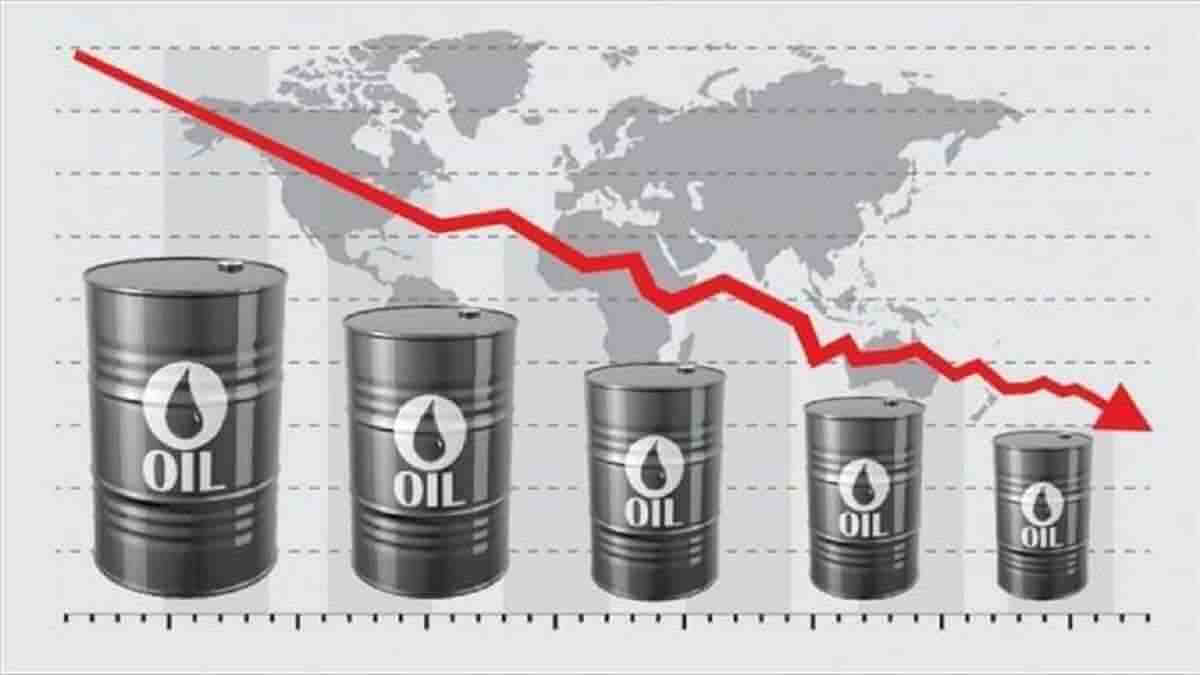
Oil Prices Decline on Virus Spread Triggers Lockdowns
Oil prices decline on Tuesday as the virus spreads in China, Japan among other countries with more lockdowns coming up to curb further threats. The increased infection rate signposts a weaker oil demand outlook in the region after a lower than expected economic data from the United States.
Japan, the world third-largest economy, extended its state of emergency in Tokyo and other regions on Tuesday and announced new measures covering seven more prefectures to counter a spike in COVID-19 infection that is threatening the medical system.
Reacting to weak market sentiment, crude prices sloped down amid concerns that the spread of the Delta coronavirus variant has reduced demand in the world’s second-largest oil consumer, China, while hopes that major oil producers will not raise their outputs have limited further price declines.
International benchmark Brent crude traded at $69.14, dropped 0.53% from Monday when trade closed at $69.51 per barrel. American benchmark West Texas Intermediate (WTI) traded at $66.67 at the same time, decreasing by 0.56% relative to $67.05 a barrel on Monday.
The economic outlook in China raised investor concerns and weighed on prices. Industrial production rose 6.4% in July from the same month a year ago, but this rise was well below market estimates of 7.8%. Retail sales were up 8.5%, again much lower than the 11.5% expectation.
These results came amid rising coronavirus cases in the country. According to the National Health Commission, China recorded 42 new confirmed coronavirus cases on August 16, compared to 51 the day before.
Prices still reflect last week’s negative projections over demand, as the International Energy Agency in its monthly report on Thursday revised its estimates to reflect lower global oil demand for the remainder of 2021 and for 2022.
Meanwhile, the Organization of Petroleum Exporting Countries kept global oil demand growth expectations for 2021 unchanged from the previous monthly report’s assessment. Further price declines were capped over investor relief that OPEC producers and allies (OPEC+) are sticking to the cartel’s output schedule.
Investors are now keeping tabs on the inventory data forecast of the American Petroleum Institute (API) later on Tuesday and data of the US Energy Information Administration (EIA) on Wednesday.
Meanwhile, New Zealand entered a new lockdown after the country’s first coronavirus case in six months was reported. Hedge funds and money managers cut net long positions in U.S. crude to the lowest since November in the week to Aug. 10 as resurgent coronavirus infections in several countries dampened hope for a rapid resumption in long-distance air travel.
Daily crude processing in China, the world’s biggest oil importer, fell to its lowest in July since May 2020 as independent plants slashed production amid tighter quotas, high inventories and weakening profits, data showed on Monday.
China’s factory output and retail sales growth also slowed sharply and missed expectations in July, as new COVID-19 outbreaks and floods disrupted businesses. On the supply side, U.S. shale oil output is expected to rise to 8.1 million barrels per day (bpd) in September, the highest since April 2020, according to government data on Monday.
Read Also: Oil Prices Rise 7% on China, U.S Economic Recovery
U.S. crude inventory data from industry group American Petroleum Institute was later today. Last week, U.S. President Joe Biden’s administration urged OPEC+, which groups members of the Organization of the Petroleum Exporting Countries and other producers such as Russia, to boost oil output to tackle rising gasoline prices.
Oil Prices Decline on Virus Spread Triggers Lockdowns
