

United Nations Urges Africa to Boost Domestic Funding
The United Nations (UN) has advised Nigeria and other African countries to strengthen domestic resource mobilisation to address economic and development challenges amid a sharp decline in funding from international development partners.
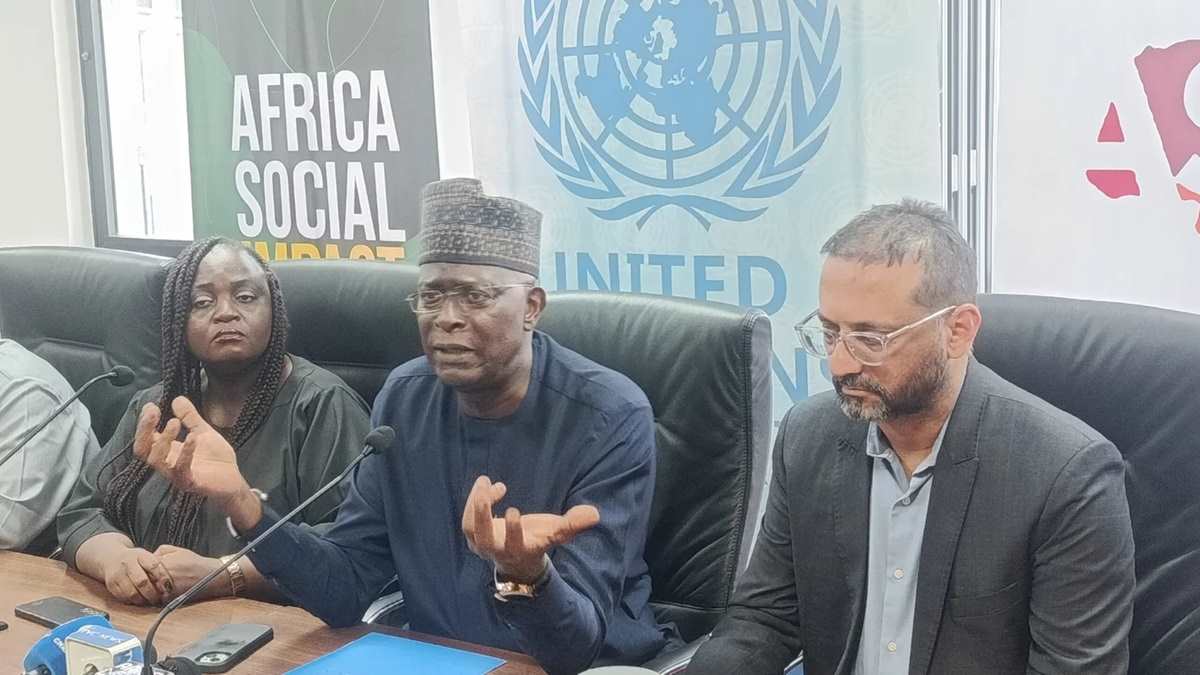
UN Resident and Humanitarian Coordinator in Nigeria, Mohamed Fall, gave the advice on Thursday in Abuja during a joint news conference to unveil partners and details of the 5th Africa Social Impact Summit (ASIS).
The summit, scheduled for July 22 to 24 at the Eko Convention Centre in Lagos, is themed “Financing for Development: Building Resilience and Transforming Emerging Economies.”
The summit serves as a multi-stakeholder platform to accelerate progress on the Sustainable Development Goals (SDGs) through impact investments, strategic partnerships, and advocacy for supportive development policies.
Fall, a co-convener of the summit, said the global decline in funding should serve as a wake-up call for African governments to rethink development financing rather than depend indefinitely on external assistance.
“As we speak, UN development funding we used to have has shrunk in a way that you can’t believe how much resources we are left with.
“The time where we think that the West will give money and it will be flooding the UN with resources, that time is gone,” he said.
He urged African countries to seize the moment by strengthening collaboration with the private sector, civil society and the media to drive sustainable, home-grown development initiatives.
Fall also called for a shift in Nigeria’s narrative from a predominant focus on insecurity and insurgency to its economic potential, innovation capacity and resilience.
He highlighted the country’s vibrant private sector, technology ecosystem, Nollywood and globally acclaimed Afrobeats industry as key drivers of growth and investment opportunities.
“Nigeria is also defined by the fact that probably the richest people and the most vibrant private sector on the African continent and in the world are based here.
“Aliko Dangote is projecting his company to be a 100 billion dollars firm by 2030, and he’s followed by so many people in different sectors,” Fall said.
Speaking on the summit’s significance, Chief Executive Officer of the Sterling One Foundation, Olapeju Ibekwe, said Africa faced an annual SDG financing gap of about 1.3 trillion dollars, while Nigeria accounted for a 31.5 billion dollars shortfall.
Ibekwe said public resources alone could not bridge the gap, stressing the need to mobilise private capital, philanthropic funding and blended finance solutions.
“Our continent is home to the youngest population in the world, abundant natural resources, a rapidly growing digital economy, expanding entrepreneurial talent, and immense cultural and creative capital.
“Yet millions still face barriers to quality education, healthcare, decent jobs, climate resilience, and access to finance,” she said.
She said that more than 3,000 delegates from over 50 countries were expected to attend the summit, where investment deals worth at least 500 million dollars were projected to be signed.
According to Ibekwe, the ASIS platform has unlocked more than 1 billion dollars in development capital since its inauguration in 2022.
She cited a partnership with the ECOWAS Small Business Coalition that facilitated a 2 million dollars technical investment benefiting 12,500 businesses across 12 West African countries and indirectly impacting more than 100,000 people.
Managing Director and Chief Executive Officer of Sterling Bank Limited, Abubakar Suleiman, described the summit as a movement aimed at transforming African economies rather than a conventional conference.
“The Africa we envision is within reach, a resilient Africa, an inclusive Africa. Building that future starts with the decisions we make today and the partnerships we choose to build together,” Suleiman said.
Executive Director of The Alternative Bank, Garba Mohamed, said Africa’s development aspirations required bold and innovative financial solutions rather than incremental adjustments.
He urged the media to help bridge the gap between financial institutions and grassroots innovators, including smallholder farmers and clean-energy entrepreneurs across the continent.
Associate Director of IHS Towers Nigeria, Fatima Ibrahim Haruna, underscored the importance of technology and connectivity in expanding economic opportunities, education and community resilience.
She said IHS Towers’ sustainability strategy is built around four pillars: people and community, education and economic growth, ethics and governance, and environment and climate change.
The three-day summit will feature high-level plenary sessions, ministerial dialogues, climate and sustainability roundtables, and exhibitions showcasing innovations in artificial intelligence, healthcare and youth economic inclusion.
The summit is co-convened by the United Nations in Nigeria and the Sterling One Foundation, in partnership with the Federal Ministry of Budget and Economic Planning, the Lagos State Government and other corporate and technical partners South Africa’s Inflation Rises to 4.5% in May
