

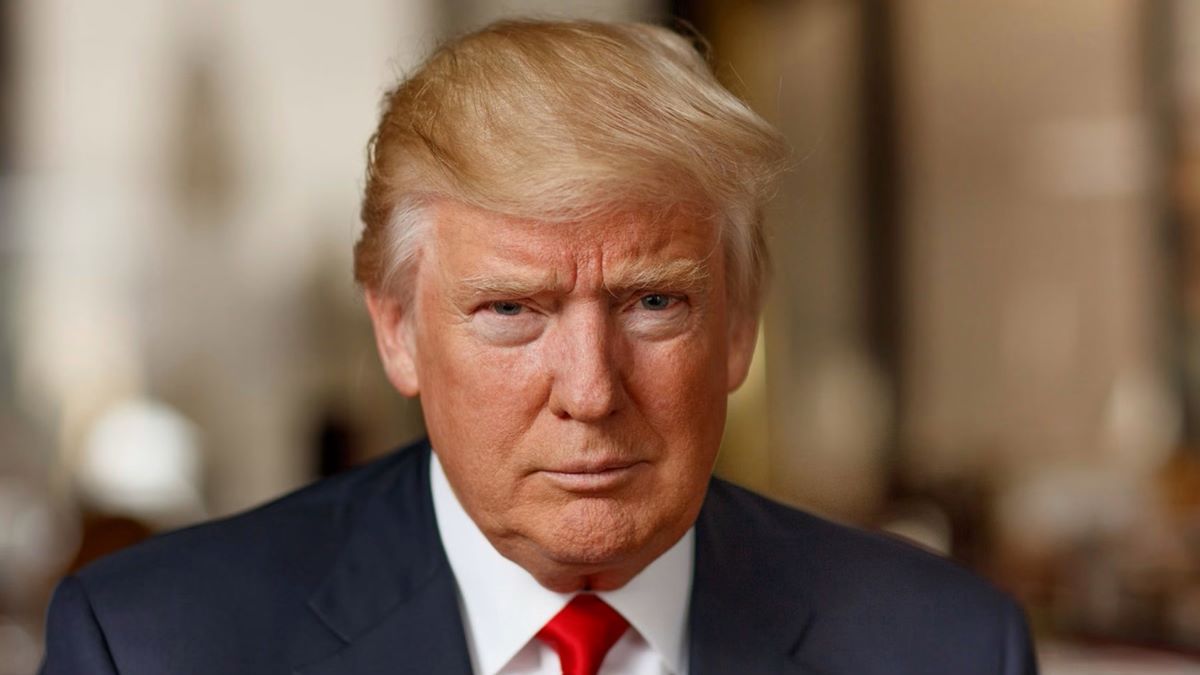
Trump to Deliver Primetime Address on Iran War as Uncertainty Grips Washington
Washington is holding its breath tonight as President Donald Trump prepares to address the nation in a rare primetime speech, scheduled for 9 p.m. Eastern Time, on the month long war with Iran. A conflict that has rattled global energy markets, strained America’s oldest alliances, and claimed thousands of lives across the Middle East.
White House press secretary Karoline Leavitt announced the address on X, saying the president would “provide an important update on Iran,” though she offered no further details on what exactly he plans to say. The vagueness of that announcement has done little to quiet speculation in Washington, where officials, analysts, and allies are all bracing for a potential turning point in a war that began on February 28.
Defense Secretary Pete Hegseth set the tone on Tuesday, declaring that “the upcoming days will be decisive” , language that did not go unnoticed in diplomatic circles or on trading floors around the world.
The address arrives as Trump sends contradictory signals about where things are headed. On one hand, he has publicly projected confidence that the conflict is nearing its end. In a phone interview with Reuters, Trump said the U.S. plans to leave Iran “pretty quickly” but may return for “spot hits,” adding that American actions have ensured Iran will not obtain a nuclear weapon.
He also made the bold claim that there has been a “full regime change” , an assertion that contradicts the facts on the ground, as Iran has not installed a new government. On the other hand, Trump posted on his Truth Social platform that his administration would continue “blasting Iran into oblivion or, as they say, back to the Stone Ages” until the Strait of Hormuz is reopened , rhetoric that analysts say does not exactly sound like a war winding down.
At the heart of today’s drama is a dispute over a ceasefire. Trump claimed earlier Wednesday that Iran’s leadership had reached out requesting one. Tehran flatly rejected that characterisation. Iranian Foreign Minister Abbas Araghchi told Al Jazeera point-blank that “negotiation is when two countries engage in talks to reach an agreement, and such a thing does not exist between us and the United States.” He went further, warning Washington to change its tone: “One cannot speak to the Iranian people with the language of threats and deadlines,” he said.
Iran’s parliament was equally defiant. Ebrahim Azizi, head of the Iranian Parliament’s National Security Committee, posted on social media that the Strait of Hormuz would reopen , “but not for you” , directed squarely at Trump, adding that “47 years of hospitality are over forever.”
Meanwhile, the scale of destruction continues to mount on all sides. According to figures reviewed by MS NOW, more than 4,800 people have been killed in the conflict — with Iran accounting for the majority at over 3,400 deaths, according to the Human Rights Activists News Agency, while Lebanon has recorded more than 1,200 fatalities. Thirteen U.S. service members have been killed in action since the war began.
On the ground, the fighting has shown no signs of pausing ahead of the speech. Iran launched what one Israeli military official described as “the most significant strike Iran has conducted since the first days of the war,” with Israel identifying ten missile launches fired, ominously, just as millions of Israelis were heading to Passover gatherings to mark the start of the Jewish holiday.
In the Gulf, Kuwait International Airport’s fuel depots were hit by an Iranian drone attack, causing a “massive blaze” with significant damage but no reported injuries, according to Kuwait’s state news agency KUNA.
The war is also opening cracks in America’s most foundational military alliance. Trump told Britain’s Telegraph newspaper that he is strongly considering pulling the United States out of NATO, after member states failed to join his military campaign against Iran. That declaration, if acted upon, would represent the most dramatic rupture in the post-World War II international order in decades.
Reporting from outside the White House, Al Jazeera’s Alan Fisher cautioned viewers not to expect a dramatic announcement tonight. Fisher said sources indicate Trump is more likely to tell Americans that the war will continue for a couple more weeks, that he understands people are “experiencing financial pain,” but that the end is in sight.
Behind the scenes, CBS News has reported that hundreds of U.S. Special Operations Forces , including Navy SEALs and Army Rangers , are now positioned in the Middle East, alongside Marines and Army paratroopers, giving Trump the option to dramatically escalate the scope of the conflict should he choose to do so.
Pentagon officials have reportedly been preparing options for a ground deployment, and the Trump administration has even explored a high-risk mission to seize Iran’s stockpile of highly enriched uranium.
The economic toll is impossible to ignore. Gas prices in the United States hit a national average of four dollars per gallon on Tuesday , the highest since 2022, as Iran’s grip on the Strait of Hormuz drives energy prices skyward. The strait, through which roughly one-fifth of the world’s oil and liquefied natural gas passes, has been effectively shut down since the war began, sending shockwaves from Lagos to London.
Tonight, all four major U.S. broadcast networks will carry Trump’s remarks live, cutting into primetime programming. The world will be watching , not just for what the president says, but for what he doesn’t. #Trump to Deliver Primetime Address on Iran War as Uncertainty Grips Washington#
