

S&P Affirms Cameroon ‘B-/B’ Rating with Stable Outlook
S&P Global Ratings affirmed its ‘B-/B’ long- and short-term local and foreign currency sovereign credit ratings on Cameroon. The outlook is stable. The transfer and convertibility assessment remains ‘BBB-‘.
The stable outlook balances risks from Cameroon’s weak governance and concerns tied to the untested transfer of power, commodity export dependency, high government financing needs, and improving-but-still-weak public finance management against signs of resilience in key sectors, favourable growth prospects, and contained public debt.
“We could lower our ratings on Cameroon over the next 12 months if government liquidity pressures intensify or if institutional stability deteriorates materially, hindering policymaking and the government’s capacity to meet its commercial debt obligations on time and in full.
“We could raise our ratings on Cameroon if governance and public finance management improve substantially while the external position strengthens beyond our expectations, or stronger fiscal performance propels a faster decline in net general government debt as a percentage of GDP”, S&P said.
Ratings analysts said in the report that they expect the impact of the Middle East conflict and the related energy price shock on Cameroon, which is a net energy exporter, will be mixed.
While elevated hydrocarbon prices will support export revenue, declining production and a reliance on imported refined petroleum products will undermine the gains. Increasing fuel subsidies and long-standing development, social, and infrastructure spending pressures will offset higher government revenue.
On price stability, S&P global expects headline inflation to accelerate as higher oil prices pass through to consumers via transport costs and rising fertilizer prices drive food price increases.
Ratings analysts revised 2026 forecast for real GDP growth and increased our projections for the fiscal and current account deficits and CPI.
The report noted that a significant contraction in the hydrocarbon sector, weaker-than-expected performances in agriculture, manufacturing, agri-business, and construction will weigh on economic activity.
In that context, S&P expects Cameroon’s real GDP growth to average 3.5% over 2026 and 2027, or a 1% increase per capita. “While higher hydrocarbon prices will support government revenue and exports, we expect lower production volumes, higher subsidies, and lower cocoa prices will push up the twin deficits this year”.
S&P said it views of weak governance and uncertainty over power transmission continue constraining the ratings on Cameroon. Ratings analysts noted a low per capita income, exposure to commodity price volatility, and constrained monetary flexibility also weigh on the ratings.
“We consider that Cameroon’s membership in the Central African Economic and Monetary Community (CEMAC) limits its monetary flexibility, while mitigating external risks and containing inflation.
“Low public debt dominated by concessional liabilities, and contained fiscal deficits support the ratings, yet the government’s high debt service requirements expose it to refinancing risks”.
The hydrocarbon sector is undergoing a period of structural transition. Crude oil output has entered a long-term decline driven by maturing fields–most notably in the Rio del Rey basin–and insufficient upstream investment.
National production, which stood at approximately 54,200 barrels per day (bpd) in 2025, is projected to decrease to 52,000 bpd this year and 43,800 bpd by 2028.
Liquefied natural gas (LNG) production is also expected to contract sharply in the next year following the departure of the Hilli Episeyo floating LNG platform from the Kribi coast after completing its eight-year cycle.
The Yoyo-Yolanda gas project, a joint venture between Cameroon and Equatorial Guinea, is poised to be the sector’s primary growth driver, given its significant reserves (2.5 trillion cubic feet).
Authorities target a start of production for 2028, but delays are likely given the project’s complexity and uncertainty surrounding global energy prices. To stimulate upstream activity, the national hydrocarbon company launched an international licensing round in 2025.
“We project real GDP growth will average 3.5% in 2026 and 2027, then pick up to 4.5% in 2028 and 2029. We expect the agribusiness, manufacturing, construction, and services sectors to expand if market reforms continue”.
In addition, the mining sector has large potential and should be an important growth factor, supported by a $3.1 billion investment plan for three iron ore projects, which expect to start production from fourth-quarter 2026 to the end of 2027.
The Mbalam-Nabeba cross-border iron ore project with the Republic of Congo–featuring a 540-kilometer railway to the Kribi port–started production in December 2025 and the mineral terminal of the deep-water port of Kribi-Lobé started construction in September 2025.
Ratings analysts expect further diversification through the launch of bauxite exports via the Minim-Martap project later this year and the continued industrialization of gold production.
The country’s key energy drivers include the recently operational 420 megawatt (MW) Nachtigal Hydroelectric Power Station, which now supplies 30% of national electricity, and upcoming projects such as the 810 MW Grand Eweng (targeted for 2030) and the 500 MW Kikot station (expected after 2032).
“We expect infrastructure improvements, specifically the expansion of the Kribi deep-sea port and enhanced road and rail networks, to facilitate trade and reduce logistics bottlenecks”.
In addition to infrastructure investments, structural reforms to improve the relatively poor business environment will be key to boosting private sector growth and supporting industrialization and diversification efforts, in our view.
While the country benefits from project financing and budget support from international partners, negotiations for a successor to the IMF program that ended in August 2025 have made little progress so far. We still expect an agreement, but the timeline may extend into 2027.
Furthermore, as a member of the six-country CEMAC monetary union, Cameroon’s access to IMF support is subject to regional constraints: The IMF requires external sustainability assurances at the regional level, necessitating programs in most member states. Currently, only Chad and Central African Republic have IMF programs.
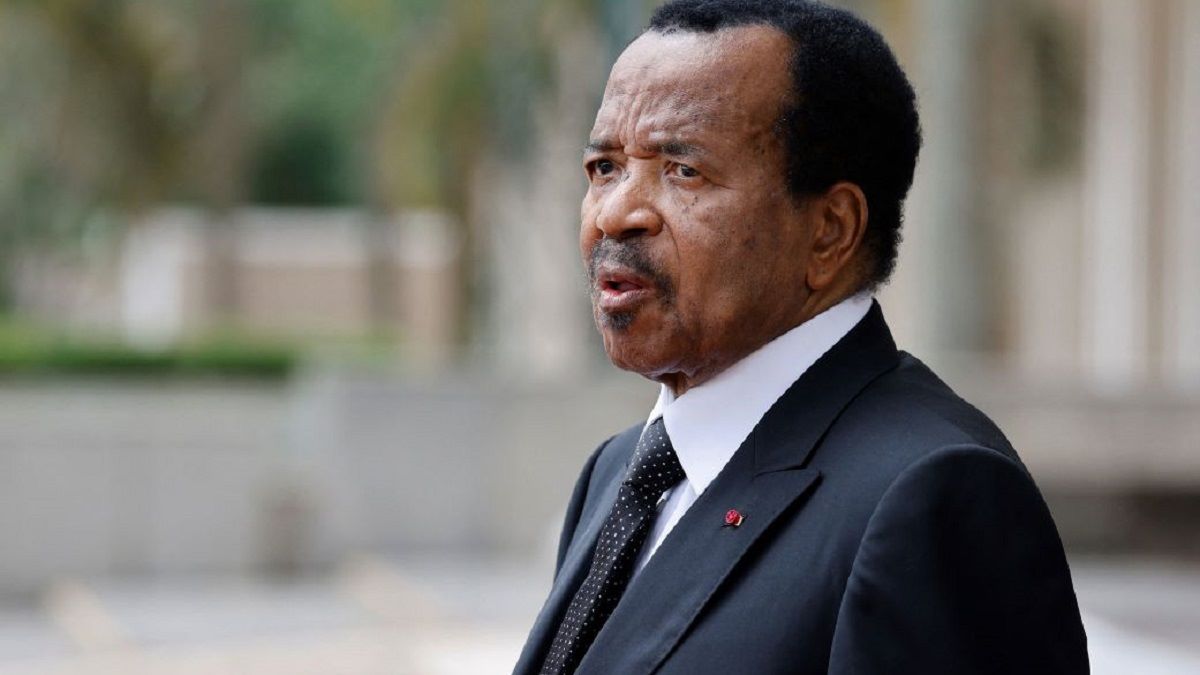
President Paul Biya, who is 93 years old and has held power since 1982, secured his eighth consecutive term in 2025. The highly centralized governance settings and the transfer of power’s untested nature undermine policy predictability.
Recent periods of presidential absence have heightened concerns regarding leadership continuity and the exercise of power. Furthermore, the lack of a new government appointment following the start of the new term in November 2025 adds to the prevailing uncertainty.
While the April 2026 reform reinstating the vice presidency–a role abolished in 1972 and designed to ensure continuity should the president be unable to fulfill his duties–aims to provide a stability mechanism, the position remains vacant.
Additionally, the mechanism for appointing the vice president remains a point of contention, as the role is filled directly by the president rather than through parliamentary selection, a move criticized by opposition groups.
Oil and, more recently, gas have dominated exports, although price fluctuations allowed cocoa to become the primary export last year. While elevated international hydrocarbon prices, driven by the Middle East tensions, should benefit export revenue, production volumes are declining for both oil and gas.
Furthermore, cocoa prices fell sharply at the start of the year after averaging $7,800 per metric ton in 2025 (and exceeding $9,000 in first-half 2025). Although prices have risen since March 2026, providing potential upside to our forecasts, the lower prices at the beginning of the year are more significant due to harvest timing.
Additionally, the rising cost of fertilizer imports will weigh down the trade balance.
Government efforts to bolster the non-oil sector and implement import substitution strategies should gradually support exports, but analysts expect import pressures from infrastructure and extractive projects to persist, leading to a persisting current account deficit.
High expenditure pressure will weigh on fiscal performance in 2026, but S&P expects the budget deficit to narrow starting next year and average slightly above 1% of GDP from 2027-2029.
Following a period of significant fiscal consolidation, during which fuel subsidies fell below 0.05% of GDP in 2025 from approximately 3.50% of GDP in 2022, the fiscal outlook faces renewed uncertainty.
“We expect elevated international oil prices to mean higher spending on energy subsidies this year, widening the deficit to 2.5% of GDP after averaging less than 1.1% from 2022-2025”.
Authorities have been working on boosting budget revenue, with some success via higher taxes and tariffs (as part of a strategy to substitute imports and promote exports) and digitalization, and made progress in expanding the tax base.
However, recurring reform delays and persistent pressures stemming from social, security, and infrastructure spending needs, and persistent financial weakness in the state-owned enterprises temper these gains.
Cameroon’s government debt is low, with 54% of total debt owed to multilateral and bilateral creditors. Ratings analysts anticipate general government debt (net of liquid assets) will peak in 2026 and decline slightly to 36% of GDP in 2029, while interest payments will average below 8% of revenue over 2026-2029, driven by a solid nominal growth and a high share of concessional debt.
External debt constituted 63% of the government’s debt as of December 2025, of which 86% came from multilateral and bilateral partners.
Furthermore, almost 50% of foreign currency debt, accounting for special drawing rights, is denominated in euros, which mitigates foreign exchange risks given the CFA franc’s (XAF’s) peg to the euro.
However, government gross financing needs are high, at about 8% of GDP per year from 2026-2029, and could pose liquidity risks, according to S&P.
The regional CEMAC debt market is shallow, and liquidity is limited, with banks heavily exposed to sovereigns in the union and other member states issuing significant amounts at high rates.
Despite progress in diversifying the investor base to include retail investors and insurance, this limits the country’s capacity to run significantly higher deficits.
The authorities are turning toward domestic bank lending and external financing, from multilateral and bilateral partners but also commercial sources, to meet borrowing requirements.
Weaknesses in management of public finances remain a key risk despite progress. The government has taken measures to improve public finance management, but progress has been slow on some aspects.
While treasury spending through exceptional budgetary procedures has decreased, spending by state-owned National Hydrocarbons Corp. outside of the budget process has led to fiscal slippage, weak transparency and predictability, and the crowding out of priority investments.
Ratings analysts expect technical assistance from partners to support further reforms in this area. The country contributes more than 40% of the CEMAC zone’s GDP, making it the largest economy in the region; and has access to CEMAC’s pooled stock of international reserves, which limits country-specific balance-of-payment risks.
The XAF’s peg to the euro, supported by the French government’s guarantee of convertibility, also limits devaluation and inflation risks.
Ratings analysts expect inflation in Cameroon to average 3% annually over 2026-2029. On June 29, 2026, the regional central bank lowered its main policy rate to 4.50% from 4.75%, its marginal lending facility rate to 5.75% from 6.25%, and its reserve requirement for banks.
