
Close Menu
MarketForces AfricaMarketForces Africa
    What's Hot

    Nairobi Stock Exchange Index Rises on Energy, Banking Stocks Rally

    July 29, 2026

    US Effective Tariff Rate Falls on Latest Tariffs, Changing Trade Flows

    July 29, 2026

    HBM Nigeria Slides as Investors Sell the Earnings, Dividend News

    July 29, 2026
    Facebook X (Twitter) Instagram
    Trending
    • Nairobi Stock Exchange Index Rises on Energy, Banking Stocks Rally
    • US Effective Tariff Rate Falls on Latest Tariffs, Changing Trade Flows
    • HBM Nigeria Slides as Investors Sell the Earnings, Dividend News
    • CBN Cuts Rate on 364-Day Nigerian Treasury Bills, Rejects N2.4trn
    • Iran Vows to Maintain Tighter Control Over Strait of Hormuz
    • IMF Commends Zimbabwe’s Economic Resilience After Programme Review
    • Afreximbank, Gebeya unveil $50,000 CANEX Create-thon for African creatives
    • Nigerian Naira Softens as NFEM Interbank FX Turnover Plunges
    • Home
    • About Us
    Facebook X (Twitter) Instagram LinkedIn WhatsApp TikTok Telegram
    MarketForces AfricaMarketForces Africa
    Subscribe
    Thursday, July 30
    • Home
    • News
    • Analysis
    • Economy
    • Mobile Banking
    • Entrepreneurship
    MarketForces AfricaMarketForces Africa
    MarketForces Africa » Economy » Nigeria’s Half-Year Budget Performance Raises Fiscal Concerns

    Nigeria’s Half-Year Budget Performance Raises Fiscal Concerns

    ...exposes lies about subsidy removal
    Julius AlagbeBy Julius AlagbeDecember 27, 2025 Economy No Comments4 Mins Read
    Nigeria’s Half-Year Budget Performance Raises Fiscal Concerns
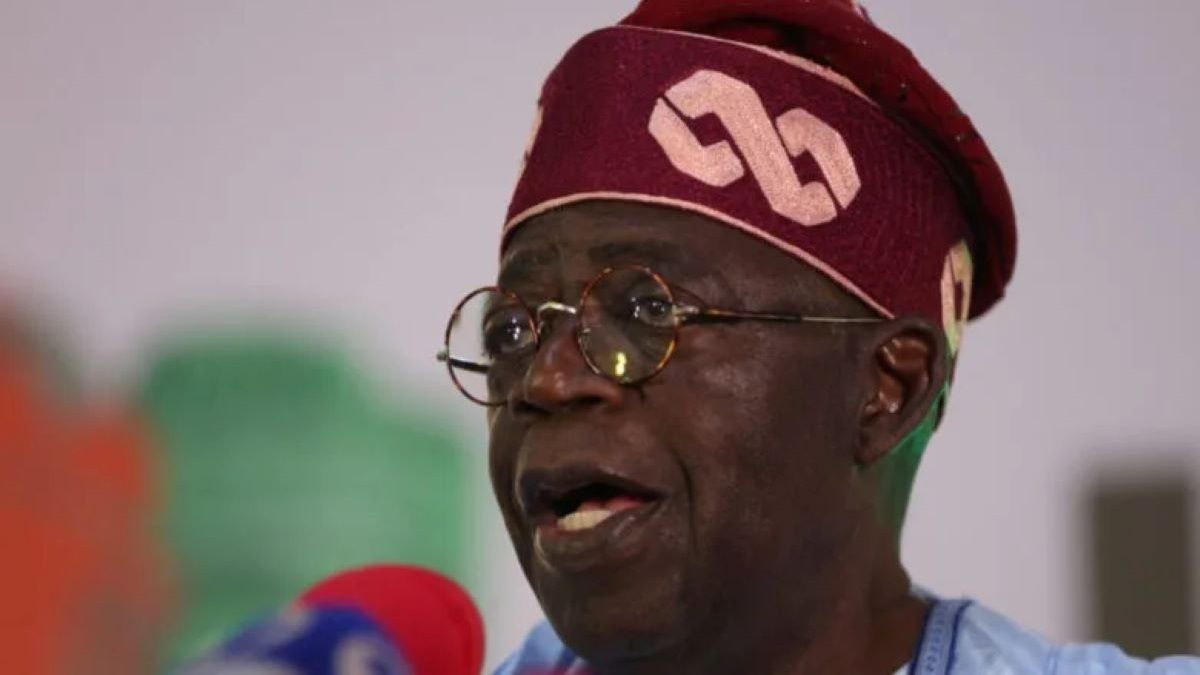
    President Bola Tinubu
    Share
    Facebook Twitter LinkedIn Pinterest Email Tumblr Reddit Telegram WhatsApp Copy Link

    Nigeria’s Half-Year Budget Performance Raises Fiscal Concerns

    Nigeria’s budget for the first half period was roughened by a wide gap between government revenue and spending, raising concerns over the country’s leadership and economic quality.

    Despite subsidy removal, the government has accelerated borrowings due to revenue non-performance. Bola Tinubu led administration has extended the path walked by his predecessor late Mohammadu Buhari in terms of national borrowings.

    Surprisingly, the government has been taunting its achievement to increase a significant increase in revenue collection by its agencies including Federal Inland Revenue Service, the Customs among others.

    A slew of analysts queried that if government cannot get spending and revenue plans correctly, and follow through its own projection, how has the authority been able to achieve accurate contract value for projects.

    Nigeria’s economic reforms have been one side at best, with huge governance costs untouched and executive unending borrowings to spend.

    The 2025 approved budget set a clear half-year benchmark, but actual performance by mid-year shows a widening disconnect between plans and reality, Cowry Asset Limited said in a commentary note.

    Nigeria budgeted at N48.97 trillion as revenue for the year, translating to a half-year target of N24.48 trillion. Actual collections at mid-year stood at about N20.44 trillion.

    That is a shortfall of roughly N4 trillion against the half-year expectation, a gap that immediately frames the rest of the fiscal story. Independent revenue was expected to deliver N7.99 trillion for the year, with a half-year benchmark of N3.99 trillion.

    Actual performance came in at approximately N3.58 trillion as of the first half of the year. 

    “While this is not a collapse, it underlines a recurring problem: independent revenue is still underperforming relative to its strategic importance in the budget.

    Oil revenue, budgeted at N6.08 trillion annually and N3.04 trillion for half-year, delivered about N2.94 trillion. That is closer to target, but still marginally behind, and offers little buffer for the broader revenue weakness. Expenditure tells a very different story.

    Total expenditure was approved at N34.35 trillion, with a half-year benchmark of N17.18 trillion. Actual spending by mid-year reached approximately N16.22 trillion. On the surface, this looks controlled, but the composition of that spending raises red flags.

    Recurrent non-debt expenditure alone was budgeted at N13.99 trillion for the year, with a half-year allocation of N6.99 trillion. Actual spending hit about N6.23 trillion, showing that recurrent costs are moving almost automatically toward their ceiling.

    Personnel costs illustrate this rigidity clearly. With an annual budget of N4.08 trillion and a half-year benchmark of N2.04 trillion, actual spending reached about N1.90 trillion by mid-year. Pension costs followed the same pattern, posting N1.42 trillion against a half-year budget of N1.72 trillion.

    These figures confirm that salaries and pensions continue to dominate fiscal space, leaving little room for adjustment when revenues fall short.

    Debt service remains the most troubling pressure point. Budgeted at N8.25 trillion for the year, with a half-year target of N4.12 trillion, actual debt service payments already climbed to about N4.73 trillion by mid-year.

    This means debt service has exceeded its half-year benchmark, consuming more revenue than planned and reinforcing the uncomfortable reality that debt obligations are growing faster than the revenue base.

    Capital expenditure shows underperformance, but not necessarily discipline. The annual capital budget of N8.32 trillion implied a half-year benchmark of N4.16 trillion.

    Actual capital releases stood at roughly N3.28 trillion. The gap reflects slow execution rather than savings, pushing economic impact into the second half and raising the risk of rushed spending later in the year.

    Financing completes the picture. Total financing was projected at N9.46 trillion for the year, with N4.73 trillion expected by mid-year. Actual financing reached about N4.85 trillion, slightly above target.

    In effect, borrowing is already compensating for revenue weakness and elevated debt service costs. Analysts at Cowry Asset Limited said the half-year numbers expose a budget running on momentum rather than balance.

    “Revenues are lagging by trillions, recurrent spending is moving as expected regardless of performance, debt service is overrunning its benchmark, and financing is stepping in earlier than planned.

    “Unless revenue collection accelerates sharply in the second half and spending discipline tightens, the budget risks closing the year leaning even more heavily on borrowing, with very little room left to pretend this is temporary”, the investment firm said.     First Holdco Delivers 62% YTD Return, Downgrades to Sell

    Budget
    Share. Facebook Twitter Pinterest LinkedIn Tumblr Email
    Julius Alagbe
    • Website
    • LinkedIn

    Julius Alagbe is a senior financial journalist and Editor at MarketForces Africa with nearly two decades of experience in finance, accounting, and economics reporting.He is one of Nigeria's most prolific financial market reporters, covering capital markets, monetary policy, corporate earnings, banking, telecoms, and macroeconomic developments across Africa.Julius has built a strong footprint reporting on Nigeria's leading corporates and financial services sector, including coverage of the Nigerian Exchange Group, Central Bank of Nigeria monetary operations, MTN Nigeria, GTCO, and major investment banking transactions.He regularly monitors the CBN’s open market operations, interbank FX markets, and equity market movements, providing readers with real-time intelligence on Nigeria’s financial landscape.His reporting draws on direct access to institutional research from firms including Moody’s Ratings, CardinalStone Securities, Fitch, and other leading African investment houses.Julius brings analytical depth and editorial rigour to every story, making complex financial data accessible to professionals, investors, and policymakers across Africa.Julius Alagbe is based in Lagos, Nigeria.

    Keep Reading

    Nairobi Stock Exchange Index Rises on Energy, Banking Stocks Rally

    US Effective Tariff Rate Falls on Latest Tariffs, Changing Trade Flows

    HBM Nigeria Slides as Investors Sell the Earnings, Dividend News

    CBN Cuts Rate on 364-Day Nigerian Treasury Bills, Rejects N2.4trn

    Iran Vows to Maintain Tighter Control Over Strait of Hormuz

    IMF Commends Zimbabwe’s Economic Resilience After Programme Review

    Add A Comment

    Comments are closed.

    Editors Picks

    Nairobi Stock Exchange Index Rises on Energy, Banking Stocks Rally

    July 29, 2026

    US Effective Tariff Rate Falls on Latest Tariffs, Changing Trade Flows

    July 29, 2026

    HBM Nigeria Slides as Investors Sell the Earnings, Dividend News

    July 29, 2026

    CBN Cuts Rate on 364-Day Nigerian Treasury Bills, Rejects N2.4trn

    July 29, 2026

    Iran Vows to Maintain Tighter Control Over Strait of Hormuz

    July 29, 2026
    Latest Posts

    Nairobi Stock Exchange Index Rises on Energy, Banking Stocks Rally

    July 29, 2026

    US Effective Tariff Rate Falls on Latest Tariffs, Changing Trade Flows

    July 29, 2026

    HBM Nigeria Slides as Investors Sell the Earnings, Dividend News

    July 29, 2026

    CBN Cuts Rate on 364-Day Nigerian Treasury Bills, Rejects N2.4trn

    July 29, 2026

    Iran Vows to Maintain Tighter Control Over Strait of Hormuz

    July 29, 2026

    Subscribe to News

    Get the latest sports news from Dmarketforces Africa about finance, business and tech.

    Advertisement
    Facebook X (Twitter) Pinterest Vimeo WhatsApp TikTok Instagram

    News

    • World
    • Politics
    • Economy
    • Business
    • Opinions
    • Fintech
    • Science & Technology

    Company

    • About us
    • Advertising
    • Classified Ads
    • Contact Info
    • Editorial Policy

    Services

    • Subscriptions
    • Research
    • Due Diligence
    • Newsletters
    • Sponsored News
    • Work With Us

    Subscribe to Updates

    Subscribe to updates from MarketForces Africa, an independent financial news service provider.

    © 2026 MarketForces Africa. All rights reserved.
    • Privacy Policy
    • Terms
    • Accessibility

    Type above and press Enter to search. Press Esc to cancel.