

Nigeria Reaffirms Policy Stability to Sustain Oil, Gas Investment
The Federal Government of Nigeria is strengthening policy stability, regulatory certainty and investment conditions to sustain oil and gas investments amid the global energy transition.
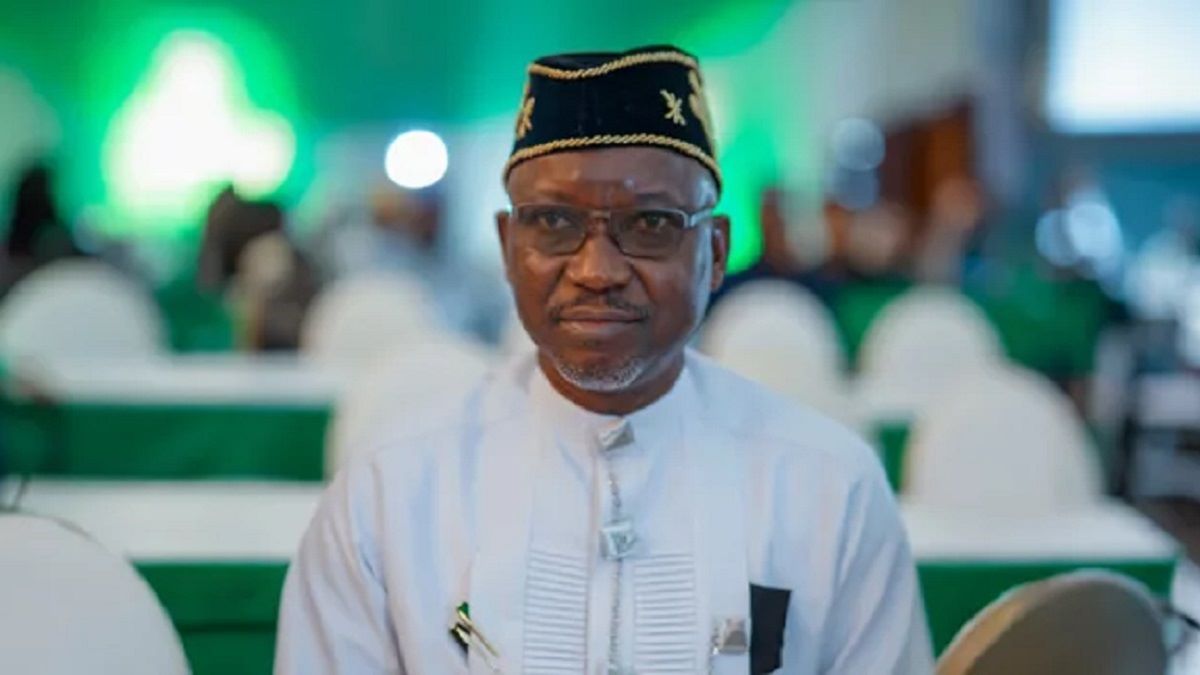
The Minister of State for Petroleum Resources (Gas), Dr Ekperikpe Ekpo, said this on Thursday in Abuja at the 2026 Annual Conference of the Association of Energy Correspondents, Abuja FCT (AECAF).
The conference held under the theme “Sustaining Oil and Gas Investment in Nigeria Amid Energy Transition”.
Ekpo, represented by his Senior Technical Adviser, Abel Nsa, said Nigeria’s energy transition must be anchored on the country’s development realities, while ensuring energy security, economic growth, industrialisation and improved living standards.
He also said that the government recognised that Nigeria’s abundant oil and gas resources remained critical to national development and required an investment environment that would enable the sector to deliver greater value to Nigerians.
According to him, sustaining investment in the sector requires policy stability, regulatory certainty, fiscal competitiveness, security and efficient project delivery.
The minister added that the implementation of the Petroleum Industry Act (PIA) 2021 and ongoing reforms were aimed at providing greater clarity to investors, strengthening regulatory institutions and creating a more competitive operating environment.
“Legislation alone is not sufficient. Investors require confidence that policies will be consistently implemented and that projects can be executed efficiently and profitably,” he said.
He revealed that the federal government was particularly focused on leveraging the nation’s vast gas resources as a catalyst for economic transformation through the Decade of Gas Initiative, aimed at sustaining gas penetration.
He identified investments in gas infrastructure as critical to achieving the objective, citing the Ajaokuta-Kaduna-Kano (AKK) and Obiafu-Obrikom-Oben (OB3) gas pipelines, gas processing facilities, Liquefied Natural Gas (LNG) and other midstream infrastructure.
Ekpo further said that the government was promoting the expansion of liquefied petroleum gas (LPG) and Compressed Natural Gas (CNG) to improve access to cleaner and more affordable energy for households, businesses and industries.
He said Nigeria’s energy transition should support, rather than undermine, the country’s development priorities, noting that millions of Nigerians still required reliable electricity and access to cleaner cooking fuels.
He urged energy correspondents to provide accurate, balanced and contextual reporting on developments in the sector, given the complexity and technical nature of the industry.
He commended AECAF for sustaining professional dialogue in the petroleum industry and called for continued collaboration among government and the media in advancing Nigeria’s energy future.
Also speaking, Mrs Oritsemeyiwa Eyesan,
Commission Chief Executive, Nigerian Upstream Petroleum Regulatory Commission (NUPRC) said the NUPRC had approved Field Development Plans worth more than 57 billion dollars since 2024 in further investments.
Eyesan, represented by the commission’s Director of Surface Development, Joseph Ogunshola, said 22 offshore projects have been planned between 2026 and 2030, with an estimated 30 billion to 50 billion dollars in further investment.
“Approvals and investment commitments are important, but their real value is realised when projects move and new volumes come onstream,” she said.
She said Nigeria averaged roughly 1.68 million barrels of crude and condensate in August 2026, meeting its Organisation for Petroleum Exporting Countries (OPEC) quota for four consecutive months.
She put Nigeria’s proved and reserves at 37.01 billion barrels of oil and condensate and 215.19 trillion cubic feet of gas as at Jan. 1, 2026.
“These peaks are encouraging and give us a stronger base from which to pursue the national production aspirations of two million barrels per day (bpd) in the near term and three million bpd by 2030,” Eyesan said,
Earlier, AECAF Chairman, John Ofikhenua traced two decades of shocks to Nigerian oil and gas investment from the U.S. shale boom to COVID-19 and the more recent divestment pressure tied to net-zero commitments.
Ofikhenua argued that global crises, including the Russia-Ukraine war and the U.S.-Israel-Iran conflict affecting the Strait of Hormuz, have driven renewed interest in Nigerian crude and gas even as energy transition rhetoric persists.
He said the conversation among major economies had increasingly moved from “energy transition” to “energy mix”.
He cited strong investor interest in the Dangote Petroleum Refinery and Petrochemicals IPO and the licensing rounds conducted by the NUPRC as indications of renewed investor confidence in Nigeria’s oil and gas sector.
He urged the government to sustain policy stability, a peaceful operating environment, and the implementation of the PIA, and to improve security in the Niger Delta.
The highlight of the event was the unveiling of the maiden edition of the AECAF ‘Energy Watch’ magazine, a platform for conversations about Nigeria’s energy future and a reference point for policymakers and relevant stakeholders. Tinubu Welcomes 4.43% GDP Growth
