

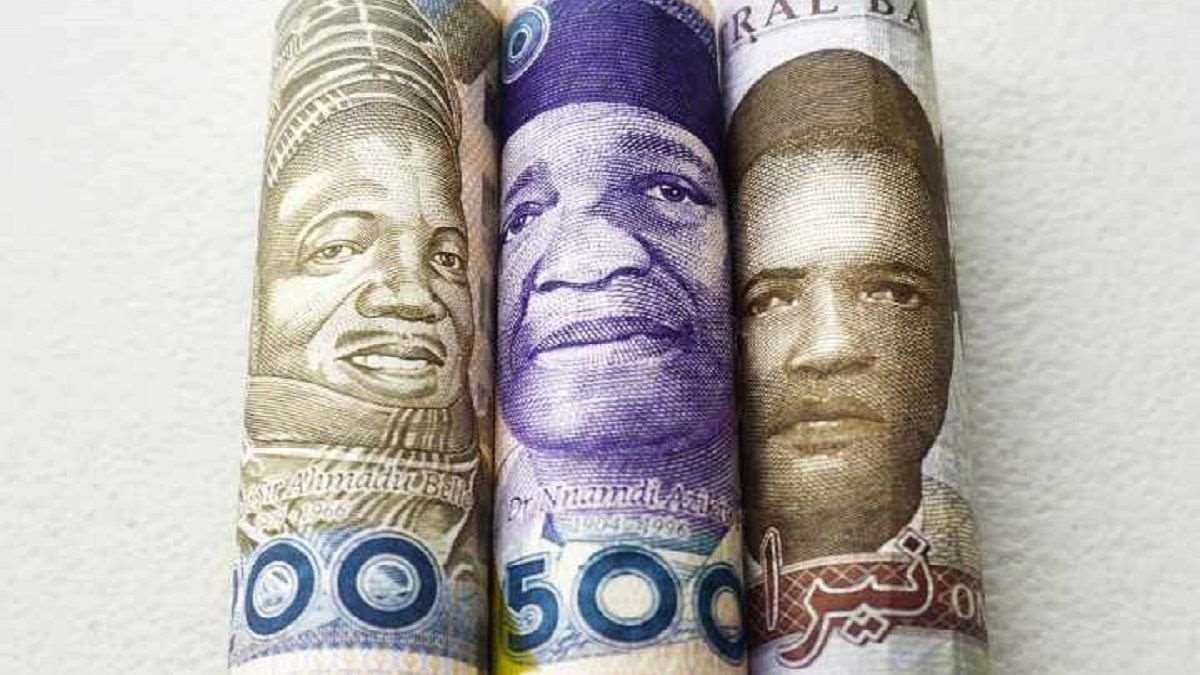
Naira Has Only One Option in Q3—Forex Analysts
In the third quarter of the year, the naira’s exchange rate is expected to rise due to the consistent backing from the Central Bank of Nigeria (CBN) for the local currency on the official market.
With Nigeria’s gross external reserves of more than $40 billion already, analysts said the CBN will rather open that nation’s FX vault to ensure exchange rate stability is ensured at best.
“For anyone to think about speculation will be foolish and excessively risky,” a slew of fx traders sampled by MarketForces Africa Research said, saying the Apex Bank has already closed potential shock from uncleared forward FX contracts.
The CBN announced the completion of a major forensic audit into the country’s foreign exchange transactions under the Retail Secondary Market Intervention Sales (RSMIS) scheme, declaring that the matter is now closed.
The authority also spotted some infractions for which it planned to take legal action against the perpetrators, and unconfirmed information has it that the authority said it will settle some forward FX in naira.
“It all depends on the settlement price and who owns the forward contracts. If the forwards were settled at today’s price, no problem. If at N400, then there is an issue. If settled at 400, and bank clients own the forwards, then the loss belongs to the clients.
“Otherwise, banks would have to take the loss; if the contracts were settled at 400, they own the forwards. We need more information at this point,” the source at Agency One Group Inc. said in chat with MarketForces Africa.
In its mid-year macro report, Verto FX acknowledged the stability of the Nigerian naira against the dominant foreign currencies. “There has been a welcome period of stability in Nigeria, with volatility broadly as low as it has ever been during President Bola Tinubu’s tenure,” Charlie Bird, Director of Trading at Verto FX said.
“While this is not the first time we have seen the parallel market print at the same levels as NAFEM, in the past this has been met with wild market swings and was ultimately short-lived.
“More recently, the situation feels different,” Birds said. And most of the FX traders across Broadstreet who spoke with MarketForces Africa shared the same sentiment.
Bird noted that both the Nigerian autonomous foreign exchange market and parallel markets have traded in lockstep for the longest period since the naira devaluation and fuel subsidy removal in 2023.
Some investment banking firms projected an exchange rate of N1700 in 2025 as their worst-case scenario. Naira bulls, however, maintained N1500 as the projected exchange rate for the year, citing the CBN FX intervention stance as key support for the naira’s stability.
Verto FX director said hard currency liquidity is better than 18 months ago, but the NAFEM order book (Bloomberg BMatch) continues to be heavily weighed on the bid side with anecdotal volume around 4x-6x larger than offer.
“The CBN has been cautiously participating in NAFEM, tending to drip-feed US dollar supply at market levels rather than the authority’s previous strategy of shocking the system with US dollar sales 2% – 3% below market rate.”
Last week, the naira saw a slight improvement at the official window, gaining 0.01% week-on-week to close at N1,533.57 per dollar at the official window.
Analysts said the modest appreciation came despite the strength of the US dollar and falling oil prices amid the announcement of a potential supply hike by the organisation of Petroleum Exporting Countries and allies (OPEC+).
However, the story was different in the parallel market, where the naira depreciated by 0.52% week-on-week to close at an average of N1,545 per greenback. This decline was driven by a surge in FX demand, as businesses and individuals sought dollars amid illiquidity.
Crude oil prices took a significant hit over the week, with Brent crude falling more than 4% to settle at $66.8 per barrel, while the US benchmark WTI dropped 4.6% to $64.1 per barrel. The downturn was driven by a slew of bearish factors, including
OPEC+’s announcement of increased supply, rising trade frictions between major economies, a decline in US crude exports, and ongoing uncertainty regarding sanctions on Russian energy.
These events triggered widespread selling across energy markets, pushing crude futures to their lowest levels in nearly two months. Nigeria’s Bonny Light crude was not spared, declining by 3.28% to close at $70.74 per barrel, amid weakened demand linked to global trade anxieties and the anticipated surge in OPEC+ supply.
On a positive note, Nigeria’s external reserves rose by 1.56% week-on-week to $40.16 billion, driven by improved inflows, which may provide some buffer against external shocks and currency volatility in the near term.
The naira is expected to sustain the marginal gains recorded in recent sessions, supported by the Central Bank of Nigeria’s continued intervention in the foreign exchange market.
While global trade tensions and volatility in the oil market—particularly the recent downward trend in crude prices—pose potential headwinds, the apex bank’s efforts to inject liquidity and stabilize demand pressures should provide a buffer against sharp depreciation.
As such, although external factors may exert intermittent pressure, we anticipate the naira to hold relatively steady, especially at the official window, barring any major shocks in global commodity or financial markets.
FX traders said they expect the current stability in the FX market to persist in the near term, supported by the CBN’s ongoing refinement of existing policies. A number of FX analysts concluded that the naira only has one option in Q3—to rally. # Naira Has Only One Option in Q3—Forex Analysts AXA Mansard Insurance: Strong Revenue Growth Amid Profit Weakness
