

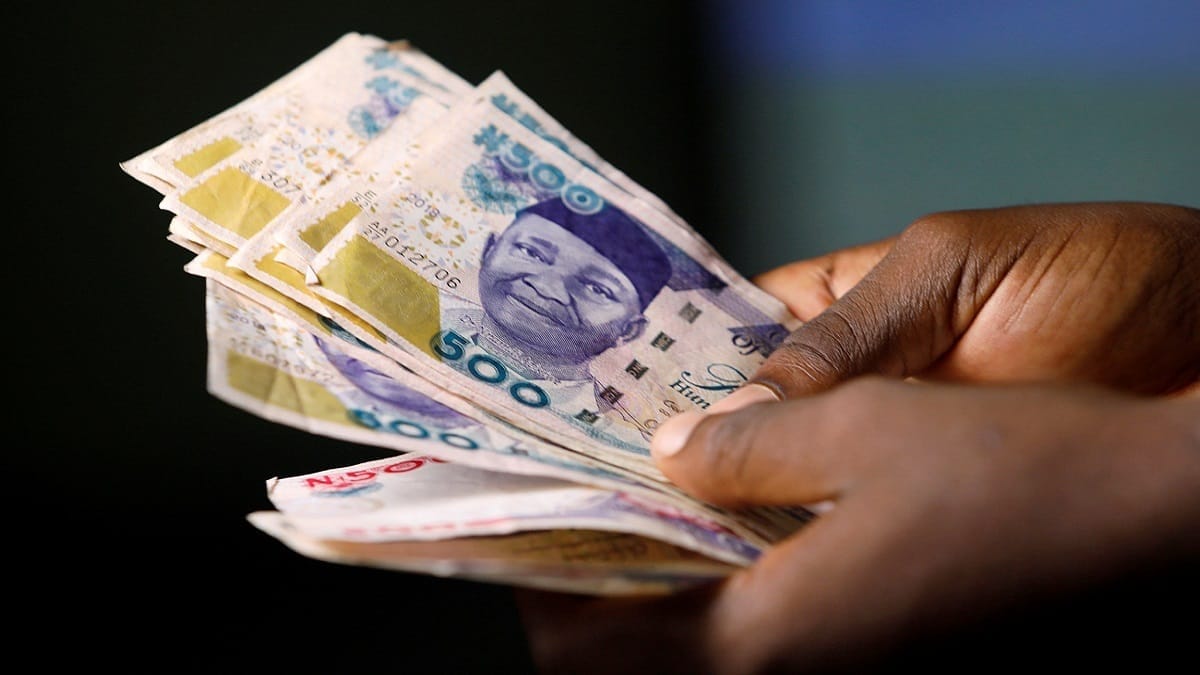
Naira Appreciates to N461.50 amidst Multiple Threats
The Nigerian naira made a slight recovery against the United States dollar amidst multiple economic threats cited by two major ratings agencies – Moody’s and S&P – over the outlook for the local currency.
At the Investors’ and Exporters’ foreign exchange (FX) window, the naira gained N0.25 or 0.05% week on week to close at N461.50 despite a scarcity of foreign currency and new naira notes, This is coming at a time when external reserves plunged for the third week.
Meanwhile, trading records showed that FX market participants maintained bids between N460 and N465 per United States dollar at the Investors and exporters market. Moody’s, and S&P Ratings cited Nigeria’s weak oil revenue receipts as a downside to growth.
This coupled with a high national debt and rising debt service costs which analysts believe has raised the country’s risk as an investment destination. The inability to get the dollar out of Nigeria has been noted to raise the level of forex backlog owed by the apex bank to foreign investors.
For the local currency, analysts maintained that outlook remains downbeat amidst expectations for devaluation. Nigeria’s inflation rate has remained stubbornly high while the apex bank intervention to keep the exchange steady dragged external reserves lower.
Last week, external reserves declined for the third consecutive week. Data from the Central Bank of Nigeria (CBN) showed that the gross reserve position fell by $30.67 million to $37.01 billion amidst market intervention.
In its latest report on Nigeria, S&P said rising prices of imported goods, payments to clear foreign exchange (FX) backlogs, the Central Bank of Nigeria’s (CBN’s) intervention in the FX market to stabilize the naira (N), and low oil volume exports reduced gross foreign exchange reserves.
MarketForces Africa reported that despite higher global oil prices in the financial year 2022, external reserves declined by $3 billion, reaching $38 billion by December.
“We also lowered our estimate of usable reserves to $28 billion for 2023 to account for what S&P Global Ratings estimates to be encumbered reserves of about $10 billion”. In its note, Fitch said the Nigerian naira remains under pressure, raising the possibility of a material devaluation following the presidential election in February 2023.
Despite the continued increase in current account receipts, costlier imports and clearance of FX arrears, CBN intervention in the Investors and Exporters window will limit the proportionate increase in FX reserves, S&P Ratings said in a note.
“We also deduct $10 billion from gross FX reserves to account for what we estimate as encumbered reserves, which could make them unavailable for meeting external financing needs. We project usable reserves to average about $28 billion over 2023-2026”, it added.
A look at activities at the Interbank Foreign Exchange Forward Contracts market, the spot exchange rate remained unchained from the previous week as it closed the week at N445.
In the Forwards market, the 1-month contracts decline 0.8% to N483.43 and the 3-month contract lost 0.2% to N489.61. Meanwhile, the 6-month contract appreciated by 0.1% to N506.18 and the 1-year contract gained 9.3% to N487.41. # Naira Appreciates to N461.50 amidst Multiple Threats
