

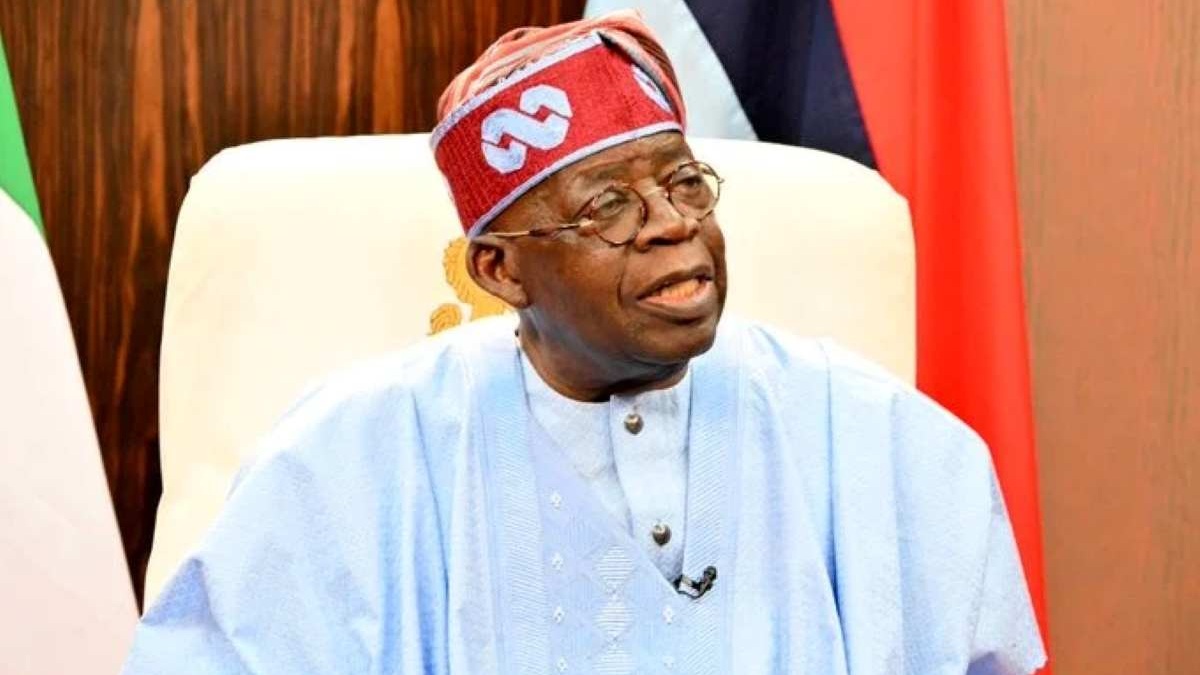
Human Capital, Nigeria’s Greatest Resource Not Oil — Tinubu
Bola Tinubu says Nigeria’s primary engine for industrial transformation lies in its human capital rather than its oil and mineral wealth.
Tinubu, represented by Mr Muhammadu Dingyadi, Minister of Labour and Employment, said this at a two-day National Industrial Manpower Summit (NIMS) 2026 which began on Thursday in Abuja.
The summit had the theme “Unlocking Nigeria’s Human Capital for Industrial Transformation: Building Skills, Driving Innovation and Creating Prosperity”.
The President said that ongoing reforms, including the Nigeria Industrial Policy 2025, aimed to link infrastructure projects directly with standardised technical and vocational training across major sectors.
According to him, physical infrastructure and foreign investments will not deliver sustainable growth without competent technicians, engineers, and skilled entrepreneurs to drive productivity.
“Nigeria is blessed with abundant natural resources, but our greatest resource is not the oil beneath our soil or the minerals on our land; it is our people.
“We cannot build a modern industrial economy with yesterday’s skills.
“I want Nigerian artisans to become certified professionals, small manufacturers to become major employers, and promising entrepreneurs to compete in large markets.
“Our mission is to turn skills into productivity, productivity into industries, and industries into shared prosperity,” he said.
He urged stakeholders to support the proposed National Industrial Manpower Competence Portal to map local skills, verify qualifications, and connect certified workers directly with industrial employers.
In his remarks, Minister of State for Industry, Trade and Investment, and Chief Host of NIMS 2026, Sen. John Enoh, said the country’s industrial development required coordinated investments in human capital alongside funding for factories, ports and other infrastructure.
According to him, factories cannot operate efficiently without competent technicians, engineers and managers capable of maintaining equipment, managing production costs and ensuring quality standards.
“The binding constraint is rarely the idea or the machine; it is the lack of a skilled workforce, practical experience and a sense of ownership,” he said.
Enoh advocated treating industrial manpower and skills development as an essential component of national infrastructure, deserving sustained government investment and financing.
He noted the importance of human capacity development in translating Nigeria’s natural resources and industrial investments into sustainable economic growth.
He emphasised the need to develop local value chains by ensuring that raw materials were processed into finished products within the country, thereby creating employment and expanding industrial opportunities.
Also, the Senior Special Assistant to the President on Industrial Training and Development, Adamson Ayinde, called for deliberate and coordinated investments to address the national shortage of certified technicians.
“Every factory established and every investment contracted requires one indispensable source of capital, which is our human workforce.
“Training alone is not the objective because the true measure of success lies in what happens after the training is completed.
“We must move from conversation to collaboration, from coordination to implementation, and from implementation to measurable impact.
“The greatest industrial resource is not extracted from the ground, but is built within the minds, talents and potential of our people,” he said.
Echoing the same views, Otunba Francis Meshioye, chairman of the summit’s planning committee, said economic development relied on aligning workforce skills with industrial demands.
Meshioye noted that multi-stakeholder collaboration remained essential to preparing local talent for emerging technologies, mining, energy, construction, and advanced manufacturing sectors.
“Human capital is central to economic evolution, as sustainable growth depends directly on the quality, skill and resourcefulness of our people,” he said.
He urged delegates to develop actionable policy recommendations that enhance technical education, expand apprenticeships and attract new investment frameworks into domestic production.
In his goodwill message, Dr Afiz Ogun, Director-General, Industrial Training Fund, said plans were underway to establish digital application centres to enable artisans to use computers and mobile devices to design, develop and produce innovative products.
“Training young people is not enough; we must make it practical,” he said.
Ogun emphasised the need for stronger collaboration between training institutions and industries to ensure that graduates were adequately prepared for employment and entrepreneurship.
He called for sustained investment in human capital development, stressing that a skilled workforce was essential to Nigeria’s industrial transformation, innovation and job creation. #Human Capital, Nigeria’s Greatest Resource Not Oil — Tinubu# 2027: Why Tinubu’s Economic Reforms Require Continuity
