

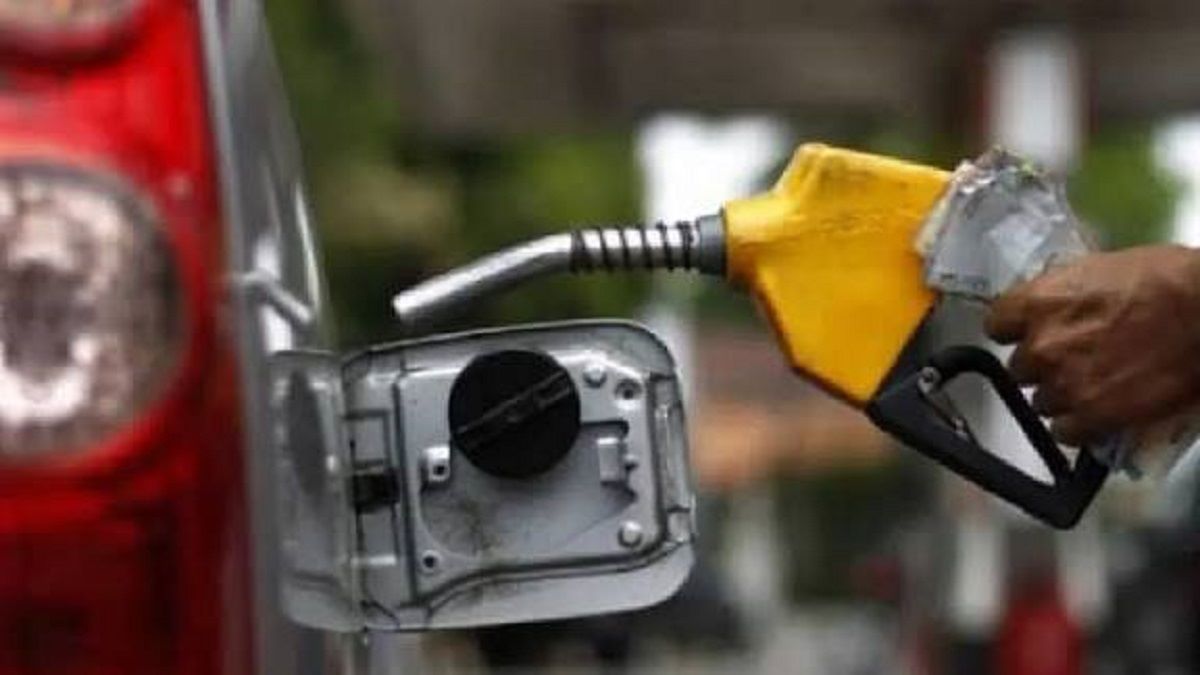
FG Markdown Petrol Price for 30 Days as Subsidy Debate Heats Up
The Federal Government says it is offering a discount on petrol dispensed by the Nigerian National Petroleum Company Limited (NNPCL) for the next 30 days.
The discount was introduced to cushion the impact of high fuel prices on Nigerians, a short-term move to ease the cost of living, which is already ‘killing the living’.
The development was triggered as the subsidy removal debate continues to emerge as a top issue opposition parties are using against the present administration.
The Minister of Finance and Coordinating Minister of the Economy, Taiwo Oyedele, announced this on Thursday at a press briefing in Abuja, addressing questions on fuel prices and subsidies.
According to the Minister, the discount is not a subsidy but a government arrangement to sell petrol at cost.
“We are offering a discount on petrol dispensed by NNPC Limited for the next 30 days in the first instance, with priority for public transporters nationwide. So, it’s not a subsidy, government is just saying we sell to you at cost.”
Oyedele also announced that the Federal Government is targeting a ₦1,350-per-litre ceiling on the ex-gantry or landing cost of petrol.
Oyedele said the government was taking further steps because existing measures had not fully addressed the pressure on households and businesses following increases in fuel and transportation costs.
Under the proposed price modulation mechanism, the government is negotiating a ₦1,350-per-litre ceiling on the ex-gantry or landing cost of petrol, subject to monthly reviews.
The proposed ceiling does not mean petrol will sell for ₦1,350 per litre at filling stations. Rather, it is intended to prevent sharp movements in global crude prices or the exchange rate from immediately translating into corresponding increases in petrol prices.
“Pump prices should not have to follow every swing in global crude or the exchange rate. The government is negotiation a ceiling of N1,350 a litre on the ex gantry or landing cost of petrol to keep pump prices stable,” Oyedele said.
He added that where the cost rises above the ceiling, refiners and importers would initially bear the shortfall and recover it later when market conditions allow.
Oyedele said the arrangement was neither a subsidy nor price control, but a mechanism designed to smooth out petrol prices over time.
“The reasoning is simple: N1,400 a litre today and N1,400 a litre tomorrow is better than N1,500 a litre today and N1,300 a litre tomorrow. Why? Because volatility itself adds to uncertainty and cost, and when fuel goes up sharply, they rarely come down as fast.”
He said the ceiling would be reviewed monthly, with the figures published for transparency. Some opposition parties are forming a consensus to return petroleum subsidy as Nigerians groan under high costs of living. Oil Prices Ease on Supply Boost Expectation, Brent Dips to $101
