

Elevated Oil Prices Stoke Energy Crisis Fuel U.S Inflation Concerns
Oil prices above $100 increase fuel costs and inflationary pressures in the US, while also giving energy prices greater weight in the country’s monetary policy and economic agenda.
Rising tensions in the Strait of Hormuz, along with supply disruptions originating from Saudi Arabia, contributed to oil prices returning to triple-digit levels.
After the US targeted five Iranian oil tankers, Iran’s Islamic Revolutionary Guard Corps (IRGC) said it attacked two US vessels and eight tankers in the Strait of Hormuz on Sept. 9.
The attacks, along with strikes on energy facilities in Saudi Arabia, pushed international benchmark Brent crude up more than 3% on the same day, taking it above $100 per barrel for the first time since May 22.
The supply squeeze in the global oil market deepened further after Saudi Arabia’s East-West Pipeline, an alternative route to the Strait of Hormuz, was taken offline following the attacks.
After it was reported that the pipeline shutdown would delay deliveries to some refineries, Brent crude rose more than 6% to $107.63 per barrel. The impact of the supply disruption on physical shipments also added to upward pressure on prices.
According to market sources, some oil shipments scheduled for delivery to Europe in September were canceled on Sept. 15.
Up to 4% of global oil supply could be at risk if the pipeline outage persists.
As tight supply conditions push oil prices higher, the resulting increase in costs at the pump is adding to pressure on American consumers and affecting broader economic dynamics in the US through inflation and monetary policy.
According to the American Automobile Association (AAA), the national average price of gasoline rose to $4.44 per gallon as of Sept. 17, up 38.7% from the same period last year.
The national average price of diesel, meanwhile, climbed to a record $6.40 per gallon from $3.70 a year earlier.
Higher fuel costs are also adding to energy-driven inflationary pressures. The US Consumer Price Index (CPI) rose 0.4% month-on-month and 3.4% year-on-year in August, while a 3.9% increase in gasoline prices accounted for more than one-third of the monthly rise.
High oil prices are also affecting the US Federal Reserve’s monetary policy as higher transportation and production costs translate into broader price pressures.
The Fed on Wednesday raised its policy rate by 25 basis points to a range of 3.75%-4%, marking its first rate hike since 2023.
Although the Fed’s rate increase does not directly resolve the supply shortage in the oil market, higher borrowing costs constrain economic activity while also strengthening the dollar against other currencies.
A stronger dollar makes oil more expensive for buyers using other currencies, weighing on global demand and limiting further increases in oil prices.
The impact of high oil prices in the US extends beyond the economy and monetary policy.
The sharp rise in gasoline and diesel prices is also increasing pressure on the US administration to bring down energy costs ahead of the Nov. 3 congressional midterm elections.
The White House is considering using the Defense Production Act to increase the country’s oil refining capacity in an effort to ease the impact of rising fuel prices on consumers and businesses.
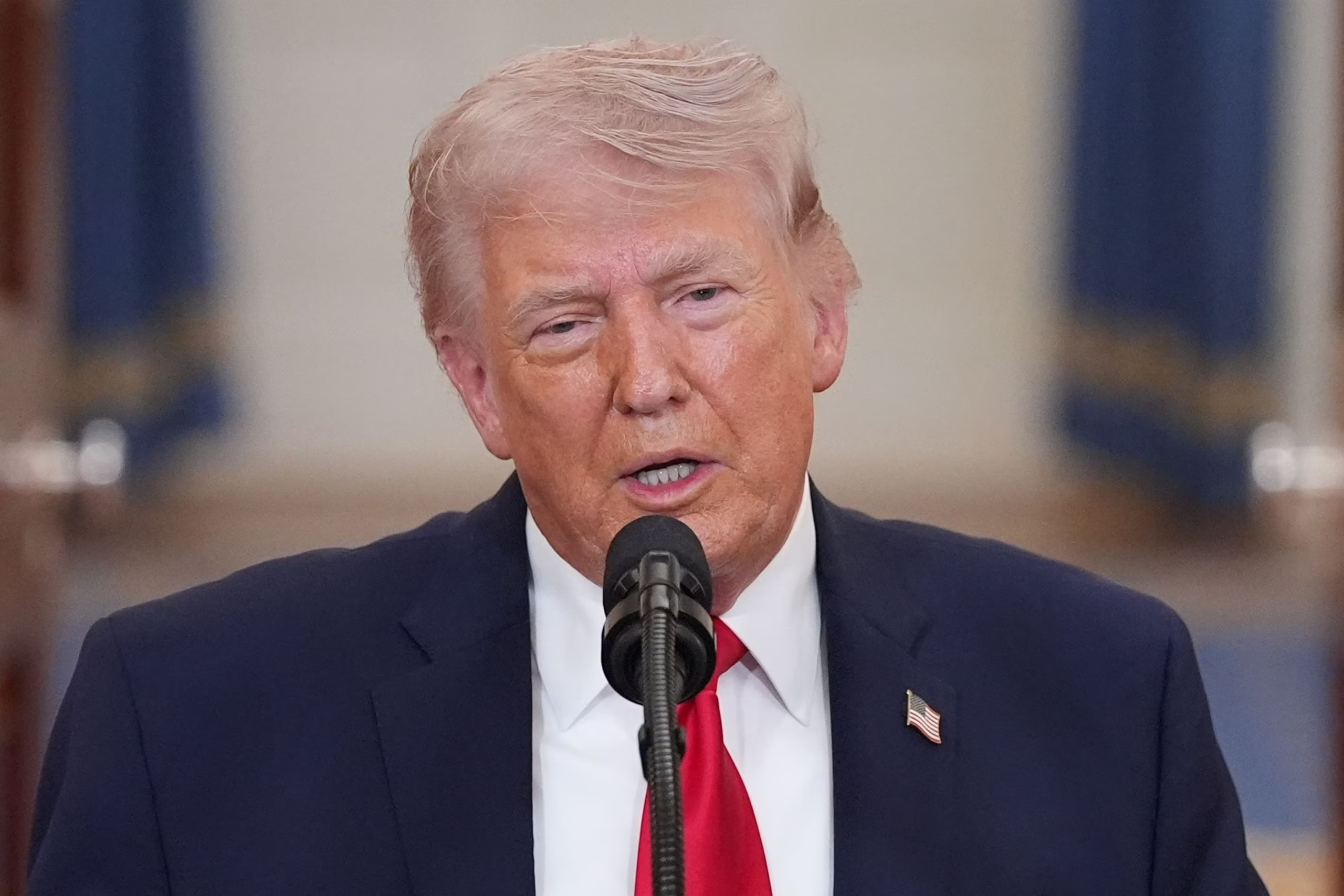
Against this backdrop, US President Donald Trump’s messages that the conflict with Iran will end and that oil continues to flow through the Strait of Hormuz are also in focus in oil markets.
As oil prices climbed back above $100 on Sept. 9, Trump argued that the war would end immediately after the Nov. 3 midterm elections.
Trump claimed Iran was trying to influence the elections, the US Navy had “full control” of the Strait of Hormuz, and numerous oil tankers were passing through the waterway every day.
He also said gasoline prices would fall once the war ended.
Meanwhile, efforts in the US House of Representatives to withdraw American forces from the conflict with Iran remain on the agenda at a time when the economic costs of the war are being debated.
On Sept. 14, Trump claimed that Iran wanted to reach an agreement with Washington “quickly and very eagerly.”
Brent crude, which rose about 5% during the day to $109.80 per barrel, gave back most of its gains following Trump’s remarks and settled 1% higher at $105.68.
Iran, however, said there would be no talks with the US until its conditions were met.
With the Nov. 3 midterm elections approaching, high fuel prices are adding to pressure on the US administration, while the course of the conflict between Washington and Tehran remains critical to the outlook for energy costs. #Elevated Oil Prices Stoke Energy Crisis Fuel U.S Inflation Concerns# Oil Prices Decline as Saudi Provides Supply Alternative
