

Naira Reclaims Value amidst Gloomy FX Predictions
The naira was sold at N461.50 per United States (US) dollar to market participants at the Investors and Exporters window, gaining 0.04 per cent compared with the 461.67 it exchanged on Monday. The rate is tracking the exchange rate of N500, which appears as a benchmark prediction for 2023 by Nigeria’s investment banking houses.
Major investment banking firms in the country have maintained a stance that the local currency which they believe trades above fair value would need to be adjusted. Their best case expectation is that the naira will cross N500 to a greenback in 2023 at investors’ and exporters’ FX window.
Based on the trading pattern reviewed by MarketForces Africa, the local currency is far from gaining in the real sense but reclaimed value previously lost to demand pressures. At the same time, the naira strengthened in the parallel market even as local banks stopped dollar spending using debit cards.
Data from the FX market shows that the open indicative rate closed at N460.25 to the dollar on Tuesday. An exchange rate of N462 to the dollar was the highest rate recorded within the day’s trading before it settled at N461.50.
With external reserves of $37 billion, analysts are of the opinion that the apex bank has a relatively strong buffer to support the local currency. In July, Nigeria will make a Eurobond repayment of 500 million and analysts said the bulk sum is also expected to draw down on the balance of the reserves.
Analysts posit that the apex bank’s interventions in the interbank foreign exchange market aimed at enhancing supply also pull the balance further downward. Yesterday, the naira sold for as low as 440 to the dollar within the day’s trading. A total of N117.63 million was traded at the official Investors and Exporters window on Tuesday.
Naira is projected to weaken further in 2023, according to a slew of foreign currency analysts. This expectation is anchored on the fact that dollar outflow will most likely increase in the first half of the year.
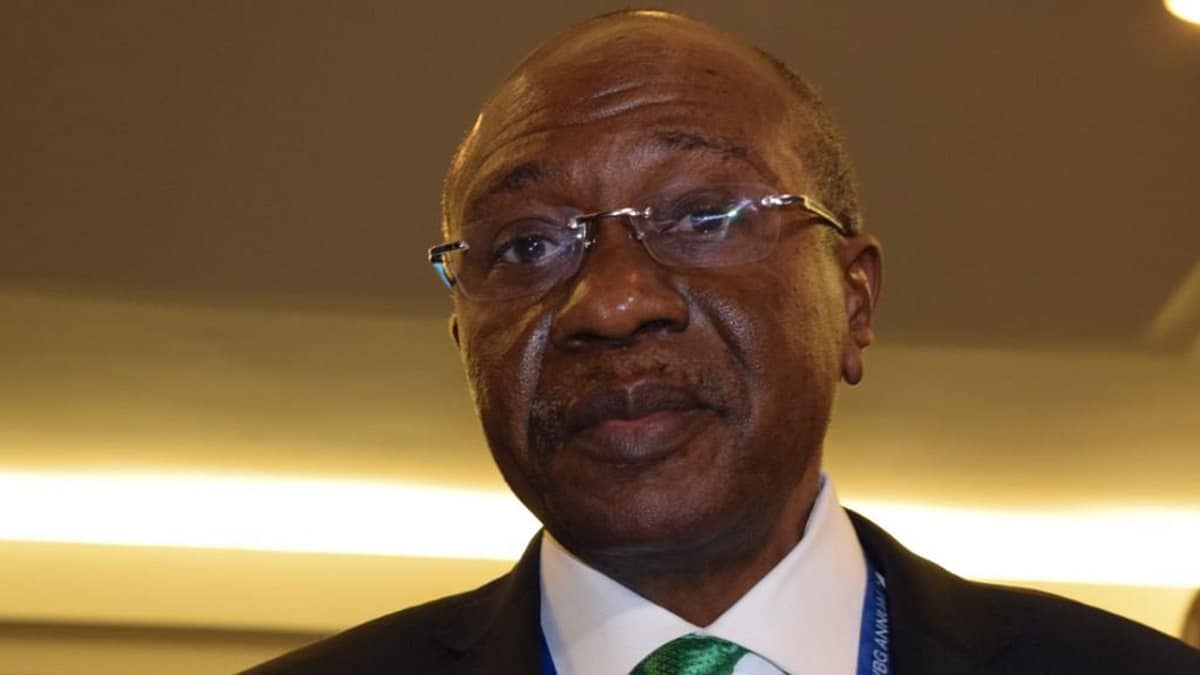
According to investment banking firms’ report for 2023, the consensus remains that the local currency is overvalued. Last year, Godwin Emefiele, the CBN chief agreed that the naira traded above real value.
The International Monetary Authority, IMF, and other foreign interests hope to see exchange rate convergence but the outlook has widened further with the new note design launched late last year.
MarketForces Africa reported that the introduction redesigned new local currency note spurred spurious demand for foreign currency in the parallel market, and then the exchange rate was spooked.
While there has been a slowdown in the local currency depreciation rate in the black market, it has shifted the FX spot rate curve and the market is battling with the new normal.
Foreign investors have continued to stay away from the Nigerian economy, and the absence of hot monies in the form of foreign portfolios has continued to be having runoff on rates.
MSCI index threatened to downgrade Nigeria’s index last year, citing its inability to get the dollar out of Africa’s largest economy with about $450bn gross domestic product size. The apex bank, in a bid to protect the naira initiate capital control measures, making it difficult for Multinational Corporations to upstream FX abroad.
This resulted in an FX backlog, though external reserves remain solid at $37bn. There’s a positive outlook for external reserves amidst an increase in crude oil production that started late last year.
The upsurge lifted the oil group’s output after Nigeria increase crude oil production volume after sustained failure to meet the 1.8mpd quota of the Organisation of Petroleum Exporting Countries (OPEC) daily allocation. The inability to supply oil impacted Nigeria’s revenue performance in 2022, thus government resulted in borrowing from the local debt capital market.
In March 2022, Nigeria’s debt office $1.25 billion from the international debt capital market for government to close its financing gap. Debt Management Office had earlier tweaked its policy strategy to accommodate Eurobond borrowings to support dwindling external reserves.
Due to changes in market conditions, FG’s plan to ramp up dollar borrowings was thwarted as inflation pressure forced global central bankers to hike policy rates. This external influence which impacted foreign currency borrowing across the world triggered Nigeria’s decision to look inward for funding fiscal deficit.
In its bull case scenario, Meristem securities limited has projected that naira will be sold for #501.15 in the year provided the price of crude oil remains upbeat and Nigeria’s oil production recovers. The investment firm worst case scenario estimated the naira exchange rate at N520.05 should there be another global shock in the crude oil market, dragging oil prices downward in addition to low output.
Johnson Chukwu, Cowry Asset CEO said at a webinar on Tuesday express that the naira will continue to face demand pressure. In his presentation, Chukwu noted that uncertainties surrounding the exchange rate will prevail in the face of less impressive net inflows into foreign reserves.
For its best case condition, the investment firm, Meristem Limited, the prediction was anchored on moderation in capital flow reversal and fuel subsidy removal. Analysts, however, believe that if capital flow reversal persists, the exchange rate will be worse off.
“Low transaction volumes at investors and exporters FX window, mounting capital repatriation pressures, low FX inflows and its resultant effect on accretion to the external reserves thus provide minimal optimism about the improvement in the exchange rate in 2023 (both official and parallel market rate)”.
In addition, analysts noted that the CBN’s contribution at the Investors’ and Exporters’ FX window has declined significantly below pre-pandemic levels reflecting the apex bank’s limited capacity to defend the Naira.
On average over the three years, CBN’s contribution to investors and exporters window has slowdown by 29.20%, according to Meristem said in its outlook for 2023. “…we do not rule out the possibility of another Naira devaluation in 2023 to allow the exchange rate to reflect current realities”, Meristem stated.
It supported the projection with the fact that Non-deliverable Forwards at the Naira settled over-the-counter (OTC) foreign exchange futures market as of December 30th, 2022, revealing that contracts maturing in one year closed at N529.55.
The investment firm analysts said this reflects investors’ pessimism about the direction of the Naira’s value against the greenback.
Analysts also considered the fact that the Naira has been devalued in 4 out of the past five years, saying the high likelihood of further strains in FX supply, declining foreign investor confidence in the capital market and other weak macroeconomic variables, signals the possibility of another currency devaluation.
On the other hand, the potential removal of the petroleum subsidy bill would improve accretion into the FX reserves and strengthen the CBN’s ability to defend the domestic currency, according to Meristem.
“For our outlook, we believe the FX liquidity issues will remain over the short-to-medium term as we do not see any positive signal that denotes an improvement in FX supply relative to the pre-pandemic levels”, Cordros Capital said in a note.
Moreover, considering the tepid accretion to the reserves given low crude oil production and elevated PMS under-recovery costs, foreign portfolio investment (FPIs) which have historically supported supply levels in the Investors’ and exporters’ FX window will be needed to sustain FX liquidity levels in the medium to long-term, analysts stated.
“.. we think further adjustments in the exchange rate peg closer to its fair value and flexibility in the exchange rate would significantly attract foreign inflows back to the market”, Cordros Capital maintains stance.
CardinalStone Partners in its outlook for the year said FX pressures will persist in 2023. The multi-assets investment banking firm said in 2022, average monthly net flows through the CBN settled at a negative $81.0 million versus +$321.9 million in 2021.
It considers this as a significant dip in crude oil production constrained the accretive movement of higher crude oil prices. Adding an extra layer of pressure on the market, foreign inflows were tepid in the review period on global risk-off sentiments, FX repatriation concerns and the absence of market reflective exchange rate, CardinalStone added.
Analysts said the limited FX inflows also curtailed the magnitude of FX supply, as average CBN monthly sales across the FX strata currently stand at $1.4 billion, lower than the 3-year average of about $2.0 billion. Hence, the widened disequilibrium in demand and supply drove the parallel market premium to an all-time high in 2022.
“We project naira to weaken to $500 in 2023”, CardinalStone said in its outlook for the year. #Naira Reclaims Value amidst Gloomy FX Predictions >>> Naira Steadies as FX Transactions Fall by 21%
