

FG Unveils National Agricultural Mechanisation Policy
The Federal Government has unveiled the National Agricultural Mechanisation Policy to promote sustainable mechanisation and investment in the agricultural sector.
It also unveiled the National Agricultural Mechanisation Investment Strategy to shift the sector from public procurement to sustainable investment.
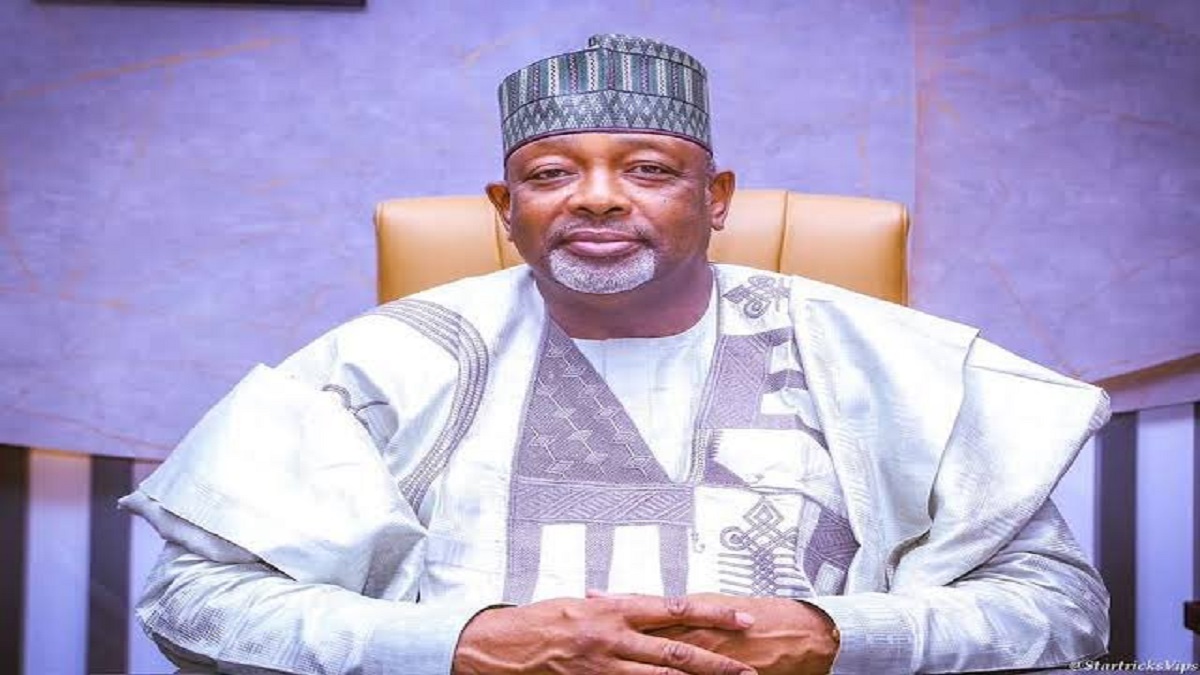
The Minister of Agriculture and Food Security, Sen. Abubakar Kyari, unveiled both documents on Wednesday at a High-Level National Policy Dialogue on Agricultural Mechanisation in Abuja.
The dialogue was themed: “Anchoring National Food Sovereignty through Sustainable Agricultural Mechanisation Policy, Innovation and Strategic Investment.”
Kyari said food security was fundamental to national sovereignty, economic resilience and stability.
He said the Renewed Hope Agenda of President Bola Tinubu had positioned agriculture as an engine of productivity, prosperity and economic transformation.
“Our responsibility as a ministry is to translate that vision into policy architecture, institutional coherence and practical pathways for investment and delivery.
“The opportunity before us is therefore to build an ecosystem in which capital, technology, skills and entrepreneurship converge around one objective: making mechanisation commercially viable and widely accessible,” he said.
Kyari said mechanisation went beyond tractors to include land preparation, planting, irrigation, crop protection, harvesting, processing, storage, logistics and transportation.
He said the government’s goal was to establish a “Mechanisation-as-a-Service” economy that would make technology available to farmers when and where needed.
The minister said the government had commenced the procurement and deployment of 2,000 tractors and more than 9,000 assorted implements and spare parts under the Renewed Hope National Agricultural Mechanisation Programme (RH-NAMP)
He said the investment strategy also provided for a mega tractor assembly plant capable of producing between 2,000 and 4,000 units annually.
Kyari said the plant would reduce import dependence, strengthen domestic industrial capacity and create jobs.
He urged youths and women to participate actively in the mechanisation economy, saying agriculture had become a sector for enterprise, technology and wealth creation.
“Our youths must not stand at the edge of the mechanisation economy. They must own, operate, innovate and lead it,” he said.
Also speaking, Gov. Babagana Zulum of Borno said agricultural mechanisation must go beyond purchasing machines.
“We must build the agriculture of tomorrow. Agriculture must be mechanised and smart,” he said.
Sen. Aliyu Abdullahi, Minister of State for Agriculture and Food Security, said the dialogue marked a defining moment for Nigeria’s agricultural sector.
“Today is a defining moment for Nigerians. We are not here to fail. We are here because we mean business,” he said.
Earlier, Dr Marcus Ogunbiyi, Permanent Secretary, Ministry of Agriculture and Food Security, said mechanisation was critical to food security, productivity and rural prosperity.
He said it would also support youth employment, women’s economic empowerment, private-sector investment and national competitiveness. “We must mechanise. We must modernise. And we must do so at scale,” he said.
Mr Godson Ohuruogu, Chief Executive Officer, TracTrac Mechanisation Services Ltd., said the company had spent six years working to make agricultural mechanisation more accessible and sustainable.
He said the company was committed to ensuring that mechanisation reached smallholder farmers who had historically been excluded.
Ohuruogu said the launch of the policy and investment strategy marked a shift from years of discussions to a structured framework for agricultural mechanisation. #FG Unveils National Agricultural Mechanisation Policy# SEC Urges Investors to Reclaim Unclaimed Funds, Promotes e-dividend Registration
