

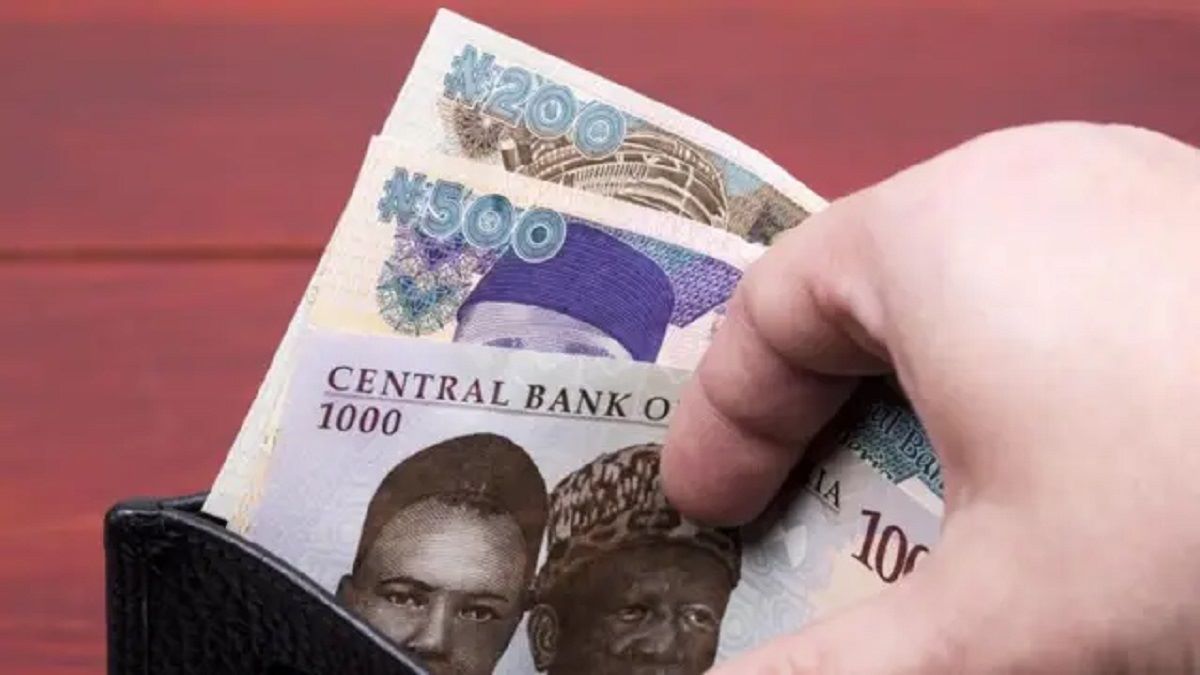
Naira Gains on FX Liquidity Strength, Climbs Against Crosses
The naira opens strong at the Nigerian foreign exchange market (NFEM) and climbs against the US dollar, Euro and British pound on Wednesday following a lighter rally in the previous session.
The local unit is quoted at N1573.6143 against the euro, N1823.0035 against the British pound, and N1360.5519 against the US dollar, as the market anticipates interbank liquidity to remain strong.
On Tuesday, the naira gained against the US dollar at the official window in the absence of significant pressure on liquidity from international FX payments.
Broadstreet analysts told MarketForces Africa in a chat that the forex market has remained relatively liquid and is expected to continue strengthening the exchange rate during the week.
In its daily FX update, the Central Bank of Nigeria (CBN) reported that the spot rate closed at N1360.5519 per US dollar from N1362.8397 the previous day.
The naira has strengthened in the Nigerian foreign exchange market (NFEM) in June, as inflows from exporters, foreign portfolio investors, and non-bank corporates continue to drive FX liquidity.
Trading data released by the authority on Tuesday indicated that transactions were consummated between N1359 and N1363 per dollar during the day, reflecting improved FX market liquidity.
Elsewhere, oil prices rose during early Asian trading on Wednesday following the United States’ execution of what it termed self-defense strikes on Iranian military assets near the Strait of Hormuz, according to the source.
Brent crude increased by 1.03 percent to $92.39 per barrel at the time of reporting, while West Texas Intermediate advanced 0.91 percent to $89.00 per barrel. U.S. Central Command stated the strikes were a response to Iran’s downing of a U.S. Army Apache helicopter in the area.
U.S. forces subsequently targeted Iranian air defense systems, ground control stations, and surveillance radar sites near the Strait.
Iran denied shooting down the helicopter, asserting that the incident was an accident which the U.S. was exploiting as a pretext for an attack. President Trump had pledged to retaliate for the downing of the U.S. helicopter overnight, but later commented in an interview with the Wall Street Journal that it was not a major event because the pilots survived.
Oil prices had already spiked at the beginning of the week when Iran and Israel exchanged missile attacks after Israel struck southern Beirut—an action Tehran had designated as a red line.
Tensions appeared to ease on Tuesday, with both nations finding an off-ramp under substantial pressure from the U.S. and regional allies.
The latest confrontation between the U.S. and Iran has unsettled markets once more, and traders will be watching for indications that the exchange remains limited rather than the beginning of a fresh escalation cycle. Post-Auction Selloffs Trim Nigerian Treasury Bills Yield
