

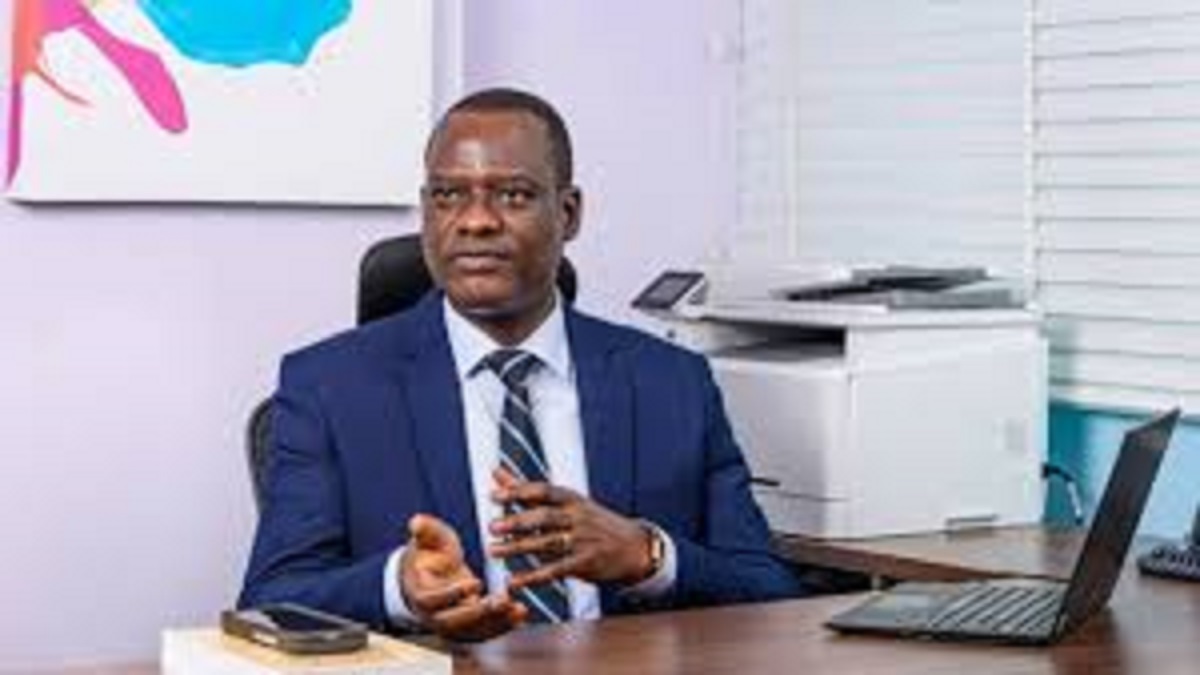
Why FG Won’t Disclose $5bn Abu Dhabi Loan Use – Taiwo Oyedele
The Federal Government says it will not publish a separate breakdown of its $5 billion loan facility with First Abu Dhabi Bank, Finance Minister Taiwo Oyedele disclosed Wednesday in Abuja..
Oyedele said Nigeria has drawn $1.5 billion from the $5bn Total Return Swap facility approved by the National Assembly on March 31, 2026, to fund the 2026 budget and refinance expensive debt, despite concerns raised by the IMF and Fitch Ratings.
Nigeria recently drew $1.5 billion as the first tranche of the $5 billion Total Return Swap programme arranged with the Abu Dhabi lender.
The drawdown, which forms part of funding plans for the 2026 budget, infrastructure and debt refinancing, came even after the International Monetary Fund and Fitch Ratings flagged transparency and sovereign risk concerns around such derivative-based funding structures.
The National Assembly approved the facility on March 31, 2026.
Pressed on whether the government would disclose a line-by-line use of the First Abu Dhabi funds, Oyedele said public spending would continue to be reported through established channels, but the loan would not be treated as an exception.
His words: “We will not publish how we are spending it. We will publish how we spend government money. There is nothing special about that loan.”
He questioned the focus on the transaction, noting that similar disclosure demands were not made for multilateral and market borrowings.
“Nobody has asked us whether we are going to publish the money we took from the World Bank, whether we publish the one from Eurobond, whether we publish the one from Sukuk. Why is this one special?” he said.
Oyedele stressed that due process was followed, with approval secured beyond the Federal Executive Council.
“The loan was approved not only by FEC, it was taken to National Assembly because what some people are doing is they comparing with other countries where they did it under the table. What else can be more public than what you gave to the National Assembly?” he said.
According to him, the government is phasing drawdowns to avoid cost drag on idle cash.
“We are accessing it in phases. You don’t want to take all the money at once because if you don’t spend it at once, you incur cost on the extra amount you have taken,” he said.
The Minister said the commercial logic differs from Nigeria’s traditional Eurobonds, which were priced at double-digit coupons and now trade at yields around 7 to 7.5 percent, with no benefit to the issuer from the secondary rally.
“This First Abu Dhabi Bank transaction is flexible rates. It means if rates go up, we pay more. If rates come down, we benefit more. The all-in rate for this transaction is lower than our existing portfolio,” Oyedele said.
He said the primary goal is to retire more expensive obligations and reduce overall borrowing costs. “The objective is to use it to refinance expensive debt so you can save money,” he said.
Under the terms, Nigeria is required to pledge securities equivalent to about 133 percent of any amount drawn as collateral, a structure the IMF warned could be difficult to track and value in real time, potentially obscuring fiscal liabilities. Fitch also warned it could weaken transparency in debt reporting.
Oyedele said the Ministry of Finance and the Debt Management Office will publish a Frequently Asked Questions document in the coming days to clarify the facility. “There is nothing special about the loan, despite the attention it has received,” he added. #Why FG Won’t Disclose $5bn Abu Dhabi Loan Use – Taiwo Oyedele# Why Some Investors Are Choosing Infrastructure Funds Over FGN Bonds
