

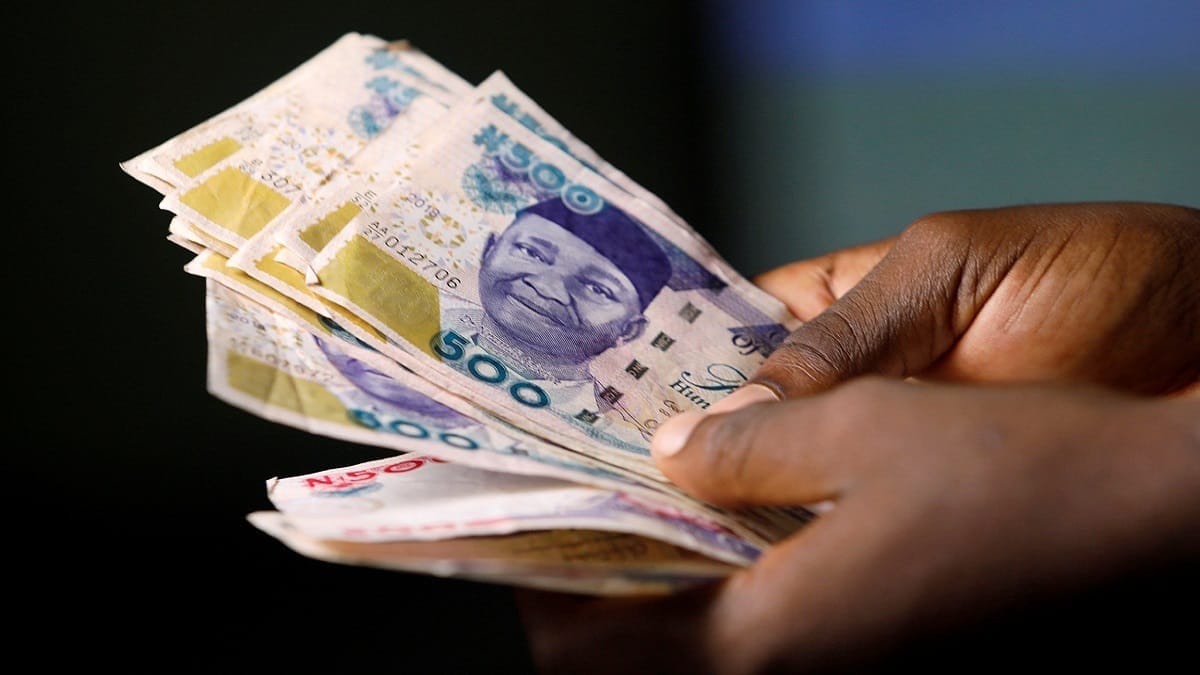
T-Bill Yield Steadies as Banks Seek Higher Rate
In the secondary market, the average yield on Nigerian Treasury bills steadied on Thursday at 5.7% as trading activities ended flattish.
Investors in the local debt capital have started weighing the impact of rising inflation and interest rate hike on naira assets.
Over the the year, Nigeria’s rising inflation rate has impacted the real return on Treasury bills amidst changing market dynamics.
Though, spot rates pricing at the central bank auction signal that demand level remains the main driver on yield direction – Q1 is closing with more then 600 basis points yield decline.
Late last year, Treasury bills yield had printed around 11% in the secondary market before a switch driven by liquidity glut dragged the curve downward.
Intermittently though, the market saw a higher spot rates at the long end of the curve at auction by the CBN in past weeks.
Then, it reversed due to investors’ apathy for short-dated bills – forcing government to resetting rate that favoured 91-day bills thereafter.
The lower rates were offered for 181-day and 364-day bills at last week primary market auction by the apex bank.
Analysts comment that the CBN was able to offer lower spot rates on 182-day and 364-day bills due to large subscription placements or bets by market participants who seek to optimise portfolio returns.
Elsewhere, the average yield expanded by 101 basis points to 4.0% in the OMO bills segment as market participants offloaded the local debt market instruments amidst reduced liquidity in the financial system.
In the money market, short-term benchmark rates spiked near 20% Thursday over sustained pressures on financial system liquidity.
The market experienced liquidity strain despite inflow from matured Federal Government of Nigeria (FGN) bonds. Consequently, Nigerian interbank offered rate climbed against as local lenders with heavy free cash demand higher rates, according to Cowry Asset Management Limited.
Analysts stated that interbank rate climbed across the board for all maturities tracked as gauges of money market stress tightened.
In the money market, short-term benchmark rates, such as the open repo rate (OPR) and the overnight lending rate (OVN), rose to 18.50% (from 18.38%) and 19.00% (from 18.75%), respectively.
This reflects the prevailing market conditions as the policy rate was increased to 18.00% by the monetary policy committee (MPC) of the Central Bank of Nigeria (CBN). The market receives more than N23 billion as an inflow from FGN bonds coupon payments.
The liquidity level in the market has been draining following high subscriptions seen on government instruments in the first quarter of 2023. #T-Bill Yield Steadies as Banks Seek Higher Rate CBN Devalues Naira 12.95% despite Rising Foreign Reserves
