

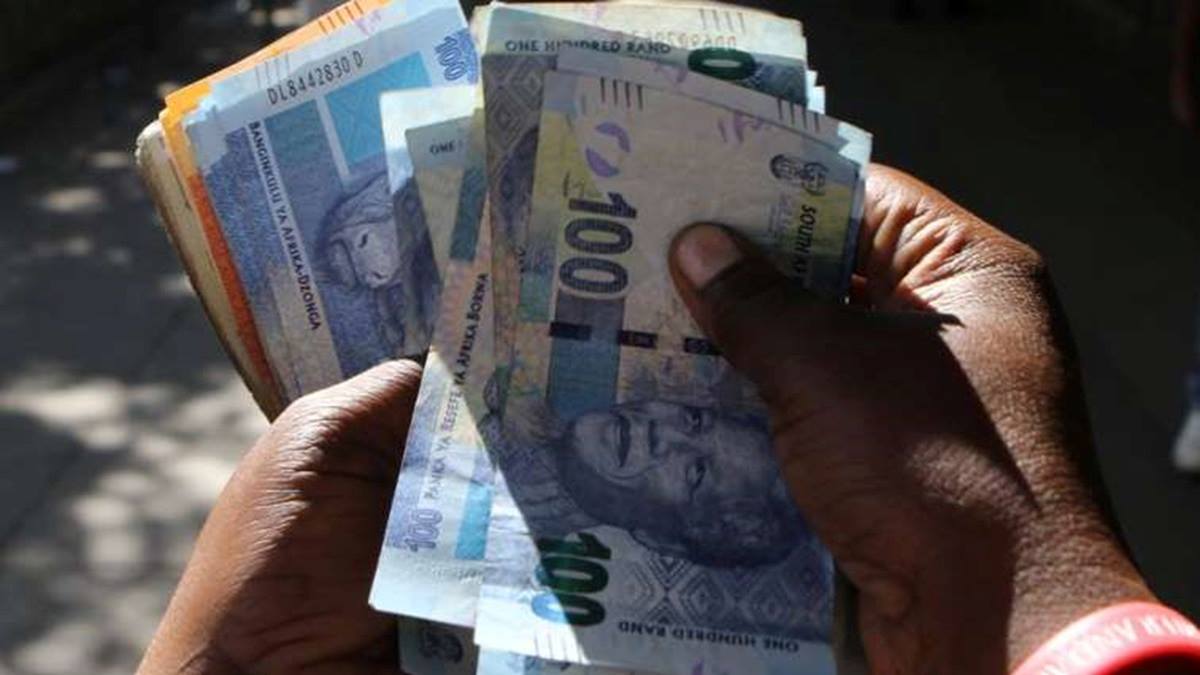
South African Rand Trades Flat after 0.5% Q1 GDP Growth
The South African rand trades flat on Wednesday after the country reported 0.5% gross domestic product (GDP) growth in the first quarter of 2026.
The local unit is trading range-bound, drawing support from Tuesday’s stabilisation in global risk sentiment after a Middle East-driven sell-off, alongside a pullback in South African bond yields.
The rand is quoted at R16.56 to the US dollar, R22.15 to the British pound and R19.10 to the euro on Wednesday, First National Bank (FNB) said in its morning brief.
The renewed geopolitical escalation pushed global oil prices higher on Wednesday. Oil prices surged overnight after the US launched fresh airstrikes against Iran in retaliation for the downing of a US Army helicopter near the Strait of Hormuz.
Gains pared after the US announced the end of its brief retaliatory campaign, though the market remains on edge as Iran pledged to respond and warned Gulf states against allowing their territory to be used for strikes.
Brent crude oil is hovering at $91.94/barrel while US WTI is trading around $88 per barrel. At $4,174 per ounce, the yellow metal traded lower on Tuesday and remains lower this morning.
The pullback is driven by rising bets on more aggressive Fed tightening ahead of today’s US May CPI print, which is expected to show inflation accelerated.
South Africa reported 0.5% quarter-on-quarter GDP growth in Q1 2026, a modest acceleration from 0.4% in the prior quarter and ahead of both internal and consensus expectations.
This marks the sixth consecutive quarter of expansion, indicating resilience despite a challenging macro backdrop.
On an annual basis, GDP growth strengthened to 1.9% year-on-year (y/y), supported by a rebound in agriculture, alongside improved momentum in mining and financial services.
From a production perspective, growth was largely driven by finance, real estate and business services, which expanded 0.9% q/q and contributed meaningfully to overall output.
Agriculture rebounded strongly following prior weakness, while mining also gained traction. However, domestic demand remains subdued.
Household consumption growth slowed sharply to just 0.1% q/q, while fixed investment contracted by 1.1% q/q, driven by a pullback in private sector spending.
On the external side, a decline in imports alongside modest export growth meant that net exports provided a significant boost to GDP, effectively anchoring the quarterly outcome. Lafarge Africa Slumps by 10% as Investors Exit Positions
