

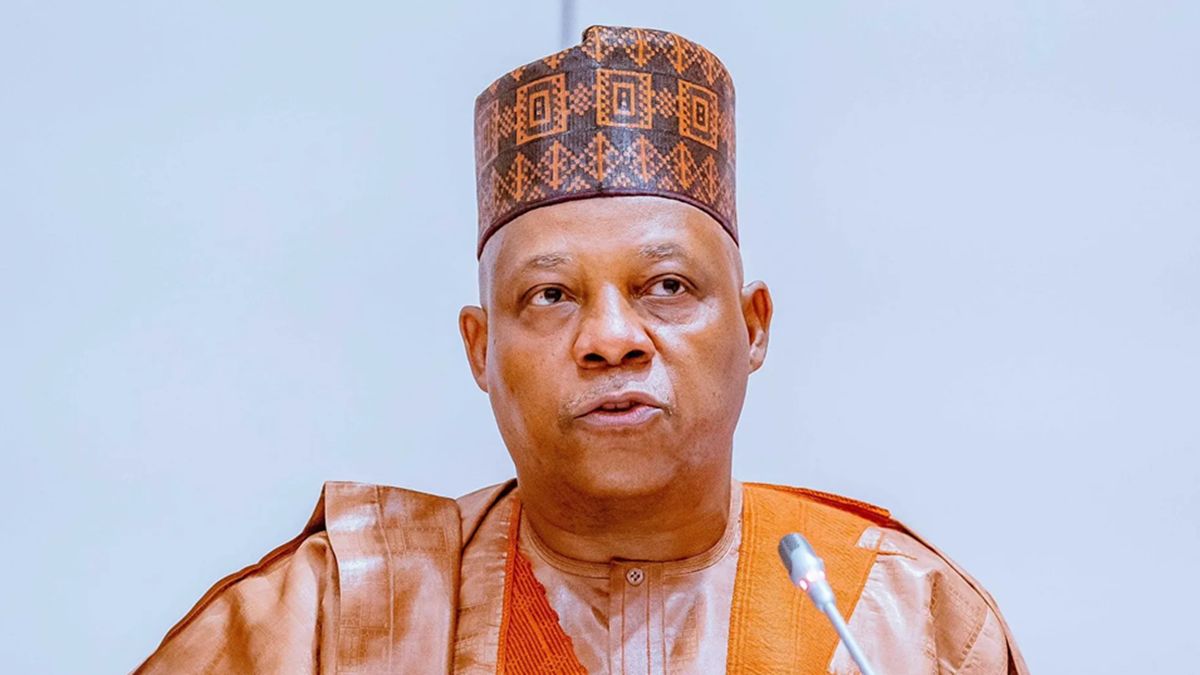
Shettima Tasks African Leaders on Industrialisation, Regional Trade Cooperation
Vice-President Kashim Shettima has urged African leaders to prioritise industrialisation, local value addition and regional cooperation to strengthen the continent’s position in global trade.
Shettima, represented by Mr Tope Fasua, Special Adviser to the President on Economic Affairs in the Office of the Vice President made the call at a conference in Abuja on Monday.
The conference focused on Africa and the Geoeconomics of African States, Integration, Power and Structural Transformation.
He said geopolitical competition, strategic interests, technological advancement and the pursuit of economic power increasingly shape global trade.
According to him, competition for critical minerals, energy security, semiconductors and artificial intelligence has transformed international commerce into an instrument of economic statecraft.
Shettima said Africa must develop the capacity to process, transform and manufacture products from its abundant natural resources instead of exporting raw materials.
He lamented that the continent continued to export commodities at low prices while importing finished products at significantly higher costs.
Citing cocoa and crude oil, he noted that Africa had historically exported the commodities while importing chocolate and refined petroleum products.
He, however, acknowledged developments in Nigeria’s refining sector, particularly the emergence of Dangote Refinery and other refineries.
The vice-president said the Federal Government was also supporting lithium processing factories in Nasarawa and Kaduna states to promote local value addition.
He described Africa’s dependence on raw material exports as a structural disadvantage requiring deliberate industrial policies to overcome.
Shettima said the African Continental Free Trade Area (AfCFTA) offered opportunities to create a larger integrated market, attract investments and strengthen the continent’s bargaining power.
He, however, warned that the agreement’s success depended on addressing border delays, fragmented standards, poor transportation networks and inadequate electricity supply.
“A free trade area that is difficult to cross is free only on paper,” he said. He urged African governments to develop regional production networks and invest in agriculture, pharmaceuticals, petrochemicals, automobiles, critical minerals and digital services.
Shettima also called for increased investment in infrastructure, long-term financing, research, technology and skills development to support competitive industries.
Former President Goodluck Jonathan called for stronger economic cooperation among African countries, describing regional integration as critical to translating the continent’s economic potential into sustainable prosperity.
Jonathan, represented by Prof. William Kennedy, Executive Director, New York State Writers Institute, said Africa needed stronger domestic economies and a united approach to global economic negotiations.
He described AfCFTA as a historic initiative but stressed that its success required effective institutions, infrastructure, financing and political commitment.
Jonathan urged African countries to invest in agro-processing, pharmaceuticals, automotive industries, fertilisers, machinery and renewable energy equipment to strengthen regional value chains.
He also called for investments in education, technology and entrepreneurship, while urging governments to address insecurity and ensure women, young people and small businesses benefit from continental integration. #Shettima Tasks African Leaders on Industrialisation, Regional Trade Cooperation# Tinubu’s second term will be era of harvest – Shettima
