

Oyedele Defends Nigeria’s $21.7 Billion Borrowing Proposal
The Federal Government said the $21.7 billion borrowing proposal President Bola Tinubu transmitted to the National Assembly is an investment in assets, not for spending.
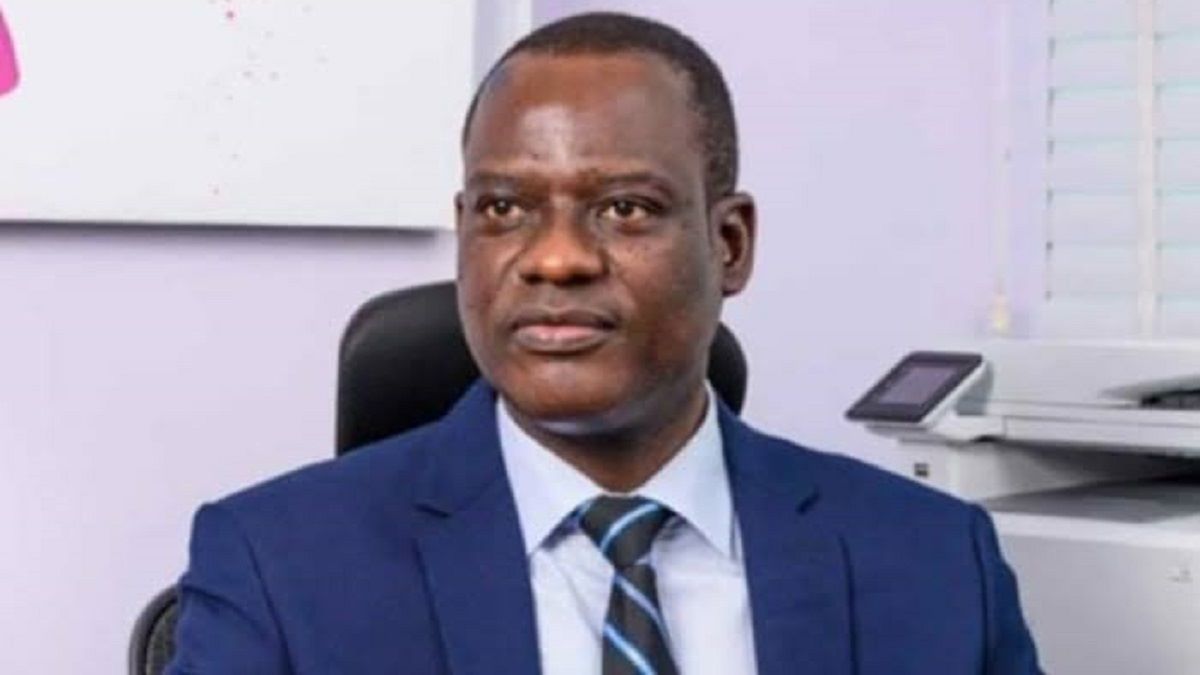
Minister of Finance and Coordinating Minister of the Economy, Mr Taiwo Oyedele, stated this shortly after the Federal Executive Council Meeting at the Presidential Villa in Abuja.
Oyedele, who addressed public commentary regarding the draft external borrowing plan submitted to the National Assembly, clarified that the proposed $21.7 billion plan represented a multi-year investment plan spanning roughly five years rather than an immediate drawdown
He said $10.6 billion was slated for critical transport links, including the Sokoto–Badagry Highway, Lagos–Calabar Coastal Highway, and the Kano–Kaduna Metro Rail.
He said over $7.9 billion of the loan will come from multilateral and bilateral development partners (led by $5 billion from the World Bank) at an average interest rate of about 2.1 per cent.
Out of the overall package, Oyedele said $3.3 billion is earmarked directly for state government projects, with an additional $1.45 billion set aside for the Federal Capital Territory (FCT).
” Borrowing to consume is harmful, but borrowing ₦1 to build transformative assets worth more than ₦1 creates net positive wealth for the country,” Oyedele argued, comparing the government’s approach to strategic corporate financing.
Reiterating that macroeconomic recovery must translate into microeconomic relief, the minister highlighted several direct social intervention milestones.
He cited that a total sum of ₦372.6 billion was disbursed under the Nigerian Education Loan Fund (NELFUND) to over 1.5 million students; over ₦600 billion was distributed to 10 million households, with expansion plans targeting 15 million vulnerable families; and single-digit interest loans were provided to over 800,000 MSMEs through the Bank of Industry (BOI).
Speaking further, the finance minister affirmed that the Federal Executive Council fully adopted the 90-day execution framework established by the National Economic Council (NEC) and pledged strict fiscal discipline.
Meanwhile, the Federal Executive Council approved 10 memos submitted by Oyedele.
Highlighting four major approvals among the 10, he said the FEC approved a €155.9 million credit facility arranged by Deutsche Bank to build five new 132/33kV substations under Phase 1 of the Presidential Power Initiative (PPI), aiming to stabilise grid supply and lower energy costs.
FEC also approved a $970 million syndicated 10-year facility, led by Standard Chartered Bank and the Africa Finance Corporation (AFC), for rolling stock on the Kano–Maradi rail line to boost regional trade and lower freight costs.
Oyedele said the FEC also approved a €76.8 million credit from the ECOWAS Bank for Investment and Development (EBID) for Bauchi State’s urban-rural road networks and farm-to-market transit corridors.
On border security and trade facilitation, Oyedele said the FEC approved direct investment in non-intrusive cargo inspection scanners for the Nigeria Customs Service to accelerate port clearance, combat smuggling, and stop illicit arms trafficking. Dangote Cement Gains N3.896trn in 2 Days in Nigerian Market
