

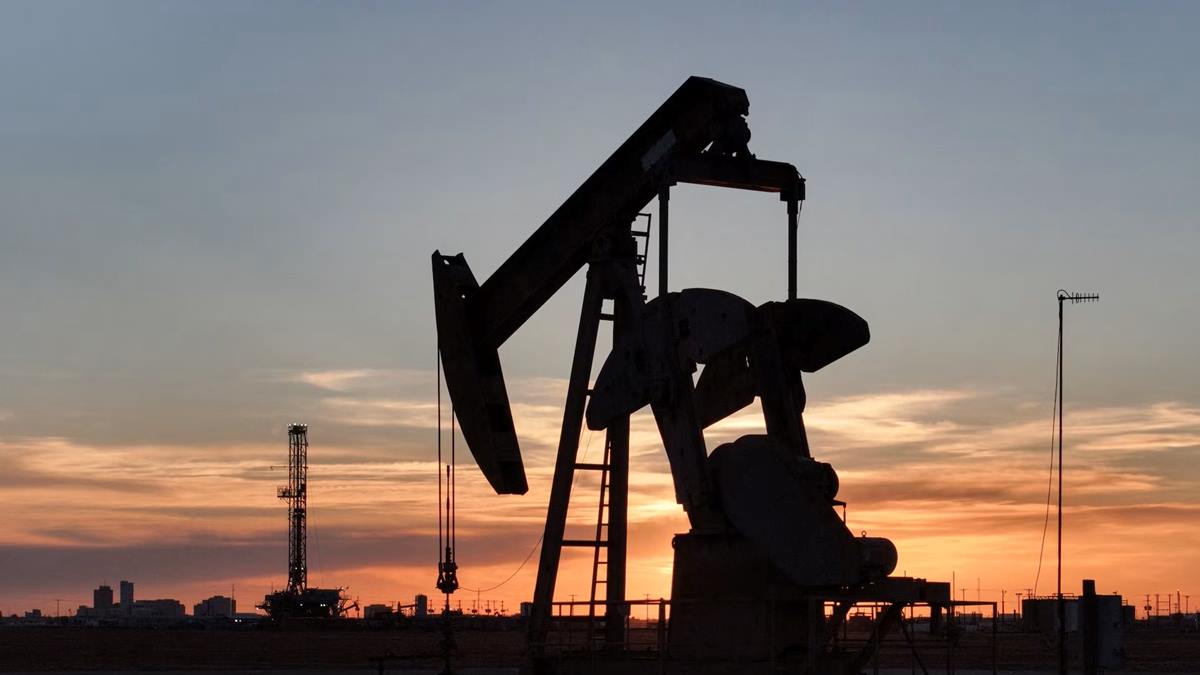
Oil Prices Surge, Brent Tops $105 as Iraq Production Sinks
Oil prices spiked on Monday due to escalating conflict in the Middle East and threats to energy shipments through the Strait of Hormuz, raising fears of potential supply disruptions.
Output in Irad has plunged sharply, raising supply risk and driving a surge in prices across global commodities markets. The international benchmark, Brent crude, was trading at $105.63 per barrel, a 14.8% increase from the previous close of $92.02.
Meanwhile, the U.S. benchmark, West Texas Intermediate (WTI), rose by 14.5%, reaching $101.81 per barrel, compared to $88.88 in the prior session. During the early trading session, Brent even peaked at $114.30, marking its highest level since June 2022.
This sharp increase came after last week’s rally, where Brent gained about 28%, signifying its quickest weekly rise since early April 2020, when markets were unsettled by the onset of the COVID-19 pandemic.
Analysts noted that Brent last reached similar levels at the beginning of the Russia-Ukraine war in 2022. The escalating tensions in the Middle East, combined with rising risks to energy shipments through the Strait of Hormuz—a vital conduit for global oil trade—have intensified worries about potential supply interruptions.
U.S. President Donald Trump, in an interview with The Times of Israel, refrained from providing a timeline for ending the attacks on Iran following Mojtaba Khamenei’s selection as the new supreme leader.
Trump stated that any decision to conclude the U.S.-Israeli conflict with Iran would be made in collaboration with Israeli Prime Minister Benjamin Netanyahu.
“I think it’s mutual…a little bit. We’ve been talking. I’ll make a decision at the right time, but everything’s going to be taken into account,” Trump commented when asked if Netanyahu would influence the decision.
White House Press Secretary Karoline Leavitt indicated on Friday that Washington expects the conflict to last between four to six weeks. In Iraq, oil production has plummeted sharply due to the U.S.-Israeli attacks on Iran.
An Iraqi official reported that production has dropped by nearly 60%, now at about 1.3 million barrels per day, down from approximately 3.3 million before the outbreak of war. Kazem Abdul Hassan Karim, assistant director general at the Iraqi Oil Ministry’s Department of Fields and Licensing Affairs, stated this in a recent announcement.
A drone attack involving two unmanned aircraft targeted the Burjesia oil area southwest of Basra province in southern Iraq, causing material damage to warehouses linked to a foreign logistics services company.
Fortunately, the attack did not result in direct damage to any oil facilities or production fields. Iraq had previously announced plans to reduce crude output after experiencing a decline in exports following the closure of the Strait of Hormuz.
Additionally, Saudi air defences intercepted and destroyed a drone targeting the Shaybah oilfield in the Rub’ al-Khali (Empty Quarter) desert in southeastern Saudi Arabia, according to the Defence Ministry. A spokesman noted that two drones were also shot down north of the capital, Riyadh, after they attempted to target the area.
Iranian Parliament Speaker Mohammad Bagher Qalibaf warned on Sunday that ongoing U.S.-Israeli attacks could lead to a halt in oil production and exports.
“Trump said oil prices would not rise much, but they did, and now he claims a correction will happen soon,” Qalibaf said on the social media platform X. “If the war continues in this way, there will be no path left for selling oil or producing it,” he cautioned. Iran Says Strait of Hormuz Closed, Warns it’ll Attack Ships Trying to Pass
