

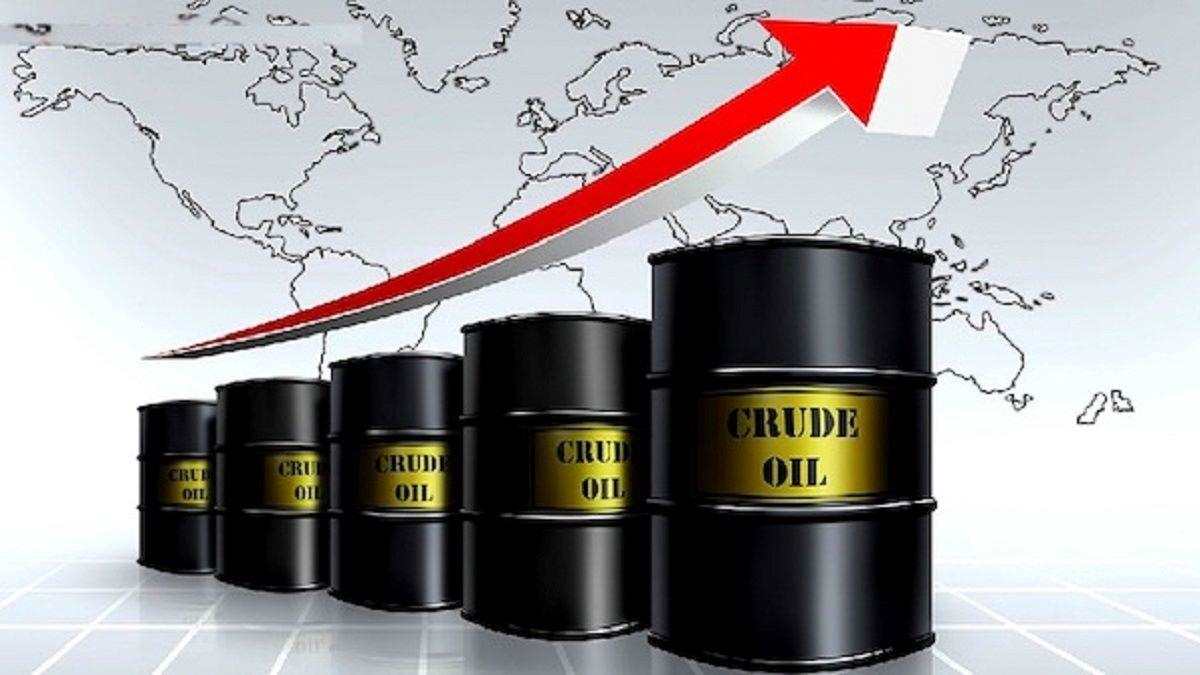
Oil Prices Rise over Vessel Attacks, Ukraine Strikes Russia
Oil prices jump on Tuesday as missile attacks on commercial vessels in the Strait of Hormuz and renewed Ukrainian strikes on Russian energy infrastructure heightened concerns over potential supply disruptions
International benchmark Brent crude traded at $72.75 per barrel, up around 1.05% from the previous close of $71.99. US benchmark West Texas Intermediate (WTI) rose about 0.8% to $69.32 per barrel from $68.75 in the previous session.
Market sentiment was supported by reports that Iran’s Islamic Revolutionary Guard Corps (IRGC) fired missiles at commercial vessels transiting the Strait of Hormuz late Monday.
According to Axios, citing two US officials, Washington is likely to retaliate with strikes against Iranian targets following the attacks, fueling fears of a broader escalation in the region.
Iran’s state broadcaster said on X, citing sources, that a Qatari oil tanker attempting to transit the Omani route in the Strait of Hormuz with US Navy support was targeted after allegedly ignoring repeated warnings.
The developments renewed fears of disruptions to energy flows from the Middle East at a time when markets had been anticipating further stabilisation in the region. Traders also monitored reports suggesting that the US could respond with strikes against Iranian targets, raising the risk of a broader escalation that could threaten regional oil supplies.
Additional support came from Russia, where officials reported Ukrainian drone attacks targeting energy infrastructure in the western Siberian region of Omsk.
Ukrainian authorities later claimed responsibility for striking the Omsk Oil Refinery, one of Russia’s largest refining facilities, saying the attack hit an oil-processing unit with a capacity of 8.4 million tons per year.
The strike revived concerns about Russia’s fuel production after Ukraine said it had targeted numerous Russian refineries and fuel terminals in recent months. Kyiv claims its attacks have affected more than 30% of Russia’s refining capacity, raising the possibility of tighter fuel supplies and additional pressure on energy markets.
Together, the incidents added a fresh geopolitical risk premium to oil prices, with investors closely watching developments in both the Middle East and Russia for signs of further disruptions to global energy supplies.
However, gains were capped by expectations of higher supply after the Organisation of the Petroleum Exporting Countries (OPEC) and its allies, known as OPEC+, agreed on Sunday to increase their collective production target by 188,000 barrels per day in August, extending the gradual unwinding of voluntary output cuts.
Saudi Arabia, Russia, Iraq, Kuwait, Kazakhstan, Algeria and Oman agreed to implement the increase as part of the additional voluntary adjustments first announced in April 2023.
The group also reiterated its commitment to maintaining market stability and said it would retain the flexibility to increase, pause or reverse the phase-out of production cuts depending on market conditions.
The decision reinforced expectations of additional crude supplies entering the market in the coming months, limiting upward pressure on prices.
Meanwhile, investors continued to assess the outlook for US monetary policy, with expectations that the Federal Reserve (Fed) could deliver one additional rate hike before the end of the year remaining largely intact.
Analysts said investors are likely to look for further clues on the Fed’s policy outlook in the minutes of the central bank’s latest meeting, due to be released on Wednesday.
Moreover, market attention has turned to the US Energy Information Administration’s (EIA) Short-Term Energy Outlook (STEO) report for July, while investors continue to monitor shipping conditions in the Strait of Hormuz and assess how quickly OPEC+’s planned production increase will be reflected in global oil markets. Oil Rallies as Markets Balance Demand, Supply Equation
