

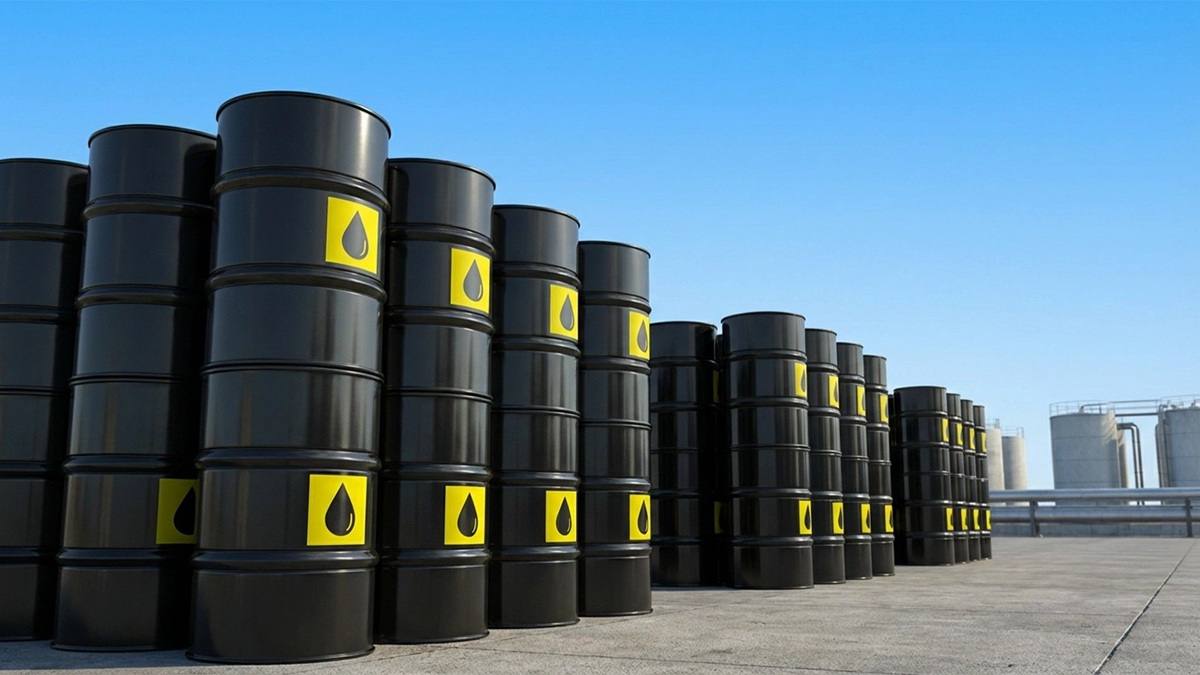
Oil Prices Fall on US Preference for Diplomatic Solution with Iran
Oil prices fell about 3% in global markets on Monday amid reports that US President Donald Trump is prioritising diplomatic efforts with Iran.
International benchmark Brent crude futures for January delivery fell about 2.97% to $110.05 a barrel, down from the previous close of $113.43.
US benchmark West Texas Intermediate (WTI) crude futures for December delivery fell 3.28% to $100.71 a barrel, down from $104.12 at the previous close.
Israeli Prime Minister Benjamin Netanyahu urged Trump to resume military strikes against Iran immediately after the Nov. 3 midterm elections, according to US-based news platform Axios,
Trump, however, reportedly favours allowing ongoing diplomatic efforts more time to produce results. Speaking to reporters over the weekend, Trump said talks with Iran were progressing well and that he was in “no great hurry” to resume strikes.
Earlier, Trump suggested attacks could resume after the midterm elections.
Trump’s preference for a diplomatic solution is strengthening expectations that Middle East tensions could ease and risks to regional oil supplies could diminish, putting downward pressure on prices.
Reports that US Vice President JD Vance had sent a letter to Mohsen Rezaei, secretary of Iran’s Supreme National Security Council, seeking to restart negotiations have also raised expectations of diplomatic progress.
The US-based Wall Street Journal, citing US officials, reported that Vance had sent Rezaei a letter at Trump’s direction to resume peace negotiations. Trump denied the report, saying Vance had only helped facilitate the delivery of medical supplies needed by Iran.
Iran’s semi-official Fars News Agency, citing an Iranian security source, also reported that Tehran had not responded to the letter and that claims about its contents were inaccurate.
In addition, remarks by Ahmad Bakhshayesh Ardestani, a member of the parliament’s Security Commission, suggesting that the United States and Iran could hold direct talks in Qatar or Türkiye, have helped ease supply concerns in the markets.
According to Iranian media reports, Ardestani said negotiations were the only solution under the current circumstances and that dialogue should end wars.
He added that direct talks between the two countries were possible. Expectations that diplomatic contacts could resume are easing concerns about the potential impact of Middle East conflicts on oil shipments.
Meanwhile, a decision by seven OPEC+ members, comprising the Organisation of the Petroleum Exporting Countries (OPEC) and several non-OPEC producers, not to implement an additional production increase in December is limiting the decline in prices.
The seven OPEC+ members agreed at a meeting Sunday to maintain their September production levels in December as well.
Accordingly, Saudi Arabia’s crude oil production target for October will stand at 10.47 million barrels per day, while Russia’s target will be 9.94 million barrels per day, Iraq’s 4.43 million barrels per day,
Kuwait’s 2.67 million barrels per day, Kazakhstan’s 1.62 million barrels per day, Algeria’s 1 million barrels per day and Oman’s 841,000 barrels per day. The countries will continue holding monthly meetings to assess market conditions, with their next meeting scheduled for Nov. 29.
