

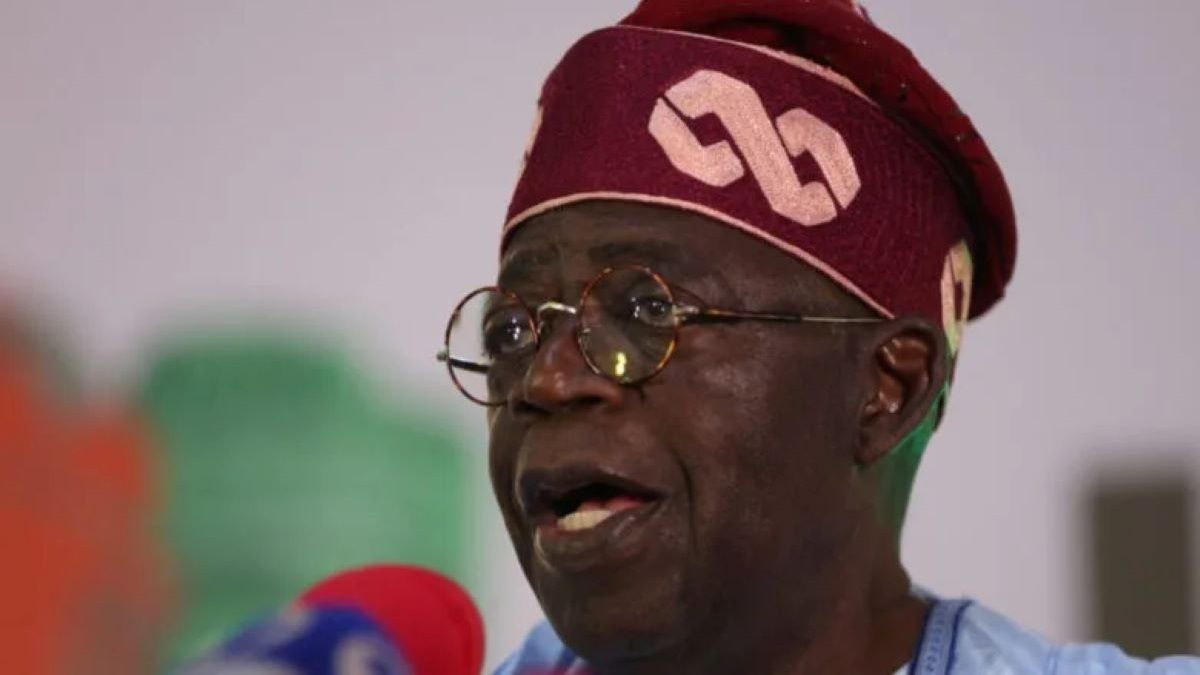
Nigeria’s Half-Year Budget Performance Raises Fiscal Concerns
Nigeria’s budget for the first half period was roughened by a wide gap between government revenue and spending, raising concerns over the country’s leadership and economic quality.
Despite subsidy removal, the government has accelerated borrowings due to revenue non-performance. Bola Tinubu led administration has extended the path walked by his predecessor late Mohammadu Buhari in terms of national borrowings.
Surprisingly, the government has been taunting its achievement to increase a significant increase in revenue collection by its agencies including Federal Inland Revenue Service, the Customs among others.
A slew of analysts queried that if government cannot get spending and revenue plans correctly, and follow through its own projection, how has the authority been able to achieve accurate contract value for projects.
Nigeria’s economic reforms have been one side at best, with huge governance costs untouched and executive unending borrowings to spend.
The 2025 approved budget set a clear half-year benchmark, but actual performance by mid-year shows a widening disconnect between plans and reality, Cowry Asset Limited said in a commentary note.
Nigeria budgeted at N48.97 trillion as revenue for the year, translating to a half-year target of N24.48 trillion. Actual collections at mid-year stood at about N20.44 trillion.
That is a shortfall of roughly N4 trillion against the half-year expectation, a gap that immediately frames the rest of the fiscal story. Independent revenue was expected to deliver N7.99 trillion for the year, with a half-year benchmark of N3.99 trillion.
Actual performance came in at approximately N3.58 trillion as of the first half of the year.
“While this is not a collapse, it underlines a recurring problem: independent revenue is still underperforming relative to its strategic importance in the budget.
Oil revenue, budgeted at N6.08 trillion annually and N3.04 trillion for half-year, delivered about N2.94 trillion. That is closer to target, but still marginally behind, and offers little buffer for the broader revenue weakness. Expenditure tells a very different story.
Total expenditure was approved at N34.35 trillion, with a half-year benchmark of N17.18 trillion. Actual spending by mid-year reached approximately N16.22 trillion. On the surface, this looks controlled, but the composition of that spending raises red flags.
Recurrent non-debt expenditure alone was budgeted at N13.99 trillion for the year, with a half-year allocation of N6.99 trillion. Actual spending hit about N6.23 trillion, showing that recurrent costs are moving almost automatically toward their ceiling.
Personnel costs illustrate this rigidity clearly. With an annual budget of N4.08 trillion and a half-year benchmark of N2.04 trillion, actual spending reached about N1.90 trillion by mid-year. Pension costs followed the same pattern, posting N1.42 trillion against a half-year budget of N1.72 trillion.
These figures confirm that salaries and pensions continue to dominate fiscal space, leaving little room for adjustment when revenues fall short.
Debt service remains the most troubling pressure point. Budgeted at N8.25 trillion for the year, with a half-year target of N4.12 trillion, actual debt service payments already climbed to about N4.73 trillion by mid-year.
This means debt service has exceeded its half-year benchmark, consuming more revenue than planned and reinforcing the uncomfortable reality that debt obligations are growing faster than the revenue base.
Capital expenditure shows underperformance, but not necessarily discipline. The annual capital budget of N8.32 trillion implied a half-year benchmark of N4.16 trillion.
Actual capital releases stood at roughly N3.28 trillion. The gap reflects slow execution rather than savings, pushing economic impact into the second half and raising the risk of rushed spending later in the year.
Financing completes the picture. Total financing was projected at N9.46 trillion for the year, with N4.73 trillion expected by mid-year. Actual financing reached about N4.85 trillion, slightly above target.
In effect, borrowing is already compensating for revenue weakness and elevated debt service costs. Analysts at Cowry Asset Limited said the half-year numbers expose a budget running on momentum rather than balance.
“Revenues are lagging by trillions, recurrent spending is moving as expected regardless of performance, debt service is overrunning its benchmark, and financing is stepping in earlier than planned.
“Unless revenue collection accelerates sharply in the second half and spending discipline tightens, the budget risks closing the year leaning even more heavily on borrowing, with very little room left to pretend this is temporary”, the investment firm said. First Holdco Delivers 62% YTD Return, Downgrades to Sell
