

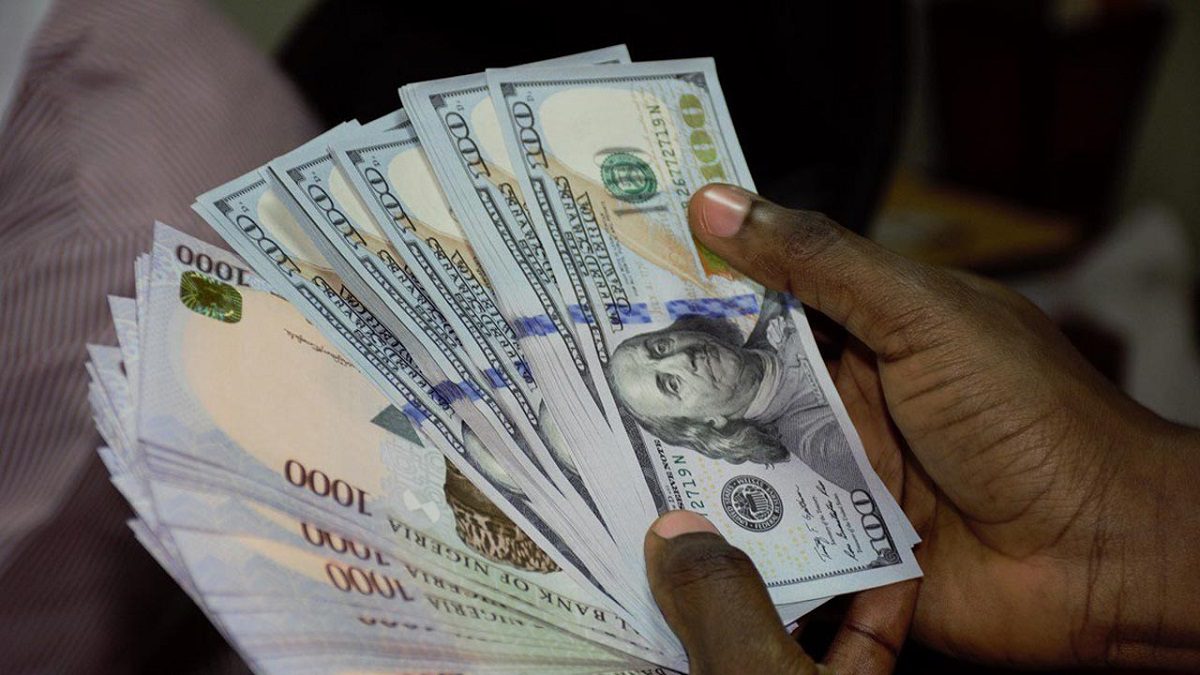
Naira Sinks to New Low as FX Pressure Worsens
The Nigerian local currency, the naira, hit a fresh low on Wednesday as Investors and Exporters’ foreign exchange (FX) market amidst rising demand for foreign currency. It has maintained resistance below N450 but pressures forced a new subtle devaluation in the market.
Trading data shows that the Naira lost 0.94% against the United States (US) dollar, decreasing to N450.58 from N446.38, breaking the resistance level as earlier predicted by MarketForces Africa analysts. >>>Angola Beats Nigeria as Largest Crude Exporter
A similar scenario occurred in the black market where the local currency was traded openly for end users. Currency traders in some selected Bureau de Change (BDCs) told MarketForces Africa the exchange rate will likely worsen.
This expectation was anchored on the fact that Nigerians have begun to demand more dollars, Euros and Pounds sterling for year-end spending plans, holidays and for other invincible requests the local banks are unable to meet.
This is also expected to be worse given the demand for FX to finance certain election spending. At the parallel market, the naira declined from N745 to N746 per greenback. Analysts maintain that there is no respite for the local currency which has plunged strongly in 2022.
Up till the end of the first half, the naira traded at N415 at the investors’ window before the local currency spiralled downward in the FX market. A sloppy exchange rate has impacted costs of production across key industries and companies are recording FX losses in their books due to self-repricing at the FX market, while foreign reserves drop.
The official figure from the Central Bank of Nigeria shows that gross external reserves has now declined below $37 billion as receipt from oil exports remain unimpressive. Though, volume production improve, prices of crude oil have come under pressure lately due to an economic quagmire in the top oil-consuming nation – especially China.
Last week, Nigeria’s autonomous exchange fixing (NAFEX) market recorded an inflow of $494 million. Of the sum, CBN accounted for 1.2%, FPIs accounted for 0.4%, non-bank corporates accounted for 28.9%, exporters accounted for 68.4%, and others accounted for 1.1%.
# Naira Sinks to New Low as FX Pressure Worsens
