

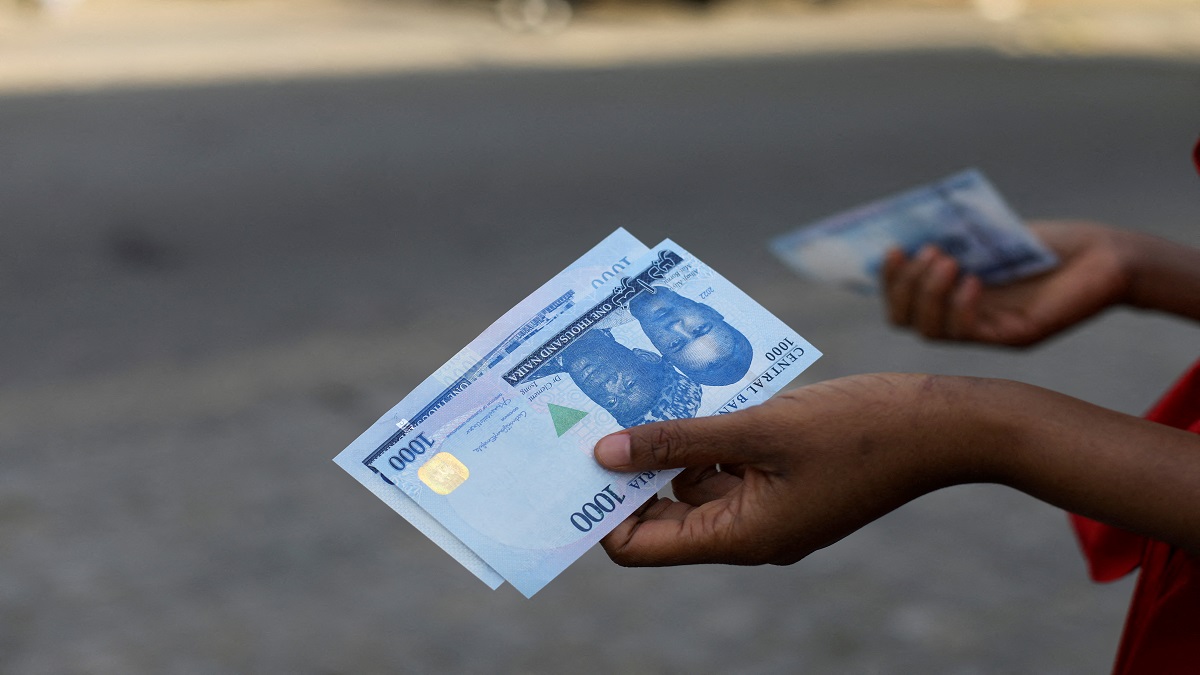
Naira Gains N16 as FX Interventions Crack Foreign Reserves
The Nigerian local currency, the naira, gained N16 week on week against the US dollar to close at N1531.20 on Friday in the official market. This happened following consistent but less aggressive FX sales to authorised dealer banks to boost US dollar volume available to meet increased demand.
The Nigerian Foreign Exchange Market (NFEM) exhibited stable liquidity throughout the week, although sustained demand initially pushed prices higher, AIICO Capital Limited said. FX traders reported that transactions fluctuated within ranges of N1,480.00 to N1,570.00 earlier in the week, narrowing to N1,548.00 to N1,558.00 as liquidity improved.
By Friday, increased supply from foreign portfolio investors (FPIs) strengthened the naira, with trades ranging between N1,515.00 and N1,550, AIICO Capital Limited explained. Analysts noted that the Central Bank’s active participation in the forex market further supported the local currency’s strong recovery.
In the parallel market, the naira also gained N15 to close at N1,655. Based on the latest exchange rate movement, the spread between the two markets widened to 8.09% from 7.91% the previous week, according to TrustBanc Financial Group Limited.
The investment firm hinted that the CBN intervened for the eighth consecutive session last week, selling $52 million between the rates of ₦1,549.55/$1 and ₦1,553.00/$1, bringing total FX sales for the week to $113.85 million. In the forwards market, the naira rates decreased across contracts. The 1-month FX forward contract declined by -0.1% to N1,591.41 per dollar.
Also, the 3-month FX contract declined by -0.8% to N1,667.93 while the 6-month forward contract fell by -1.6% to N1,779.33. The 1-year forward contract dipped by -1.4% to N1,962.32 per dollar.
The latest data from the CBN showed that Nigeria’s foreign reserves fell below $40 billion. External reserves declined to $39.99 billion due to pressures from a series of foreign payments.
“In the short term, while we expect FX demand pressure to remain intact, we believe sustained CBN intervention and increased transparency and market efficiency from the adoption of the Electronic Foreign Exchange Matching System (EFEMS) will support naira stability,” Cordros Capital Limited said.
Elsewhere, Oil prices rose slightly but recorded a weekly decline, ending four weeks of gains following U.S. President Donald Trump’s announcement to enhance domestic production and his call for OPEC to lower crude prices.
Brent crude reached approximately $78.50 per barrel, while West Texas Intermediate (WTI) was around $74.66. Similarly, gold prices climbed over 1%, nearing the all-time high set in October, as a weakening dollar—impacted by Trump’s push for lower interest rates and tariff uncertainties—contributed to its fourth consecutive weekly gain.
The prospect of U.S. sanctions on Russia and Iran, key oil producers, could undermine President Trump’s goal of reducing energy costs by disrupting oil supply stability and potentially increasing prices, analysts at AIICO Capital Limited stated. Naira Plunges as Banks Resume FX Sales to Customers
