

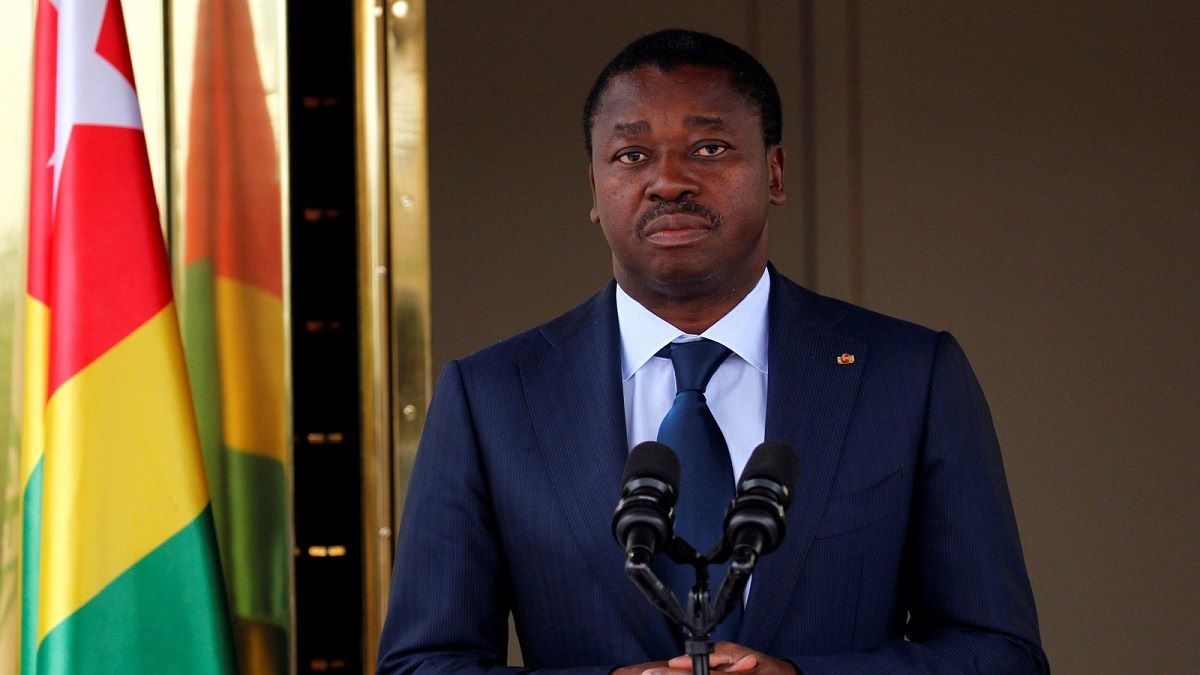
Moody’s Upgrades Togo’s Outlook to Stable from Negative
Moody’s Ratings (Moody’s) has changed the outlook on the Government of Togo to stable from negative, and affirmed the B3 domestic and foreign currency long-term issuer ratings.
In a rating note, Moody’s said the outlook change reflects its view that the risk of fiscal slippages has lessened, amid robust gains in revenue collection supporting the deficit reduction in 2023, and the approval of a new IMF programme in March 2024 which will anchor fiscal policy effectiveness over the next few years.
Notwithstanding the still-tight financing conditions on the West African Economic and Monetary Union (WAEMU) regional bond market, Moody’s analysts’ view that liquidity risks have also eased from enhanced access to concessional financing combined with stronger demand for Togo’s issuances.
The rating note hints that Togo’s sound debt structure, dominated by domestic debt and concessional external debt also attenuates fiscal and liquidity risks.
The B3 rating affirmation reflects Togo’s weak credit fundamentals stemming from low wealth levels and a small-scale economy, low institutional capacity as well as a high government debt burden amid large fiscal imbalances. Togo’s membership within WAEMU eases, but does not fully mitigate, these credit constraints.
Togo’s local currency country ceiling remains unchanged at Ba3, maintaining the existing gap with the sovereign rating. The three-notch gap reflects Togo’s WAEMU membership, which mitigates the risks associated with Togo’s weak institutions and external imbalances.
The foreign currency country ceiling also remains unchanged at B1, one notch below the local currency country ceiling. This reflects limited transfer and convertibility risks, given the French Treasury’s guarantee of the CFA franc peg to the euro, as part of the WAEMU membership.
The outlook change to stable acknowledges the risks of further fiscal slippage have not materialized since we assigned the negative outlook. The Togolese government has laid out a clear path towards a reduction of its deficit, in agreement with the IMF, with the objective to put government debt on a downward trajectory starting in 2025.
“We view that the Extended Credit Facility (ECF) agreement with the IMF, approved in March 2024, will provide an effective anchor to the government’s fiscal policy effectiveness, lowering the risks of sudden deterioration in the future”.
The government managed to reduce its deficit in line with its budget targets in 2023 to 6.7% of GDP, from 8.3% in 2022. A robust 2.1 percentage point increase in revenue-to-GDP, including a 0.8 pp increase in tax revenue, underpinned the reduction of the deficit. Meanwhile, pressures on expenditure, especially related to security, remained high.
The authorities, as part of the objectives agreed with the IMF, target to return the deficit to 3% in 2025, in line with the WAEMU convergence criteria. We forecast a more gradual decline in the fiscal deficit, to 5.2% of GDP excluding one-off operations to recapitalize two domestic banks in 2024, and to 4.1% in 2025.
“Our forecasts incorporate some revenue gains, albeit at a slower pace than projected by the authorities, and a more gradual reduction in expenditures amid high pressures on security spending due to the challenging security situation in the north of the country, bordering Burkina Faso”.
Moody’s expects government debt to peak in 2024 and consider that the risks of an unsustainable debt trajectory have declined with the approval of the IMF programme.
Under the previous programme (2017-19), Togo successfully implemented fiscal consolidation, posting a fiscal surplus in 2019.
“We expect that the new programme will act as an effective backstop and anchor fiscal policy over the next three years, reducing the risks of a renewed deterioration in Togo’s fiscal position and unsustainable increase in debt”.
In addition, analysts expect that the IMF programme will support access to external, concessional financing, in a context of still-tight financing conditions on the WAEMU regional bond market.
The IMF programme will provide funding of about $390 million over 2024-27, Moody’s said. In May 2024, the World Bank also announced significant new financing to Togo, worth over $600 million.
The IMF programme will also unlock access to concessional lending from bilateral lenders and multilateral development banks, given high willingness to support Togo in light of the geopolitical situation.
“We also consider that the risks related to access of funding on the WAEMU regional market have eased, even though financing conditions remain tight and gross financing needs elevated, at over 15% of GDP in 2024.
“The intervention of the BCEAO, the WAEMU central bank, to purchase government securities on the secondary market in 2023 has led to an uptick in investor demand for government issuances across the region, compared to the first half of 2023.
“While this has come at the cost of shorter maturities and higher interest rates on new issuances, spreads have not widened compared to regional peers and the average maturity of Togo’s total debt has remained broadly stable, at 6.4 years in March 2024”.
Togo’s financing needs remain small compared to the overall WAEMU bond market and are therefore absorbed relatively easily. Togo accounted for 13% of outstanding debt on the regional market as of July 2024 and 12% of issuances over January-July 2024.
Government liquidity risks are also attenuated by Togo’s sound debt structure, with domestic debt accounting for over 60% of the government debt stock at end-2023, followed by 26% held by bilateral and multilateral lenders.
External commercial debt accounts for 13% of the debt stock. Given the CFA franc’s guaranteed peg to the euro, external debt carries limited foreign exchange risk. Therefore, greater access to external concessional lending with long maturities will support Togo’s debt maturity profile and debt affordability.
According to the rating note, Togo’s credit profile remains constrained by low wealth levels and a small economic base, as well as weak institutions and policy effectiveness, especially with regards to fiscal policy.
Togo’s economy remains characterized by low wealth levels (GDP per capita of $2,764 on a PPP basis in 2023) and by its small size ($9.1 billion).
Notwithstanding the notable reforms to Togo’s business environment in recent years and significant public investment which has bolstered growth, transforming the Togolese economy will continue to take time and foreign investment is only slowly picking up.
High government debt and weak fiscal policy effectiveness are the main constraints on Togo’s ratings. Government debt stood at 66.8% of GDP in 2023, above the 45% median for B3-rated sovereigns and having increased by over 23 pp since 2015.
Fiscal policy effectiveness is weak overall, particularly in periods without an IMF programme, as demonstrated by significant spending overruns and the government’s inability to contain the increase in debt over the past decade.
Moody’s said WAEMU membership is a key credit support. The credible peg to the euro backed by France under which the WAEMU operates is a mitigant to Togo’s liquidity and external risks.
While the union membership would not prevent a repeat of past instances of fiscal slippages and liquidity stress, leading in widening risk premia for Togo’s debt issuance in the WAEMU market, it would slow the unfolding of such a crisis scenario.
Moreover, membership in the WAEMU reduces the risk of a balance of payments crisis and supports monetary policy effectiveness. #Moody’s Upgrades Togo’s Outlook to Stable from Negative Jaiz Bank Value Increases by 11.2% to N86 Billion
