
Close Menu
MarketForces AfricaMarketForces Africa
    What's Hot

    Excess Banking Liquidity Drives 60% SDF Placement Surge, Rates Ease

    July 12, 2026

    FX Spot, Derivatives Markets Turnover Sinks by 47%

    July 12, 2026

    BUA Foods Momentum Pauses Ahead of Q2 Earnings

    July 12, 2026
    Facebook X (Twitter) Instagram
    Trending
    • Excess Banking Liquidity Drives 60% SDF Placement Surge, Rates Ease
    • FX Spot, Derivatives Markets Turnover Sinks by 47%
    • BUA Foods Momentum Pauses Ahead of Q2 Earnings
    • IntBrew Gains 40%, Plans to Return Capital to Shareholders
    • Iran, Oman End Hormuz Talks Without Breakthrough
    • Ukraine Sets Russian Refinery Ablaze in Fresh Drone Attack
    • Naira Slides Amid Bullish Economic Growth Estimates, Robust FX Reserves
    • Before You Invest A Dime
    • Home
    • About Us
    Facebook X (Twitter) Instagram LinkedIn WhatsApp TikTok Telegram
    MarketForces AfricaMarketForces Africa
    Subscribe
    Monday, July 13
    • Home
    • News
    • Analysis
    • Economy
    • Mobile Banking
    • Entrepreneurship
    MarketForces AfricaMarketForces Africa
    MarketForces Africa » MarketForces News » Kuda MD Calls for Unified Regulatory Framework, Investment to Drive Fintech Growth

    Kuda MD Calls for Unified Regulatory Framework, Investment to Drive Fintech Growth

    Marketforces AfricaBy Marketforces AfricaFebruary 13, 2025Updated:February 14, 2026 News No Comments3 Mins Read
    Kuda MD Calls for Unified Regulatory Framework, Investment to Drive Fintech Growth
    Share
    Facebook Twitter LinkedIn Pinterest Email Tumblr Reddit Telegram WhatsApp Copy Link

    Kuda MD Calls for Unified Regulatory Framework, Investment to Drive Fintech Growth

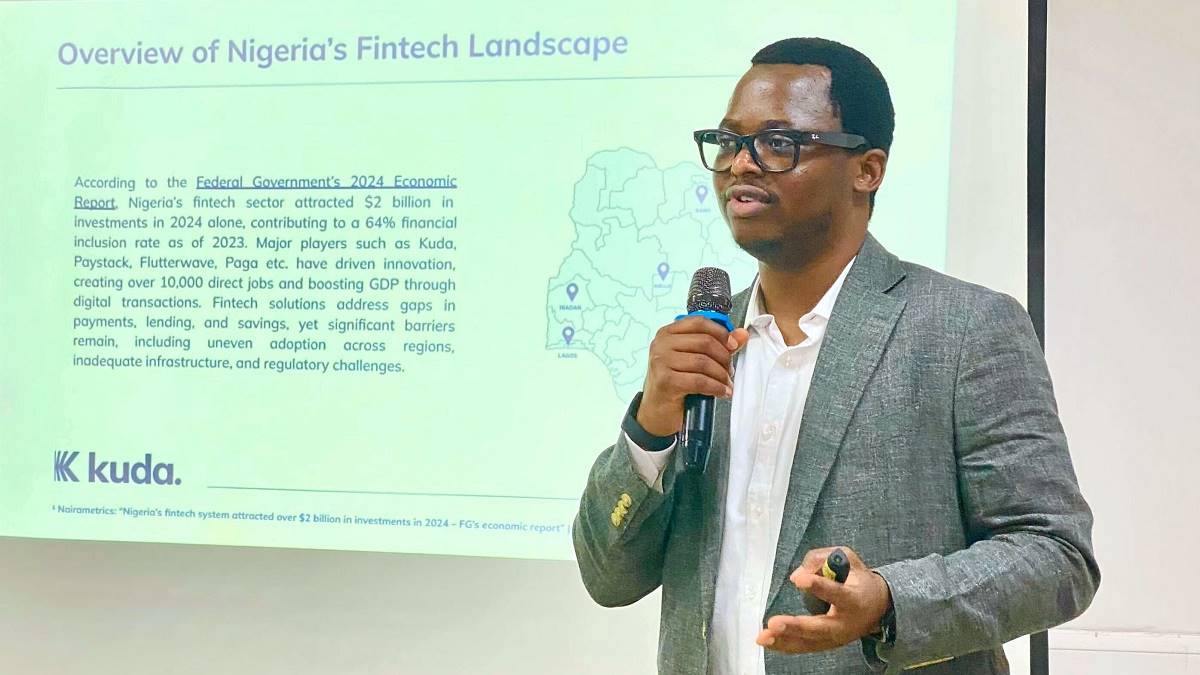
    The Managing Director of Kuda Microfinance Bank, Musty Mustapha, has called for a unified regulatory framework and infrastructure investment to unlock Nigeria’s fintech potential.

    Speaking at the Nigeria Deposit Insurance Corporation (NDIC), Mustapha highlighted the sector’s rapid growth, with $2 billion in investments in 2024, but warned that regulatory uncertainty, cybersecurity threats, financial exclusion, and infrastructure deficits continue to hinder sustainable progress.

    Nigeria’s fintech ecosystem has been instrumental in driving financial inclusion, pushing the country’s inclusion rate to 64% in 2023, according to government data.

    However, Mustapha pointed out that fintech firms still face an uneven regulatory playing field, operating under multiple oversight bodies, including the CBN, SEC, and NDIC, which creates compliance bottlenecks.

    He argued that fragmented regulations not only slow down innovation but also discourage further investment in the sector. To address this, he called for harmonised policies that balance innovation with consumer protection, ensuring fintechs have equal access to critical financial infrastructure.

    Security risks also pose a significant challenge, with Nigeria ranking fifth globally in cybercrime. Mustapha noted that phishing attacks, insider fraud, and financial system breaches undermine consumer trust in digital payments, limiting the sector’s ability to scale.

    He urged industry players to strengthen cybersecurity frameworks, adopt multi-factor authentication, and collaborate with banks, regulators, and global cybersecurity firms to tackle evolving threats.

    Mustapha noted that despite fintech’s expansion, millions of Nigerians remain financially excluded, particularly in rural areas where low smartphone penetration and poor digital literacy make digital banking adoption difficult.

    He stressed the need for more inclusive financial products, leveraging USSD and offline payment solutions to serve cash-dependent populations. He also called for nationwide financial literacy campaigns to drive trust in digital financial services.

    A key issue affecting the fintech industry is talent shortage, especially in areas such as blockchain, AI, and cybersecurity. Nigeria has one of the fastest-growing tech workforces in Africa, but the unending migration of skilled professionals abroad has slowed local fintech innovation.

    Mustapha proposed partnerships between fintech companies and universities, as well as exchange programmes with international firms, to accelerate skills development and retain top talent.

    He also underscored the urgent need for infrastructure investment, as poor broadband access, erratic power supply, and inadequate payment networks continue to limit fintech operations, particularly in underserved regions.

    He called for public-private partnerships (PPPs) to improve digital infrastructure, ensuring fintech solutions can scale effectively and reach more Nigerians. Mustapha’s remarks come at a time when Nigeria’s fintech sector is positioning itself as a leader in Africa’s digital economy.

    However, as the industry continues to evolve, he stressed that sustained collaboration between regulators, fintech firms, and investors will be crucial in ensuring long-term stability, innovation, and financial inclusion.

    By addressing these challenges, Nigeria can build a more resilient and globally competitive fintech ecosystem that benefits businesses and consumers alike. #Kuda MD Calls for Unified Regulatory Framework, Investment to Drive Fintech Growth OPEC Downgrades 2025 Forecast for U.S. Oil

    Kuda
    Share. Facebook Twitter Pinterest LinkedIn Tumblr Email
    Marketforces Africa
    • Website
    • Facebook
    • X (Twitter)
    • Instagram
    • LinkedIn

    MarketForces Africa, a Financial News Media Platform for Strategic Opinions about Economic Policies, Strategy & Corporate Analysis from today's Leading Professionals, Equity Analysts, Research Experts, Industrialists and, Entrepreneurs on the Risk and Opportunities Surrounding Industry Shaping Businesses and Ideas.

    Keep Reading

    Excess Banking Liquidity Drives 60% SDF Placement Surge, Rates Ease

    FX Spot, Derivatives Markets Turnover Sinks by 47%

    BUA Foods Momentum Pauses Ahead of Q2 Earnings

    IntBrew Gains 40%, Plans to Return Capital to Shareholders

    Iran, Oman End Hormuz Talks Without Breakthrough

    Ukraine Sets Russian Refinery Ablaze in Fresh Drone Attack

    Add A Comment

    Comments are closed.

    Editors Picks

    Excess Banking Liquidity Drives 60% SDF Placement Surge, Rates Ease

    July 12, 2026

    FX Spot, Derivatives Markets Turnover Sinks by 47%

    July 12, 2026

    BUA Foods Momentum Pauses Ahead of Q2 Earnings

    July 12, 2026

    IntBrew Gains 40%, Plans to Return Capital to Shareholders

    July 12, 2026

    Iran, Oman End Hormuz Talks Without Breakthrough

    July 12, 2026
    Latest Posts

    Excess Banking Liquidity Drives 60% SDF Placement Surge, Rates Ease

    July 12, 2026

    FX Spot, Derivatives Markets Turnover Sinks by 47%

    July 12, 2026

    BUA Foods Momentum Pauses Ahead of Q2 Earnings

    July 12, 2026

    IntBrew Gains 40%, Plans to Return Capital to Shareholders

    July 12, 2026

    Iran, Oman End Hormuz Talks Without Breakthrough

    July 12, 2026

    Subscribe to News

    Get the latest sports news from Dmarketforces Africa about finance, business and tech.

    Advertisement
    Facebook X (Twitter) Pinterest Vimeo WhatsApp TikTok Instagram

    News

    • World
    • Politics
    • Economy
    • Business
    • Opinions
    • Fintech
    • Science & Technology

    Company

    • About us
    • Advertising
    • Classified Ads
    • Contact Info
    • Editorial Policy

    Services

    • Subscriptions
    • Research
    • Due Diligence
    • Newsletters
    • Sponsored News
    • Work With Us

    Subscribe to Updates

    Subscribe to updates from MarketForces Africa, an independent financial news service provider.

    © 2026 MarketForces Africa. All rights reserved.
    • Privacy Policy
    • Terms
    • Accessibility

    Type above and press Enter to search. Press Esc to cancel.