

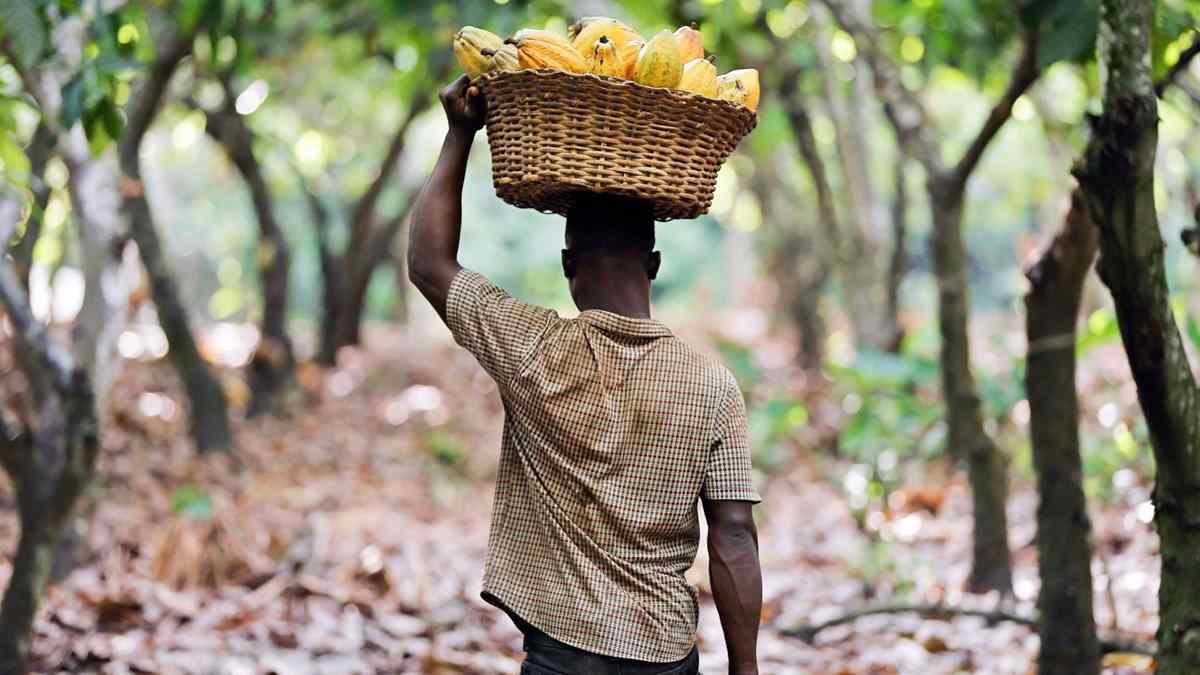
Kogi cocoa farmers, stakeholders seek govt intervention over price slump
Cocoa farmers and agricultural stakeholders in Kogi have called for urgent government intervention to address the persistent decline in cocoa prices in the country.
The farmers, who spoke with the News Agency of Nigeria (NAN) on Tuesday in Lokoja, said collaboration between government and cocoa producers would help tackle the challenges facing the sector.
They also stressed the need for adequate storage facilities for perishable produce, urging government to provide modern preservation systems to reduce post-harvest losses.
Mr Adobanyi Salihu, Chairman, All Farmers Association of Nigeria (AFAN), Kogi Chapter, urged the Federal Government to collaborate with farmers to address the continued drop in cocoa prices nationwide.
Salihu emphasised the need for stronger government participation in the cocoa value chain, particularly in marketing and international trade.
According to him, government is better positioned to secure reliable international buyers, a task many local farmers struggle with due to limited access and weak bargaining power in the global market.
He attributed the recent price crash largely to overproduction.
“An increasing number of farmers have ventured into cocoa farming, resulting in a significant rise in supply that exceeds demand,” he said.
He explained that the imbalance had created a glut in the domestic market, leading to a sharp drop in prices.
Salihu added that cocoa production had reached surplus levels comparable to staple crops like cassava, with many farmers unable to find buyers.
He warned that without prompt intervention, the trend could discourage farmers and adversely affect the agricultural sector.
The AFAN chairman also highlighted the urgent need for improved storage infrastructure, noting that inadequate facilities had forced many farmers to scale down production due to post-harvest losses and low patronage.
He called on government to invest in modern storage systems and build strategic partnerships to help farmers preserve produce and access both local and international markets.
Also speaking, Mr Soji Adeleye, a cocoa farmer from Kabba, described the price crash as devastating, noting that he had borrowed funds to procure farm inputs in anticipation of sustained high prices.
“Now, I am not sure I will harvest enough to repay the loan. My family is suffering, and I am considering replacing cocoa with cassava,” he said.
Also, Mr Jide Ariyo, a young farmer from Ekinrin-Ade in Ijumu Local Government Area, said he left his job in Lagos to venture into cocoa farming but was now stranded due to poor returns.
“I am considering alternative livelihoods or returning to Lagos. We appeal to government for grants to cushion the effects on our livelihoods,” he said.
Mrs Modupe Adebayo, a female cocoa farmer also lamented the situation, saying the downturn had affected her family’s welfare.
“My husband and I were doing well during the boom, but now we struggle to pay school fees. We have had to withdraw our children from school to assist on the farm,” she said.
Dr Maleek Abdullahi, an agricultural expert and official of the Cocoa Farmers Association of Nigeria (CFAN), described the price crash as a global issue, worsened locally by poor infrastructure and inadequate storage.
“We need government support to help farmers access markets and improve yields,” he said.
Also, Dr Musa Mohammed, an agricultural economist at Federal University Lokoja, said that the development underscored Nigeria’s vulnerability to global market fluctuations.
He called for policies to diversify the economy and support farmers with subsidies, insurance and access to credit.
Mr Samson Ademola, Executive Director, Youth in Agriculture Foundation (YAF), said the organisation, alongside other NGOs, was supporting farmers with training and resources.
He, however, called for increased government and international support to scale up interventions and help farmers adapt to changing market conditions.
