
Close Menu
    What's Hot

    Zambia’s Bond Buyback Not Distressed Debt Exchange -Fitch

    June 3, 2026

    UK Manufacturing Recovery Continues Despite Rising Prices, Supply Pressures

    June 3, 2026

    Ghana’s Private Sector Job Creation Hits 11-Month High -PMI

    June 3, 2026
    Facebook X (Twitter) Instagram
    • Home
    • About Us
    Facebook X (Twitter) Instagram WhatsApp
    MarketForces AfricaMarketForces Africa
    Subscribe
    Wednesday, June 3
    • Home
    • News
    • Analysis
    • Economy
    • Mobile Banking
    • Entrepreneurship
    MarketForces AfricaMarketForces Africa
    MarketForces Africa » MarketForces News » Ghana’s Private Sector Job Creation Hits 11-Month High -PMI
    News

    Ghana’s Private Sector Job Creation Hits 11-Month High -PMI

    Olu AnisereBy Olu AnisereJune 3, 2026Updated:June 3, 2026No Comments4 Mins Read
    Share Facebook Twitter Pinterest Copy Link LinkedIn Tumblr Email VKontakte Telegram
    Ghana’s Private Sector Job Creation Hits 11-Month High -PMI
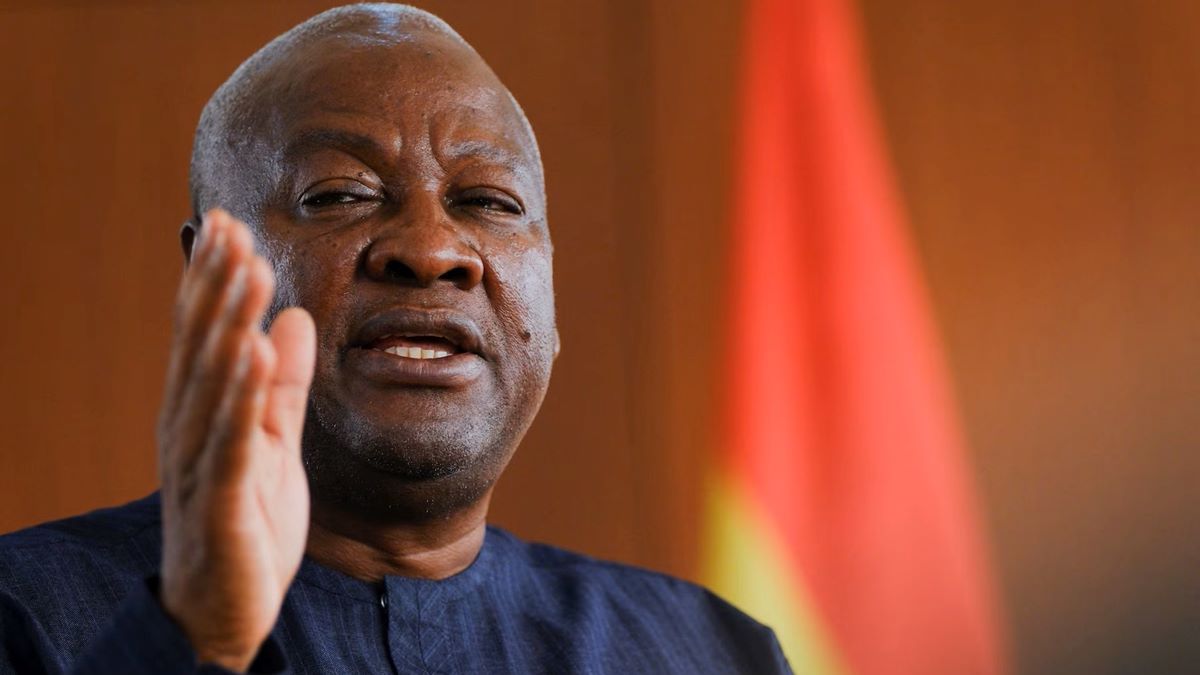
    John Mahama, President, Ghana
    Share
    Facebook Twitter Pinterest Email Copy Link

    Ghana’s Private Sector Job Creation Hits 11-Month High -PMI

    Ghana’s private sector recorded an employment boost as business conditions were stable in May, according to the purchasing manager index (PMI) report released by S&P Global today.

    According to the report, new orders continued to rise, albeit at a softer pace, while business activity decreased fractionally.  The main positive from the latest survey was a solid expansion of employment, with the rate of job creation hitting an 11-month high.

    On the price front, input costs increased for the second month in a row, prompting a rise in output prices. Rates of inflation remained muted, however.

    The S&P Global Ghana Purchasing Managers’ Index™ registered exactly at the 50.0 no-change mark in May, down slightly from 50.3 in April.  The report noted the stability of business conditions midway through the second quarter ended a two-month sequence of improvement.

    A strengthening in customer demand helped firms secure greater volumes of new orders in May, while some respondents indicated that improved material availability enabled them to offer more products to customers.

    In Ghana, new business increased for the fourth consecutive month, albeit slightly and at the slowest pace since February. Higher new orders led some firms to increase output during May, but this was just outweighed by those firms reducing activity, in part due to difficulties faced by customers in financing projects.

    Private sector’s output decreased only fractionally overall, and to a lesser extent than in April. Employment rose solidly, with the rate of job creation the sharpest in almost a year.

    A combination of rising employment and slower growth of new orders meant that companies were able to keep on top of workloads and deplete outstanding business solidly.

    While firms took on extra staff in May, they deemed their holdings of inputs to be sufficient to cater for customer requirements and therefore lowered their purchasing activity and inventories during the month.

    The falls were the first in three and 20 months respectively. Where inputs were purchased, companies noted a further shortening of suppliers’ delivery times, reflecting prompt ordering and payments as well as going direct to vendors in some cases.

    Moreover, the shortening of lead times was the most pronounced in four months. Companies posted a second successive monthly rise in purchase prices, linked to a range of factors including higher fuel costs and currency depreciation.

    The rate of inflation was little-changed from the previous survey period. Meanwhile, the latest rise in staff costs was the slowest in the current three-month sequence of inflation. Panellists linked the increase both to the hiring of additional staff and pay rises for existing workers. With input costs rising, companies increased their own selling prices.

    Charges were up modestly, following broadly no change in April. Hopes for stability in exchange rates and prices supported confidence that output will rise over the coming year.

    Positive sentiment was also linked to expected improvements in new orders and business expansion plans. The level of optimism dipped to the lowest in just over a year, but was still stronger than the series average.

    Commenting, Andrew Harker, Economics Director at S&P Global Market Intelligence said, “The overall story of the S&P Global Ghana PMI in May was one of stability. Business conditions were unchanged as a softer expansion in new orders was met with a near-stabilisation of output.

    “The main positive of the latest survey was the sharpest rise in employment for almost a year, with expanded capacity hopefully helping to boost output in the months ahead.

    “Input costs and selling prices both rose again in May, but rates of inflation remained muted and so shouldn’t be impacting too much on demand at this stage. If new business growth can gain momentum, we should be able to see renewed expansion across the private sector as the first half of the year draws to a close”. European Consumer Price Inflation Overshoots ECB Target at 3.2%

    Employment Ghana Job
    Share. Facebook Twitter Pinterest LinkedIn Tumblr Email Telegram Copy Link
    Olu Anisere
    • Website
    • LinkedIn

    Olu Anisere is a financial and economic journalist at MarketForces Africa, specialising in African macroeconomic policy, international finance, energy markets, and continental development.He covers major multilateral institutions, including the International Monetary Fund (IMF), World Bank, and the United Nations Economic Commission for Africa (ECA), providing readers with frontline reporting on policies shaping Africa's economic trajectory.Olu has reported extensively on Nigeria's fiscal and monetary policy landscape, including CBN interest rate decisions, Nigeria's bond market, FX inflows, and the country's engagement with global financial institutions.His coverage spans IMF and World Bank Spring and Annual Meetings, African Ministers of Finance conferences, and high-level economic forums where Africa's development agenda is set.His reporting captures perspectives from Africa's most influential economic voices, including Tony Elumelu, senior IMF officials, and CBN leadership, bringing institutional insight and policy depth to MarketForces Africa's readers.Olu also covers Inside Africa — tracking economic, investment, and development stories from across the continent. Olu Anisere is based in Lagos, Nigeria.

    Related Posts

    News

    Zambia’s Bond Buyback Not Distressed Debt Exchange -Fitch

    June 3, 2026
    News

    UK Manufacturing Recovery Continues Despite Rising Prices, Supply Pressures

    June 3, 2026
    News

    Naira Extends Rally as Nigeria’s Foreign Reserves Grow

    June 3, 2026
    News

    Equities Investors Lose N2.28trn as Nigerian Market Tumbles

    June 3, 2026
    News

    European Consumer Price Inflation Overshoots ECB Target at 3.2%

    June 3, 2026
    News

    Oil Prices Surge on Middle East Hostilities, Uncertain Outlook

    June 3, 2026
    Add A Comment

    Comments are closed.

    Editors Picks

    Zambia’s Bond Buyback Not Distressed Debt Exchange -Fitch

    June 3, 2026

    UK Manufacturing Recovery Continues Despite Rising Prices, Supply Pressures

    June 3, 2026

    Ghana’s Private Sector Job Creation Hits 11-Month High -PMI

    June 3, 2026

    Naira Extends Rally as Nigeria’s Foreign Reserves Grow

    June 3, 2026
    Latest Posts

    Zambia’s Bond Buyback Not Distressed Debt Exchange -Fitch

    June 3, 2026

    UK Manufacturing Recovery Continues Despite Rising Prices, Supply Pressures

    June 3, 2026

    Naira Extends Rally as Nigeria’s Foreign Reserves Grow

    June 3, 2026

    Equities Investors Lose N2.28trn as Nigerian Market Tumbles

    June 3, 2026

    European Consumer Price Inflation Overshoots ECB Target at 3.2%

    June 3, 2026

    Subscribe to News

    Get the latest sports news from NewsSite about world, sports and politics.

    About US
    About US

    MarketForces Africa is a financial information service provider with interest in media, training and research. The media platform provides information about markets, economies, and crypto, forex markets and investment ecosystem.

    Contact Us:
    Suite 4, Felicity Plaza, Freedom Estate Drive, Lagos-Ibadan Express Road, Magboro
    T: . 08076677707, 08052076440

    Facebook X (Twitter) Instagram Pinterest YouTube
    Latest Posts

    Zambia’s Bond Buyback Not Distressed Debt Exchange -Fitch

    June 3, 2026

    UK Manufacturing Recovery Continues Despite Rising Prices, Supply Pressures

    June 3, 2026

    Ghana’s Private Sector Job Creation Hits 11-Month High -PMI

    June 3, 2026

    Subscribe to Updates

    Get the latest creative news from FooBar about art, design and business.

    © 2026 Marketforces Africa
    • About
    • Contact us
    • Subscription Plans
    • My account

    Type above and press Enter to search. Press Esc to cancel.