
Close Menu
MarketForces AfricaMarketForces Africa
    What's Hot

    Pi Network Climbs Ahead of Pi2Day, Mandatory Nodes Upgrade

    June 16, 2026

    Nigerian Exchange Shrinks, Tier-1 Banks Drive N782bn Loss

    June 16, 2026

    Nigeria’s Foreign Reserves Near $51bn, Highest Since Jan. 2009

    June 16, 2026
    Facebook X (Twitter) Instagram
    Trending
    • Pi Network Climbs Ahead of Pi2Day, Mandatory Nodes Upgrade
    • Nigerian Exchange Shrinks, Tier-1 Banks Drive N782bn Loss
    • Nigeria’s Foreign Reserves Near $51bn, Highest Since Jan. 2009
    • Naira Slides Against Dollar, Interbank Turnover Tops $1.2bn
    • NCC Begins Review of Mobile Termination Rates after 8 Years
    • Strait of Hormuz: Transit May  Take ‘Weeks’ to Resume
    • XRP Price Ticks Up as Ripple Invests in Flutterwave
    • HYPE- Hyperliquid Surges by 11% on SpaceX Perp Catalyst
    • Home
    • About Us
    Facebook X (Twitter) Instagram LinkedIn WhatsApp TikTok Telegram
    MarketForces AfricaMarketForces Africa
    Subscribe
    Tuesday, June 16
    • Home
    • News
    • Analysis
    • Economy
    • Mobile Banking
    • Entrepreneurship
    MarketForces AfricaMarketForces Africa
    MarketForces Africa » MarketForces News » Fuel Pressures to Worsen Inflation, Squeeze GDP Growth

    Fuel Pressures to Worsen Inflation, Squeeze GDP Growth

    Julius AlagbeBy Julius AlagbeFebruary 17, 2022Updated:March 26, 2022 News No Comments5 Mins Read
    Fuel Pressures to Worsen Inflation, Squeeze GDP Growth
    Share
    Facebook Twitter LinkedIn Pinterest Email Tumblr Reddit Telegram WhatsApp Copy Link

    Fuel Pressures to Worsen Inflation, Squeeze GDP Growth

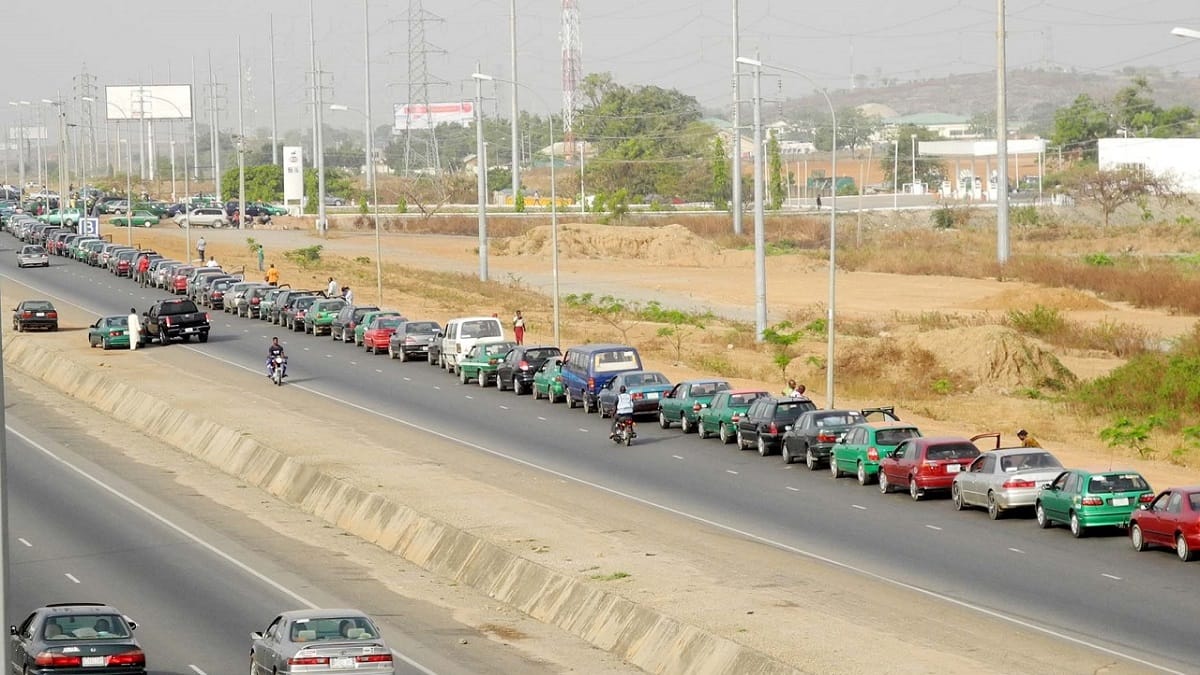
    The discomfort that follows the scarcity of fuel: Premium Motor Spirit (PMS) and other hydrocarbon related products, in particular, would raise the headline inflation rate for February, more like so, according to some BroadStreet analysts that spoke with MarketForces Africa.

    Some market observers also said the nation’s gross domestic product growth would be affected as the case has lingered with no ends in sight in the immediate despite efforts by the authority to douse the impacts.

    In weeks, Nigerians have been paying more for petrol due to pressures caused by the importation of bad fuels by some major marketers. The unpalatable experience is currently having ripple effects on pricing in the markets.

    The productive segment of the economy is already bearing the grunt as input prices have adjusted upward while locals struggle with logistics. Some companies’ operational activities have been partially grounded.

    Early in the week, Mr Simon Harry, the Statistician-General of the Federation hinted that the current experience across the nation may have an adverse effect on the headline inflation rate. Harry said that the fuel crisis would create an artificial shock in the economy and that the shock was capable of shaking the economy.

    “Whether we like it or not, transporters will be taking advantage of the situation, thereby, increasing the costs of transportation.

    “As you are bringing your commodities to the market for sale, you will be thinking of adding some amount on the selling costs so that you will be able to recover the costs of transportation.

    “So that gives us a negative signal that is capable of affecting not just inflation rate, but also other macro-economic variables such as the Gross Domestic Product (GDP) and even the unemployment rate.

    “I can, however, assure you that certainly, it is not the best for the economy and if we must maintain a stable macroeconomic environment, this kind of crisis certainly is not the best for it is not needed.’’

    He added that because the economy was strongly being driven by the private sector, the shock may affect a good number of private businesses as they may not be able to run effectively as expected.

    He, however, said that the February inflation rate could not be predicted based on the present fuel crisis as the numbers were still being collected. At the present rate, the statistician-general said that CPI for January was 15.60 per cent from 15.63 per cent recorded in December 2021.

    However, on a year-on-year basis, it was 0.87 per cent points lower than the rate recorded in January 2021 (16.47) per cent. Harry said that the headline index increased by 1.47 per cent in January, 0.34 per cent points lower than the 1.82 per cent recorded in December 2021.

    According to Harry, core inflation for January was 13.87 per cent, the same as that of December 2021, while food inflation for January was 17.13 per cent compared to 17.37 per cent in December.

    He also said that the urban inflation rate stood at 16.17 per cent year-on-year in January, the same as that of December 2021.

    “On the other hand, rural inflation was 15.06 per cent and 15.11 per cent in December 2021 respectively.

    “On state by state comparison, all items inflation on a year-on-year basis was highest in Abuja with 18.59 per cent followed by Kogi with 18.28 per cent and Bauchi 17.61 per cent.

    “On the other hand, Kwara recorded the lowest with 12.94 per cent followed by Niger with 14.10 per cent and Oyo, 14.19 per cent.’’

    Harry added that the composite food index rose by 17.13 per cent in January 2022, compared to 20.57 per cent in January 2021. The rise in the food index was caused by increases in prices of bread and cereals, food products such as potatoes, yam and other tubers, soft drinks, oils and fats, and fruits.

    “On a month-on-month basis, the food sub-index increased by 1.62 per cent in January,, which was down by 0.57 per cent points from 2.19 per cent recorded in December 2021.

    “The All items less farm produce’’ or Core inflation, which excludes the prices of volatile agricultural produce stood at 13.87 per cent in January 2022.

    “This was higher by 2.02 per cent, when compared to 11.85 per cent, the rate recorded in January 2021.’’ He said that the highest increases were recorded in prices of electricity, liquid fuel, wine, tobacco, spirit, solid fuels, cleaning, repair and hire of clothing.

    Others are shoes and other footwear, other services in respect of personal transport equipment, other services not elsewhere classified and pharmaceutical products. Read: FX Markets Liquidity Squeeze Keeps Naira Overvalued

    For food inflation, on a state by state basis, Harry said on a year-on-year basis it was highest in Kogi with 22.61 per cent followed by Enugu with 19.84 per cent and Akwa-Ibom 19.67 per cent. Meanwhile, Sokoto had 14.18 per cent, Bauchi 14.63 per cent and Kaduna 15.01 per cent as the lowest in January.

    CBN Investors Nigeria
    Share. Facebook Twitter Pinterest LinkedIn Tumblr Email
    Julius Alagbe
    • Website
    • LinkedIn

    Julius Alagbe is a senior financial journalist and Editor at MarketForces Africa with nearly two decades of experience in finance, accounting, and economics reporting.He is one of Nigeria's most prolific financial market reporters, covering capital markets, monetary policy, corporate earnings, banking, telecoms, and macroeconomic developments across Africa.Julius has built a strong footprint reporting on Nigeria's leading corporates and financial services sector, including coverage of the Nigerian Exchange Group, Central Bank of Nigeria monetary operations, MTN Nigeria, GTCO, and major investment banking transactions.He regularly monitors the CBN’s open market operations, interbank FX markets, and equity market movements, providing readers with real-time intelligence on Nigeria’s financial landscape.His reporting draws on direct access to institutional research from firms including Moody’s Ratings, CardinalStone Securities, Fitch, and other leading African investment houses.Julius brings analytical depth and editorial rigour to every story, making complex financial data accessible to professionals, investors, and policymakers across Africa.Julius Alagbe is based in Lagos, Nigeria.

    Keep Reading

    Pi Network Climbs Ahead of Pi2Day, Mandatory Nodes Upgrade

    Nigerian Exchange Shrinks, Tier-1 Banks Drive N782bn Loss

    Nigeria’s Foreign Reserves Near $51bn, Highest Since Jan. 2009

    Naira Slides Against Dollar, Interbank Turnover Tops $1.2bn

    NCC Begins Review of Mobile Termination Rates after 8 Years

    Strait of Hormuz: Transit May  Take ‘Weeks’ to Resume

    Add A Comment

    Comments are closed.

    Editors Picks

    Pi Network Climbs Ahead of Pi2Day, Mandatory Nodes Upgrade

    June 16, 2026

    Nigerian Exchange Shrinks, Tier-1 Banks Drive N782bn Loss

    June 16, 2026

    Nigeria’s Foreign Reserves Near $51bn, Highest Since Jan. 2009

    June 16, 2026

    Naira Slides Against Dollar, Interbank Turnover Tops $1.2bn

    June 16, 2026

    NCC Begins Review of Mobile Termination Rates after 8 Years

    June 16, 2026
    Latest Posts

    Pi Network Climbs Ahead of Pi2Day, Mandatory Nodes Upgrade

    June 16, 2026

    Nigerian Exchange Shrinks, Tier-1 Banks Drive N782bn Loss

    June 16, 2026

    Nigeria’s Foreign Reserves Near $51bn, Highest Since Jan. 2009

    June 16, 2026

    Naira Slides Against Dollar, Interbank Turnover Tops $1.2bn

    June 16, 2026

    NCC Begins Review of Mobile Termination Rates after 8 Years

    June 16, 2026

    Subscribe to News

    Get the latest sports news from Dmarketforces Africa about finance, business and tech.

    Advertisement
    Facebook X (Twitter) Pinterest Vimeo WhatsApp TikTok Instagram

    News

    • World
    • Politics
    • Economy
    • Business
    • Opinions
    • Fintech
    • Science & Technology

    Company

    • About us
    • Advertising
    • Classified Ads
    • Contact Info
    • Editorial Policy

    Services

    • Subscriptions
    • Research
    • Due Diligence
    • Newsletters
    • Sponsored News
    • Work With Us

    Subscribe to Updates

    Subscribe to updates from MarketForces Africa, an independent financial news service provider.

    © 2026 MarketForces Africa. All rights reserved.
    • Privacy Policy
    • Terms
    • Accessibility

    Type above and press Enter to search. Press Esc to cancel.