

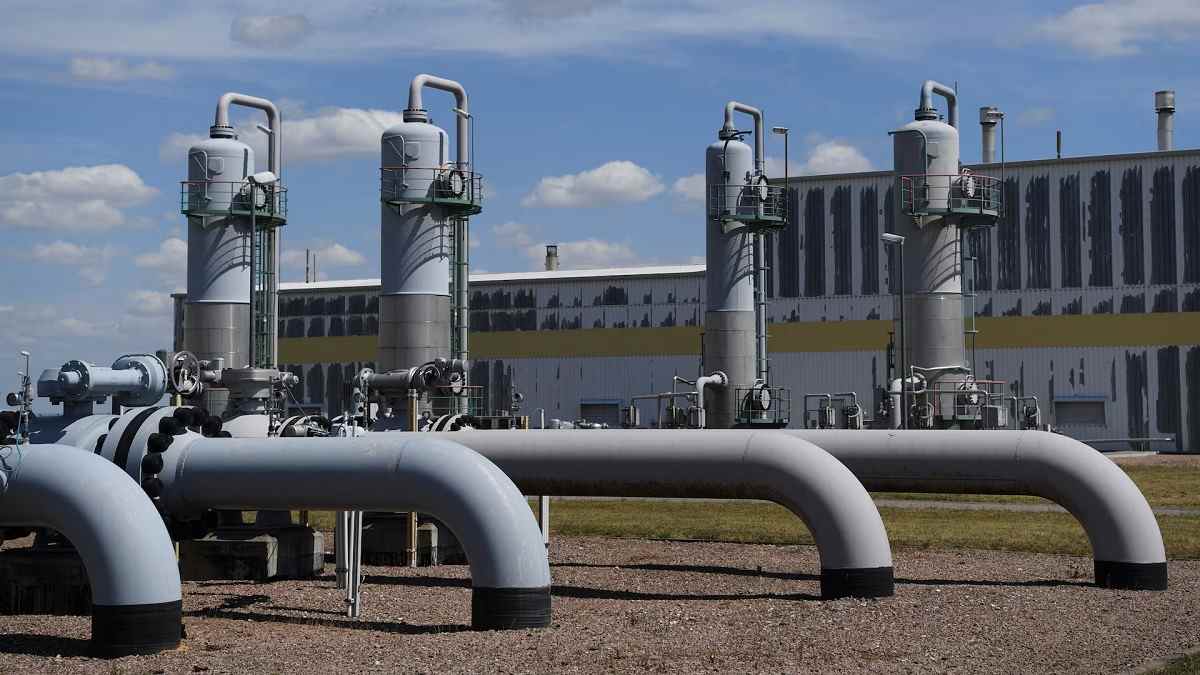
European Gas Prices Elevated on Supply Concerns
European natural gas prices rose as escalating military conflict in the Middle East heightened concerns over global liquefied natural gas (LNG) supplies, while gas storage levels remained below historical averages ahead of winter.
The November futures contract at the Dutch TTF hub, the benchmark for European natural gas prices, settled at €93.85 per megawatt-hour on Friday.
Prices rose 1.9% from Friday’s close to €95.65 per megawatt-hour, reaching their highest level since December 2022. Escalating military conflict in the Middle East has heightened concerns about global gas supplies ahead of winter.
LNG shipments from the Persian Gulf, which accounted for around a fifth of global LNG supply before the conflict, remain largely disrupted, with flows approximately 80% below year-earlier levels
According to data from Gas Infrastructure Europe (GIE), natural gas storage facilities across European Union countries were 74.6% full.
As temperatures fall, some EU countries have begun drawing on stored gas, adding to concerns over supply security ahead of winter.
With storage levels below historical averages, Europe has less capacity to absorb further supply disruptions and a potential increase in heating demand, leaving the natural gas market more vulnerable to price increases in the coming months.
Yemen Houthis Target Riyadh Airport, Saudi Arabia Oil Pipeline
Yemen’s Houthi group said they targeted King Khalid International Airport in the Saudi capital Riyadh and launched attacks on pumping stations along the East-West crude oil pipeline.
Houthi military spokesman Yahya Saree said on the US social media platform X that the group targeted the airport with a ballistic missile.
Saree also said the Houthis carried out drone attacks targeting crude oil pumping stations along the East-West Pipeline.
Saudi Arabia’s Civil Defense Directorate earlier announced that the early warning system had issued a danger alert for Riyadh.
Major General Turki Al-Maliki, spokesman for the Saudi-led coalition, said a Houthi ballistic missile targeting Riyadh had been intercepted.
Yemen has been embroiled in a civil war since September 2014, when the Houthis seized control of the capital, Sanaa, and several provinces.
The East-West Pipeline is one of Saudi Arabia’s most important crude oil transportation routes.
Operated by the state-owned oil giant Saudi Aramco, the pipeline stretches approximately 1,200 kilometers (745 miles) from the Abqaiq area in eastern Saudi Arabia to Yanbu on the Red Sea coast.
Located entirely within Saudi Arabia, it transports crude oil from production and processing facilities in the east to refineries and export terminals along the Red Sea.
The pipeline provides Saudi Arabia with an overland alternative for transporting oil to the Red Sea without relying on maritime shipments through the Strait of Hormuz. The Saudi-led coalition has supported Yemen’s internationally recognized government since March 2015.
Clashes between Yemeni government forces and the Houthis have intensified in recent months. The group has targeted Saudi Arabia with ballistic missiles and drones, accusing the kingdom of being responsible for attacks against it. Nigeria’s US Dollar Bonds Dumped as 10-Year Yield Surges to 8%
