

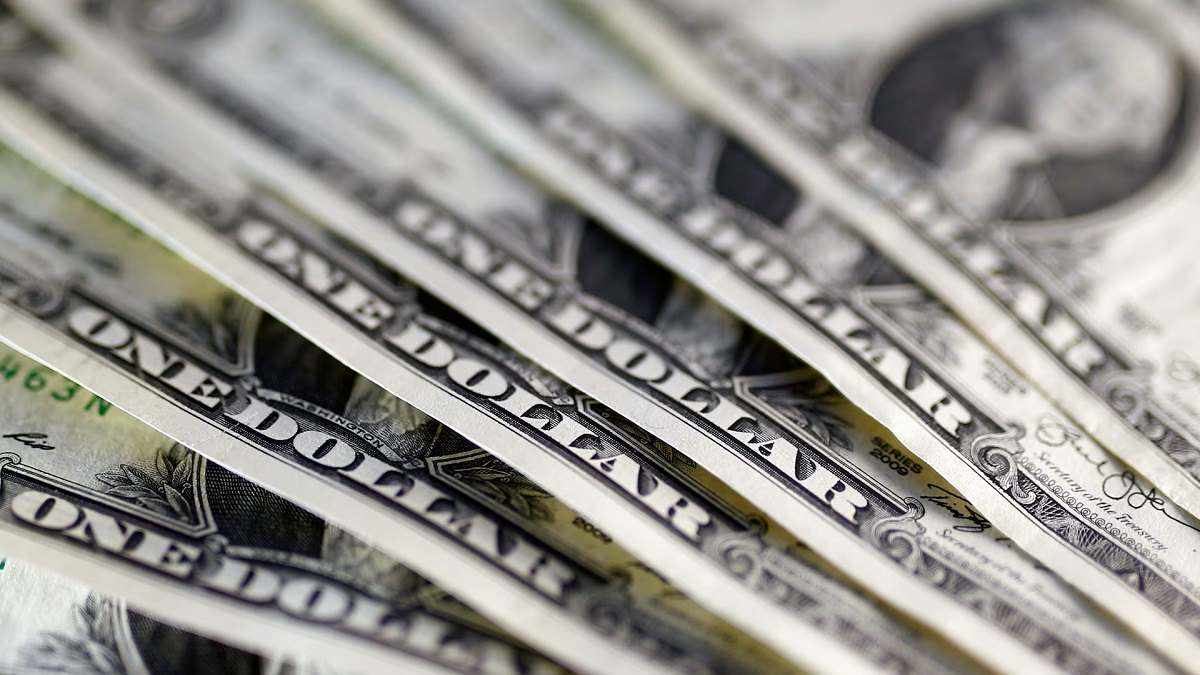
Dollar Gains as U.S.-Iran Tensions Trigger Flight to Safety
The flight-to-safety drive from Middle East tensions strengthened the US dollar against trading peers on Monday, forex traders said in a separate note.
The US dollar is also projected to maintain momentum, with the Federal Reserve rate cut out of the equation, while investors moved funds to Gold and other assets.
The DXY dollar index rose to a five-week high of 98.566 in early European trade. The euro fell to 0.9032 Swiss francs, its lowest level since the Swiss National Bank removed its peg for the two currencies in 2015, according to London Stock Exchange Group data.
Investors are moving funds into safe asset, with gold topping destination amidst escalation in the Middle East.. Markets are now focusing on a new batch of domestic data due this week.
FX traders continue to assess whether a rise in energy prices means the Fed will hesitate to lower interest rates. Higher rates support the dollar by boosting the yield on Treasury notes and other dollar-denominated assets.
Against the New Zealand and the Canadian dollars, the greenback advanced to more than a 1-month high of 0.5928 and a 4-day high of 1.3687 from early lows of 0.5997 and 1.3641, respectively.
Rising oil prices in response to the conflict also lifted the dollar. The U.S. is a net exporter of oil, so higher crude prices improve the country’s terms of trade.
If the greenback extends its uptrend, it is likely to find resistance around 1.16 against the euro, 1.31 against the pound, 159.00 against the yen, 0.78 against the franc, 0.69 against the Aussie, 0.57 against the kiwi and 1.38 against the loonie.
The dollar has been hit over the past year by a rotation toward alternative havens such as gold, as well as toward overseas assets, especially in emerging markets.
However, the U.S.’s plentiful domestic energy resources mean its economy should be relatively shielded from a spike in oil prices caused by disruption in the Middle East.
While gas prices might still head higher at the pump, the U.S. can ramp up its own oil supply if prices warrant bringing more expensive production online.
Meanwhile, the Turkish Central Bank sold more than $5 billion of foreign exchange on Monday. #Stanbic IBTC Falls by 5.4% after AFS Delay Hint
