

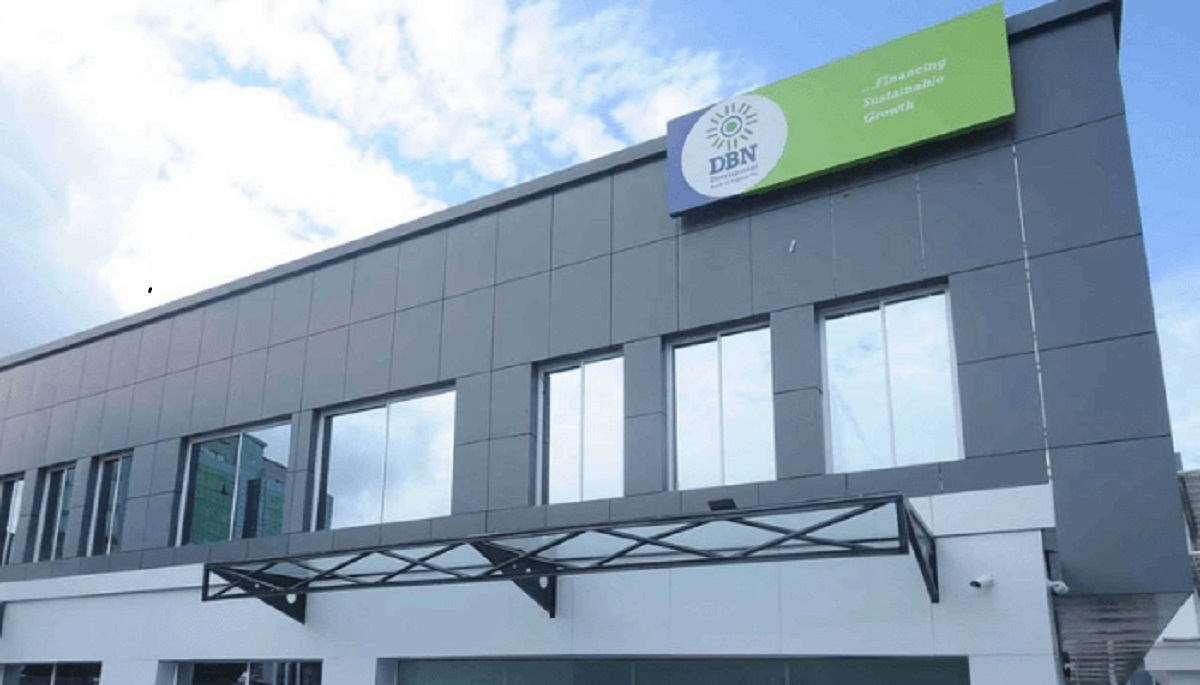
DBN Inaugurates $275m Climate Finance to Boost Nigerian MSMEs
The Development Bank of Nigeria (DBN) has inaugurated a 275-million-dollar climate finance programme to support Micro, Small and Medium Enterprises (MSMEs).
The aim, according to the bank, is to adopt clean energy solutions, strengthen climate resilience and expand sustainable business operations.
The programme, known as the DBN Enterprise Lending for Transition and Adaptation (DELTA), is also designed to bridge the financing gap facing Nigerian businesses seeking to invest in renewable energy-efficient technologies and climate-resilient agriculture.
Dr Tony Okpanachi, DBN Managing Director and Chief Executive Officer (CEO), said this on the sidelines of the 31st United Nations Climate Change Conference (COP31) in Antalya, Türkiye on Friday.
Okpanachi said climate change was already affecting Nigerian businesses through unpredictable weather patterns, disruptions to production and supply chains, and rising energy costs.
He said the initiative represented an expansion of DBN’s mandate of addressing financing challenges facing productive and underserved enterprises, with a renewed focus on climate-related investments.
He explained that the programme would combine lending, risk-sharing mechanisms and technical assistance to address barriers such as high upfront investment costs, collateral constraints, inadequate credit facilities and limited project preparation capacity.
According to him, the facility will support businesses to replace expensive diesel-powered generators with solar energy, invest in efficient irrigation systems and strengthen agricultural production against increasingly unpredictable rainfall.
He said DBN would commit its own resources to the programme and collaborate with the Green Climate Fund (GCF) and other development partners to mobilise additional capital, technical expertise and risk-sharing instruments.
Okpanachi added that the success of DELTA would be measured not merely by the size of its financing facility but by its impact on businesses through lower energy costs, increased productivity, stronger resilience and sustainable economic growth.
In his welcome address, the Minister of Finance and Coordinating Minister of the Economy, Mr Taiwo Oyedele,
described the initiative as an important step towards translating Nigeria’s climate commitments into practical financial solutions. Oyedele was represented by the Deputy Director, IERD, in the ministry, Mr Abubakar Matazu.
Oyedele said climate change was an economic, fiscal and development challenge for Nigeria, with growing implications for agricultural productivity, food security, energy access, infrastructure and livelihoods.
He said the 275-million-dollar programme, including a 100-million-dollar contribution from GCF, is expected to expand access to affordable, and long-term financing for MSMEs.
According to him, it is also to benefit approximately 1.3 million people and reduce greenhouse gas emissions by an estimated 4.5 million tonnes of carbon dioxide equivalent.
The minister said the Federal Government remained committed to creating an enabling fiscal, policy and institutional environment to mobilise climate finance and attract private-sector investment.
He said that development finance institutions such as DBN had a critical role in connecting international climate funding with local businesses through accessible financing opportunities.
Dr Omotenioye Majekodunmi, the Director-General, National Council on Climate Change (NCCC), said MSMEs were also emerging as key drivers of climate solutions through the adoption of renewable, energy-efficient technologies and climate-resilient business practices.
Majekodunmi who was represented by the Head of Climate Finance at the National Council on Climate Change (NCCC), Mrs Benny Ejiofor described MSMEs as both highly vulnerable to climate change and important drivers of climate solutions.
Majekodunmi said the facility would make climate finance accessible beyond large corporations, extending opportunities to small businesses, farmers and young entrepreneurs.
She cited examples of market women acquiring solar-powered freezers, entrepreneurs developing electric vehicle businesses and farmers adopting climate-smart agricultural practices.
She urged financial institutions to increase green lending, while encouraging MSMEs to embrace sustainable business practices and climate-resilient operations.
“In spite of being among the most vulnerable to climate change impacts, including floods, droughts, and rising energy costs, they are key drivers to achieving Nigeria’s climate solutions.
“It is a great honour to welcome you all to this landmark event on behalf of the D-G NCCC, the inaguration of the *Climate Finance Facility for Small and Medium Enterprises by the Development Bank of Nigeria.
“Today is not just another inauguration, today, we are opening a new door of opportunity for the thousands of small businesses that power our economy.
“We all know that MSMEs are the backbone of Nigeria,they create jobs, they feed families, and they drive innovation.
“But we also know that they are the most vulnerable to climate change ,to floods, to drought, to rising energy costs, yet, they are also the solution.”
Similarly, the Director of Climate Change, Rural Development and Infrastructure Division ,GIZ, Mr Alexander Haack, said the organisation would provide technical assistance to complement the financial support under the programme.
Haack said GIZ’s experience in facilitating access to finance and strengthening the capacity of small businesses and financial institutions would help improve the bankability of climate-related projects.
He noted that GIZ’s interventions would include training businesses in bookkeeping and financial management, as well as supporting financial institutions to develop targeted financial products for sectors often considered risky.
During a panel discussion on the programme, the Executive Director and Chief Financial Officer, Finance and Corporate Services, DBN, Mrs Ijeoma Ozulumba, expressed optimism that the facility would attract additional partners and generate a strong pipeline of climate-focused projects.
Ozulumba said DBN was working towards ensuring that the programme’s implementation gathered momentum ahead of COP32, scheduled to hold in Ethiopia in 2027.
Also contributing, the Founder and Chief Empathy Officer of Glean Sustainable Renewable Solutions Ltd., Mr Dele Awosika, emphasised the need to identify viable businesses and develop pilot projects that would demonstrate the programme’s potential to attract further investments.
Awosika identified opportunities in climate-resilient crop production and low-carbon agricultural practices, including rice and cassava production, as areas requiring technical expertise and targeted financing.
The DELTA programme is expected to strengthen Nigeria’s climate finance ecosystem by connecting international funding, development finance institutions and private-sector investments with businesses working towards a low-carbon and climate-resilient economy. He said. #DBN Inaugurates $275m Climate Finance to Boost Nigerian MSMEs# DBN Disburses N1trn to MSMEs, Unveils 5-Year Growth Plan
