
Close Menu
MarketForces AfricaMarketForces Africa
    What's Hot

    Nigerian Exchange Shrinks, Tier-1 Banks Drive N782bn Loss

    June 16, 2026

    Nigeria’s Foreign Reserves Near $51bn, Highest Since Jan. 2009

    June 16, 2026

    Naira Slides Against Dollar, Interbank Turnover Tops $1.2bn

    June 16, 2026
    Facebook X (Twitter) Instagram
    Trending
    • Nigerian Exchange Shrinks, Tier-1 Banks Drive N782bn Loss
    • Nigeria’s Foreign Reserves Near $51bn, Highest Since Jan. 2009
    • Naira Slides Against Dollar, Interbank Turnover Tops $1.2bn
    • NCC Begins Review of Mobile Termination Rates after 8 Years
    • Strait of Hormuz: Transit May  Take ‘Weeks’ to Resume
    • XRP Price Ticks Up as Ripple Invests in Flutterwave
    • HYPE- Hyperliquid Surges by 11% on SpaceX Perp Catalyst
    • GCR Upgrades Wema Bank Plc’s Issuer Rating to A/A1
    • Home
    • About Us
    Facebook X (Twitter) Instagram LinkedIn WhatsApp TikTok Telegram
    MarketForces AfricaMarketForces Africa
    Subscribe
    Tuesday, June 16
    • Home
    • News
    • Analysis
    • Economy
    • Mobile Banking
    • Entrepreneurship
    MarketForces AfricaMarketForces Africa
    MarketForces Africa » Inside Africa » Analysts Expect Ghana to Raise Interest Rate

    Analysts Expect Ghana to Raise Interest Rate

    Julius AlagbeBy Julius AlagbeFebruary 24, 2022 Inside Africa No Comments3 Mins Read
    South Africa’s Debt Still Rising Despite Higher Revenue Fitch Ratings-Hong Kong-23 February 2022: South Africa’s budget confirms that stronger fiscal revenue has led to an improvement in public finances, says Fitch Ratings. However, continuing breaches of expenditure ceilings point to difficulties in containing spending, and there is a risk that recent strong revenue growth may prove temporary. Improved fiscal performance had already contributed to Fitch’s decision to revise the Outlook on South Africa’s ‘BB-’ rating to Stable, from Negative, in December 2021. The budget presented on 23 February shows the consolidated government deficit for the fiscal year ending March 2022 (FY21/22) at 5.7% of GDP, narrower than the 7.8% in the Medium-Term Budget Policy Statement (MTBPS) in November 2021 and our forecast at the time of the December review of 7.7%. The budget projects further consolidation to a deficit of 4.2% in FY24/25, compared with 4.9% in the MTPBS. The new forecasts reduce the near-term risk that investor concerns about debt sustainability could lead to a further surge in borrowing costs in the context of global monetary tightening, and imply a further slowdown in debt accumulation. However, officials still expect debt to continue rising, to a peak of 75.1% in FY24/25 (MTBPS: 78.1%), and risks to the government’s expectation of debt stabilisation remain high. The better budget numbers reflect faster-than-expected growth in fiscal revenue (up by 22%) for FY21/22. High international prices for South Africa’s export commodities have boosted the mining sector and thus corporate tax receipts. Government forecasts for revenue growth in subsequent years are prudent, with a below-inflation rise of 2.9% in FY22/23, but if commodity prices fall, a contraction in revenue cannot be excluded. In light of above-target revenue growth, the government plans to extend the social relief of distress grants (SRD), worth ZAR350 (USD23) a month to recipients, by another year to March 2023, at a cost of around 0.7% of GDP. Other measures raised spending by a further 0.5% of GDP. So far, the government has resisted pressure for a more comprehensive basic income grant, which would be significantly more expensive. We expect some form of social grant to be made permanent, given pressures from exceptionally high income inequality, unemployment that surged to 34.9% in 3Q21 and strong pressures for more social spending in the governing ANC. This means the government will again breach its expenditure ceiling in FY23/24 as a result of the SRD grant extension. These ceilings on non-interest expenditure, announced three years ahead, were introduced in 2012 and had been adhered to until FY19/20. That major overshoot, due to bailouts of state-owned enterprises, was followed by breaches in FY20/21 and FY21/22 driven by the Covid-19 pandemic (which caused disruption to public finances in many countries) and in FY22/23 due to the SRD. Although we anticipated the breach this year, it raises questions about the government’s ability to pursue fiscal consolidation if revenue forecasts disappoint or other fiscal risks materialise. Its fiscal consolidation strategy relies on containing public-sector wages, which have grown strongly in the past decade. While there are still risks from a pending constitutional court ruling, the government has been relatively successful in containing wage growth during the pandemic, but the recovery in economic growth and stronger public finances may make the public-sector wage negotiations due to start in March 2022 tougher. Unexpected additional needs to provide fiscal support to state-owned enterprises could also put upward pressure on debt. A more durable resolution of South Africa’s fiscal challenges in a difficult socioeconomic context would require a substantial acceleration of economic growth. So far, government initiatives and progress on implementation has been insufficient to make this likely.
    Share
    Facebook Twitter LinkedIn Pinterest Email Tumblr Reddit Telegram WhatsApp Copy Link

    Analysts Expect Ghana to Raise Interest Rate

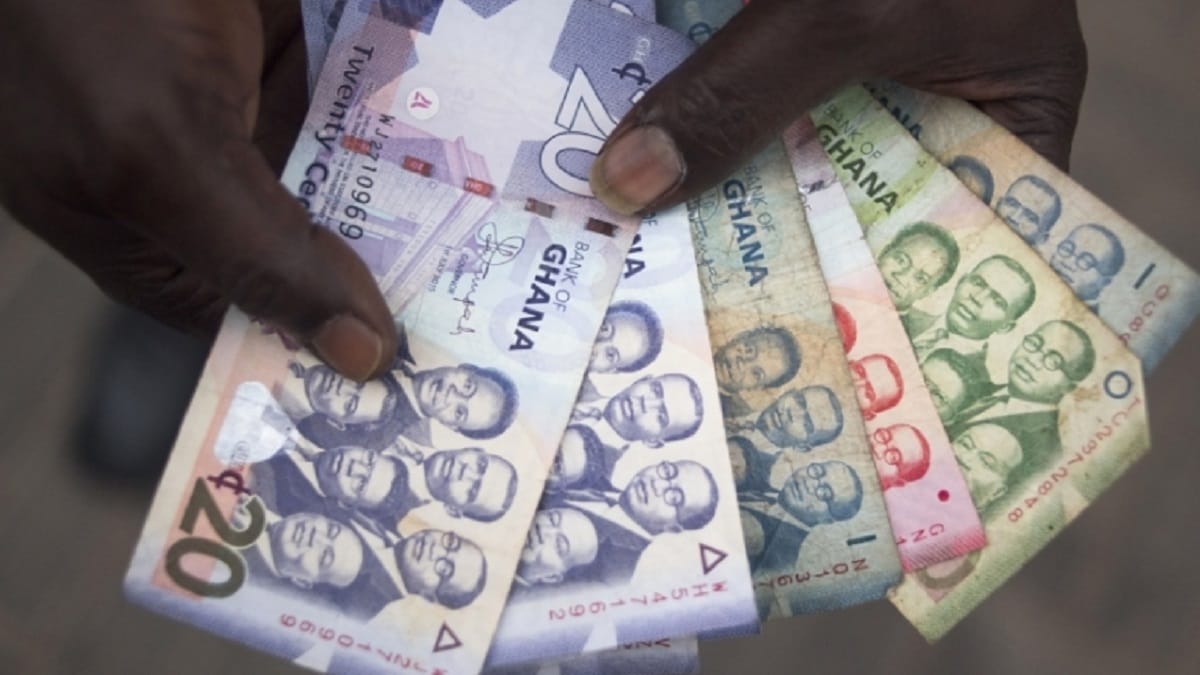
    Fitch Solutions analysts said they are expecting the Bank of Ghana (BoG) to raise its benchmark interest rate by a further 50 basis points (bps) to 15.00 per cent by the end of the fiscal year 2022.

    The firm said in its latest report, recalled that on November 22, the BoG hiked the interest rate by 100 basis points to 14.50% at its final monetary policy committee (MPC) meeting of 2021.

    Bank of Ghana had kept rates unchanged at the previous two meetings and a made 100 basis points cut in May 2021 amidst rising debt stock.

    In its MPC statement, the BoG cited ‘elevated inflationary risks’, and a subsequent need to re-anchor inflation expectations as the primary reason for tightening its policy rate.

    Price growth accelerated from 10.6% year on year in September to 11.0% in October, driven largely by an increase in fuel prices, as well as the inflationary pressures stemming from currency depreciation.

    “We expect economic growth to accelerate in 2022, thus providing room for the BoG to focus on inflation targeting and supporting the cedi”, Fitch Solutions said.

    Economic activity has been recovering, with real gross domestic product (GDP) growth in Q221 coming in at 3.9% year on year.

    The report said while Q3-2021 GDP growth data have not been published at the time of writing, the BoG’s Consumer Confidence Index increased from 91.8 in August to 93.9 in October, and the Business Confidence Index increased from 93.2 in August to 95.5 in October, indicating a slightly more benign backdrop.

    “Our Pharmaceuticals & Healthcare team expect vaccinations to accelerate next year, with most priority groups likely to be vaccinated by end-2022.

    “This, together with improving labour market conditions (we forecast unemployment falling from a forecast 4.4% in 2021 to 4.1% in 2022) will bolster consumer confidence, and see private consumption growth accelerate from 3.8% in 2021 to 4.7%”.

    The mining sector will also perform well in 2022, bolstering fixed investment and exports. Fitch Solutions Mining team expects gold output to rise by a robust 4.0% to 5.0mn ounces.

    As a result of these factors, analysts forecast that real GDP growth will rise from 4.2% in 2021 to 4.8% in 2022, allowing the BoG to tighten further.

    It said inflation will remain elevated in 2022, at an average of 8.6%, and above the mid-point of the BoG’s 6.0-10.0% target range, thus incentivising another hike.

    Read: Bank of Ghana to Tighten Monetary Policy as Growth Pressures Ease

    This reflects sustained high fuel prices, and higher import costs due to a weakening cedi – Fitch Solutions analysts forecast the currency weakening by 4.9% to an average of GHS6.23 per dollar in 2022.

    Moreover, it said the BoG will remain concerned about upside inflationary pressures stemming from rising government spending, and continuing global supply challenges. A further factor influencing Ghanaian monetary policy in 2022 will be the US Federal Reserve, the report said.

    “We expect the Fed to hike its fund’s rate target range by 25 basis points in response to rising inflation, which our Global team expects to remain higher and stickier than previously expected.

    “This will put pressure on the BoG to maintain Ghana’s interest rate differential with the US, with the view to stemming capital outflows and supporting the currency”, the report stated.

    Share. Facebook Twitter Pinterest LinkedIn Tumblr Email
    Julius Alagbe
    • Website
    • LinkedIn

    Julius Alagbe is a senior financial journalist and Editor at MarketForces Africa with nearly two decades of experience in finance, accounting, and economics reporting.He is one of Nigeria's most prolific financial market reporters, covering capital markets, monetary policy, corporate earnings, banking, telecoms, and macroeconomic developments across Africa.Julius has built a strong footprint reporting on Nigeria's leading corporates and financial services sector, including coverage of the Nigerian Exchange Group, Central Bank of Nigeria monetary operations, MTN Nigeria, GTCO, and major investment banking transactions.He regularly monitors the CBN’s open market operations, interbank FX markets, and equity market movements, providing readers with real-time intelligence on Nigeria’s financial landscape.His reporting draws on direct access to institutional research from firms including Moody’s Ratings, CardinalStone Securities, Fitch, and other leading African investment houses.Julius brings analytical depth and editorial rigour to every story, making complex financial data accessible to professionals, investors, and policymakers across Africa.Julius Alagbe is based in Lagos, Nigeria.

    Keep Reading

    SSA Sovereigns Face Iran Shock from Stronger Starting Point -Fitch

    Nairobi Securities Exchange Climbs on Automobile, Telecom Stocks Rally

    Fitch Affirms Côte d’Ivoire Rating at ‘BB’, Outlook Stable

    South African Rand Firmer as ‘Peace Deal’ Shifts Market Sentiment

    Niger Unlocks Access to Fresh IMF Loan

    WHO Chief Urges Uganda to Reconsider Congo Border Closure Over Ebola

    Add A Comment

    Comments are closed.

    Editors Picks

    Nigerian Exchange Shrinks, Tier-1 Banks Drive N782bn Loss

    June 16, 2026

    Nigeria’s Foreign Reserves Near $51bn, Highest Since Jan. 2009

    June 16, 2026

    Naira Slides Against Dollar, Interbank Turnover Tops $1.2bn

    June 16, 2026

    NCC Begins Review of Mobile Termination Rates after 8 Years

    June 16, 2026

    Strait of Hormuz: Transit May  Take ‘Weeks’ to Resume

    June 16, 2026
    Latest Posts

    SSA Sovereigns Face Iran Shock from Stronger Starting Point -Fitch

    June 16, 2026

    Nairobi Securities Exchange Climbs on Automobile, Telecom Stocks Rally

    June 15, 2026

    Fitch Affirms Côte d’Ivoire Rating at ‘BB’, Outlook Stable

    June 15, 2026

    South African Rand Firmer as ‘Peace Deal’ Shifts Market Sentiment

    June 15, 2026

    Niger Unlocks Access to Fresh IMF Loan

    June 13, 2026

    Subscribe to News

    Get the latest sports news from Dmarketforces Africa about finance, business and tech.

    Advertisement
    Facebook X (Twitter) Pinterest Vimeo WhatsApp TikTok Instagram

    News

    • World
    • Politics
    • Economy
    • Business
    • Opinions
    • Fintech
    • Science & Technology

    Company

    • About us
    • Advertising
    • Classified Ads
    • Contact Info
    • Editorial Policy

    Services

    • Subscriptions
    • Research
    • Due Diligence
    • Newsletters
    • Sponsored News
    • Work With Us

    Subscribe to Updates

    Subscribe to updates from MarketForces Africa, an independent financial news service provider.

    © 2026 MarketForces Africa. All rights reserved.
    • Privacy Policy
    • Terms
    • Accessibility

    Type above and press Enter to search. Press Esc to cancel.