

African Currencies Diverge Against US Dollar as Oil Retreats
African currencies | Foreign exchange markets across Africa closed the third week of November under intense cross-currents, as a resurgent U.S. dollar—driven by expectations that the Federal Reserve will hold rates steady at 3.75%–4.00% in December—collided with a sharp pullback in global crude oil prices and diverging monetary policy decisions across the continent.
With Brent crude sliding roughly 16% over the past month from October peaks above $110 per barrel to trade near $92–$95 per barrel, the continent’s major currencies split cleanly along commodity and policy lines: net oil importers gained breathing room, while hydrocarbon exporters and rate-cutting economies absorbed renewed depreciation pressure.
The South African rand suffered the steepest losses among liquid African currencies, sliding 3.66% over the week and 7.06% over the past month to test R17.55–R17.62/$—its weakest level in a year.
On November 19, the South African Reserve Bank (SARB) held its benchmark repo rate at 7.25% in a narrow 4–3 split vote, with three Monetary Policy Committee members pushing for a 25-basis-point hike after October inflation accelerated to 5.2% on higher fuel costs. Traders had priced in a greater chance of tightening, prompting a selloff once SARB stood pat.
A surging U.S. Dollar Index (nearing 104) pushed gold down toward $3,680 per fine ounce, eroding South Africa’s terms of trade alongside domestic municipal coalition jitters.
At the Central Bank of Nigeria’s (CBN) official window, the naira weakened 2.64% over the week to close at ₦1,389.23/$ on November 20, with parallel market rates trading above 1400$ in Lagos, maintaining a tight spread.
Although Nigeria’s gross external reserves remain robust at $54.65 billion, Brent crude’s retreat from $110/bbl to the $92–$95/bbl range—coupled with persistent Strait of Hormuz shipping and war-risk insurance friction—dampened near-term petrodollar inflow expectations.
After September’s 350 bps rate cut to 23.00% and October’s headline inflation slowing to 14.06%, foreign portfolio investors took profits and repatriated FX inflows ahead of the CBN’s November 23–24 MPC meeting, where markets are watching whether policymakers pause or continue easing.
Bucking the continental downturn, the Egyptian pound staged a notable recovery, strengthening roughly 1.5% in recent sessions to trade between EGP 53.81 and EGP 53.87/$.
As a major net energy importer, Egypt benefited directly from Brent crude’s 16% monthly drop off October highs. Lower energy import bills eased dollar demand across commercial banking liquidity windows, helping the pound outperform regional peers.
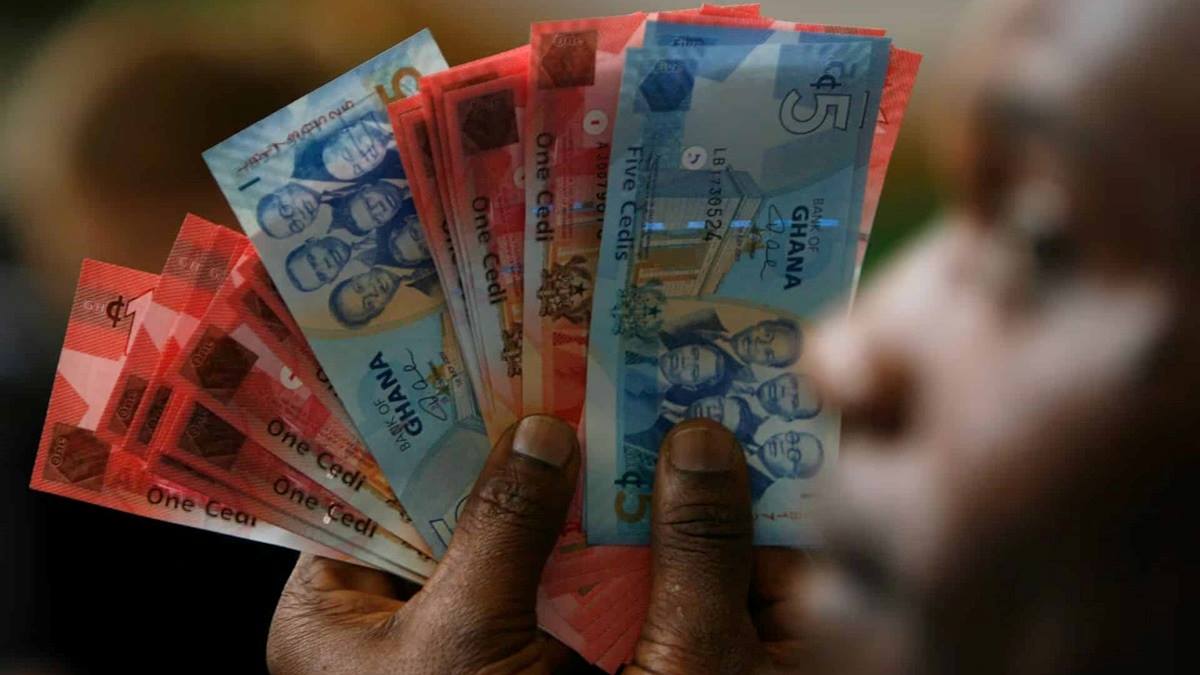
The Ghanaian cedi softened toward GHS 11.71–11.84/$ after the Bank of Ghana (BoG) delivered an aggressive 300-basis-point cut on November 18, lowering its benchmark policy rate from 14% to 11%.
Governor Johnson Pandit Asiama framed the cut as a technical realignment to match lower money-market and interbank rates (hovering near 10.20%).
However, because inflation has ticked up for three consecutive months and global gold and London cocoa prices edged lower, FX traders priced in thinner real yield buffers on cedi assets.
While peers swung sharply, the Kenyan shilling remained virtually unmoved at KES 129.93–130.05/$. Consistent diaspora remittance inflows, healthy foreign exchange reserves, and reduced dollar outlays for refined petroleum imports neutralised the broader greenback rally.
Because the CFA franc is pegged to the Euro at 655.957 CFA per EUR, it suffered no domestic devaluation. Instead, its slip toward 596.50–598.00/$ mechanically reflected the Euro’s retreat against a stronger U.S. dollar, raising landed costs for dollar-denominated imports across Côte d’Ivoire, Senegal, and Cameroon.
Trading near MAD 9.96/$, the dirham remained insulated from emerging-market volatility by Bank Al-Maghrib’s managed basket peg and lower energy import costs.
Angolan Kwanza (AOA) slipped 0.73% to AOA 918–919.70/$ as crude oil’s pullback from triple-digit levels compressed foreign currency inflows from state oil sales.
Drifted marginally to ETB 161.95/$ (with wider bank spreads reaching 164.13/$) as the National Bank of Ethiopia continued its phased liberalisation and FX auction allocation.
Zambian Kwacha eased toward ZMW 20.50/$ amid softer industrial metal sentiment and heightened global dollar demand. Currency desks across Lagos, Johannesburg, and Nairobi are focused on two immediate catalysts: the CBN monetary policy decision and the US Federal Reserve’s interest-rate decision.
The market is watching whether Nigeria holds at 23.00% to defend naira stability amid lower oil prices, or cuts again after October’s inflation drop.
With markets scaling back expectations for a December Fed rate cut below the current 3.75%–4.00% band, high U.S. Treasury yields are expected to keep emerging-market currencies on the defensive into year-end. Foreign Reserves Top $3.4trn as China Increases Gold Buying
