

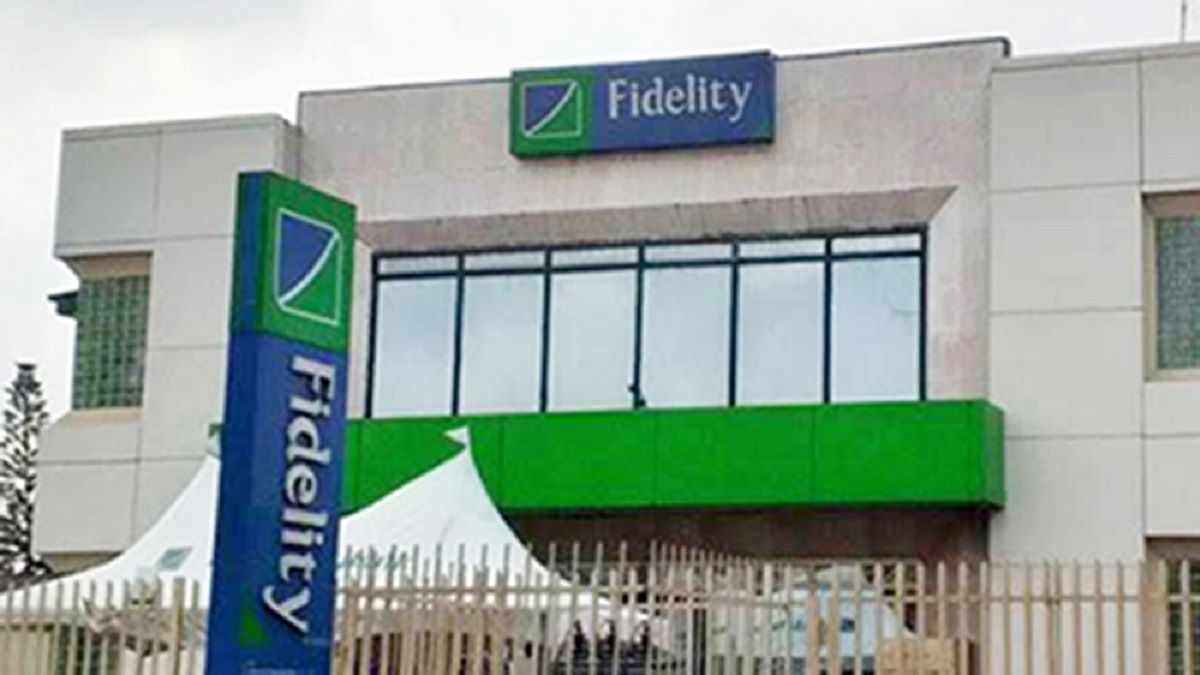
Fidelity Bank: Expectations Rise after Q3 Earnings Performance
Fidelity Bank Plc delivered an impressive performance in the nine months leading up to Q3 2024, marking a transformative period for the tier-2 Nigerian lender. The improved performance has, however, raised shareholders’ and analysts earnings expectations for financial year 2024.
A review of its unaudited financial statement showed that gross earnings saw a remarkable increase, doubling from N388.8 billion in 2023 to N772.5 billion in 2024, revealing a robust growth trajectory.
Fidelity Plc’s earnings surge was bolstered by an outstanding performance in its core banking revenue streams, most notably in fees and commission income, which rose substantially from N36.4 billion to N56.3 billion. The most striking figure in the bank’s Q3 performance is its profit after tax (PAT), which skyrocketed by an impressive 2.5 times to N224.7 billion.
The surge reflected a combination of operational efficiency, strong market positioning, and an ability to leverage favourable economic conditions. A closer look at Fidelity Bank’s financial performance showed a heavy tilt toward net interest income (NII), which constituted a dominant 83.0% of operating income.
This highlights the bank’s ability to capitalise on the higher yield environment, with a keen focus on managing interest expenses effectively.
Despite challenges posed by rising interest rates, the bank’s strategy has allowed it to contain the negative impact on interest expenses, resulting in a strong net interest margin (NIM) expansion of 3.5 percentage points, reaching 11.9%.
The favourable interest rate environment has played a crucial role in the bank’s performance. The growth in NII indicates that Fidelity Bank maximised its interest-earning assets, thereby driving operating income expansion on rising rates.
According to analysts, this performance underscores the bank’s impressive capability to navigate complex macroeconomic conditions. In the period, non-interest revenue (NIR) showed a modest improvement, contributing 17.0% to the bank’s operating income, reinforcing the diversified nature of its earnings.
While NIR growth is important, the bank’s ability to rely heavily on NII showcases its strong foundation in the core banking business.
All in, earnings per share (EPS) witnessed a significant jump, rising from N286.7 to N701.8 in Q3 2024. This upward movement in EPS reflects the bank’s exceptional profitability and its successful execution of strategies designed to boost shareholder value.
Looking ahead into 2025, the bank’s strategic focus will be on maximising higher asset yields in the first half of 2025 and expanding its interest-earning assets (IEA) to sustain the momentum in NII growth.
Given that NII has been the primary contributor to operating income over the past five years (around 77.2%), maintaining growth in this area will be pivotal for Fidelity Bank. Despite an anticipated 200 basis points (bps) moderation in yields across the yield curve, the outlook for the bank remains optimistic.
The firm is well-positioned to achieve a 50.9% increase in PAT, which is forecasted to reach N421.9 billion by the end of financial year 2025, driven by its strong fundamentals and capacity to adapt to changing market conditions. As a result of these stellar performance metrics, Fidelity Bank has a 12-month target price (TP) upward to N18.91, from the previous TP of N14.80.
This will be primarily driven by an improvement in the bank’s return on equity (ROE), which is expected to average 40.1% over the forecast horizon, a significant increase from its 5-year historical mean of 14.7%. The new TP reflects a promising upside potential of 18.2%, based on a reference price of N16.00.
However, the upside is tempered by the dilutive impact of the additional 27,343,589,744 shares issued via a rights issue and public offer, which has led to a larger share base. Despite this dilution, Fidelity Bank’s robust performance and solid growth trajectory make it an attractive investment.
In light of these developments, our recommendation for Fidelity Bank’s stock is a buy. With strong fundamentals, continued growth prospects, and a promising financial outlook, Fidelity Bank is positioned to maintain its upward trajectory, offering significant returns for investors. FBN Holdings Records Huge Off-Market Shares Transactions
