
Close Menu
MarketForces AfricaMarketForces Africa
    What's Hot

    Oil Prices Tumble by 5% as Iran Opens Strait of Hormuz

    June 15, 2026

    XRP Gains 4% as Ripple Sets $1bn Income Target for 2026

    June 15, 2026

    DOT – Polkadot Gains on T. Rowe Price Active Crypto ETF Approval

    June 15, 2026
    Facebook X (Twitter) Instagram
    Trending
    • Oil Prices Tumble by 5% as Iran Opens Strait of Hormuz
    • XRP Gains 4% as Ripple Sets $1bn Income Target for 2026
    • DOT – Polkadot Gains on T. Rowe Price Active Crypto ETF Approval
    • World’s First Trillionaire Shows Next Wave of Wealth Creation – CEO
    • Bitcoin Price Increases on US-Iran Sign Islamabad Declaration
    • Sell Pressure Hits Nigerian Bonds, Yield Rises to 16.70%
    • Investors Maintain Bearish Pose on T-Bills Ahead of Inflation
    • Airtel Africa Hits 52-Week High, Tracking N5,818 Target Price
    • Home
    • About Us
    Facebook X (Twitter) Instagram
    MarketForces AfricaMarketForces Africa
    Subscribe
    Monday, June 15
    • Home
    • News
    • Analysis
    • Economy
    • Mobile Banking
    • Entrepreneurship
    MarketForces AfricaMarketForces Africa
    MarketForces Africa » MarketForces News » Naira Devaluation Could Have Unintended Consequences on Growth

    Naira Devaluation Could Have Unintended Consequences on Growth

    Olu AnisereBy Olu AnisereOctober 12, 2021Updated:February 10, 2026 News No Comments4 Mins Read
    Naira Devaluation Could Have Unintended Consequences on Growth
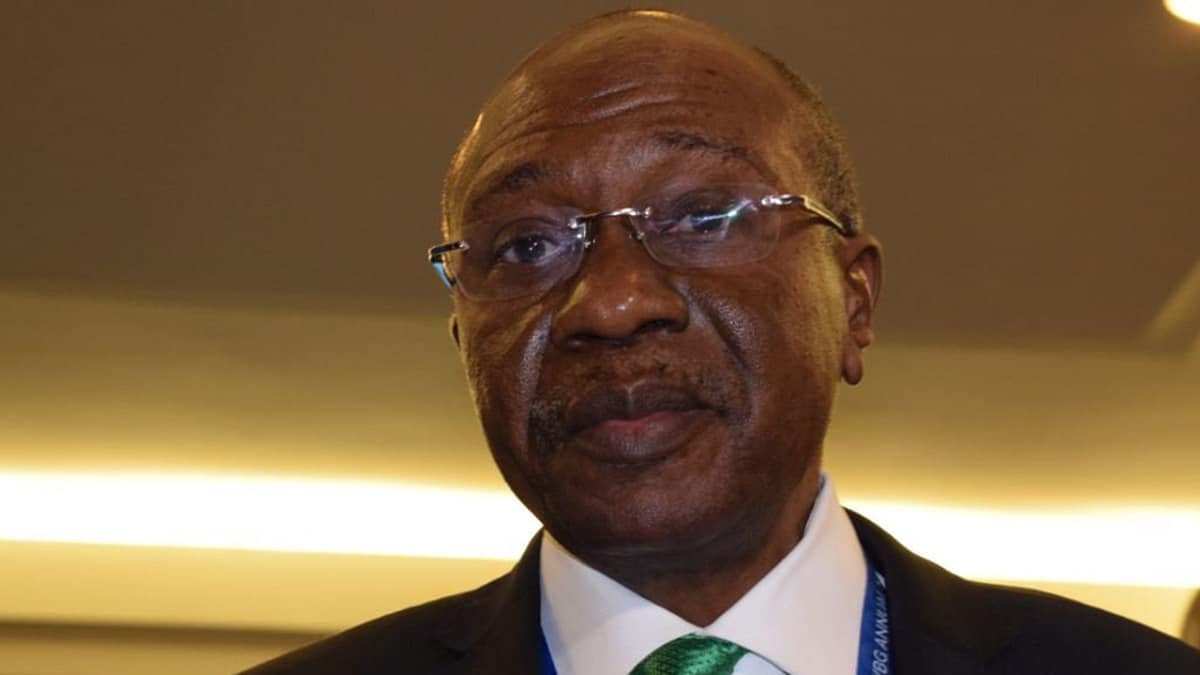
    Godwin Emefiele, CBN Governor
    Share
    Facebook Twitter LinkedIn Pinterest Email

    Naira Devaluation Could Have Unintended Consequences on Growth

    With steep inflation and unemployment that have lifted the poverty index, another round of devaluation of the Nigerian local currency, Naira, could have an unintended consequence on the gross domestic products (GDP) growth, analysts polled by MarketForces Africa said.

    In what appears like a general consensus, analysts think that Nigerians could find it difficult to breathe economically if the Central Bank depreciates the local currency again. Naira was N197 to a dollar in 2015 when President Muhammadu Buhari became the Nigerian President and since then it has faced multiple pressures due to dollar shortage.

    The Central Bank of Nigeria was professionally tutored on how to attract scarce dollars into the economy, albeit, an unpalatable call for a fresh devaluation of the local currency with a 17.01% inflation rate and 33% unemployment rate that have kept many Nigerian families struggling.

    Naira which has already been battered by a high level of unorthodox foreign exchange management policy initiated by the monetary authority trades at a wider spread between the official and black-market rate, thus creates stronger opportunities for arbitrage, currency speculation.

    However, Mr, Yemi Osinbajo differs on the FX management policy in the country, though at a point, the Central Bank Governor, Godwin Emefiele said the local currency was over-valued.

    In what appears as a messy condition for most Nigerians that have no dollar demand, prices of everything has been affected, and the poverty rate continues to rise.

    Unfortunately for the monetary authority that has mortgaged CBN independence for political acceptance, it takes a legal practitioner, who happens to be the Nigeria Vice President to tell Mr. Emefiele that all is not well with his multi-tiered foreign exchange policy.

    As factual as it sounds, another round of devaluation would trigger an unintended consequence in a growth-starved petrol-dollar powered economy.

    Nigeria has become one of the most expensive places to live despite its poor infrastructural condition. Speaking at a mid-term retreat of government ministers chaired by President Muhammadu Buhari, Osinbajo said Nigeria’s central bank needs to review its foreign exchange management strategy and ensure that the naira’s valuation reflects market reality.

    Nigeria has several exchange rates operating in parallel, a system put in place during a 2016 oil price crash because the government was seeking to avoid a large official devaluation of the naira as a matter of national pride.

    Osinbajo urged the central bank to rethink its demand management policy, which it has used to restrict imports in an attempt to manage pressure on the currency.

    “I think we need to move our rates to be as reflective of the market as possible. This … is the only way to improve supply,” the vice president said.

    Osinbajo said the naira had since June been trading at N411 to a dollar on the official market, supported by the central bank, and at N565 on the black market, where it trades more freely.

    “We can’t get new dollars into the system, where the exchange rate is artificially low,” he added.

    The central bank has devalued the currency three times since March last year, but the naira has continued to weaken. At N580 to a dollar, the local currency has hit new lows on the black market since the central bank in July banned dollar sales to bureau de change operators in a string of curbs on the currency market.

    “There must be synergy between the fiscal and the monetary authority. We must be able to deal with the synergy, we must handle the synergy between the monetary authority, the CBN, and the fiscal side.

    “Sometimes, it appears that there is competition, especially on the fiscal side. If you look at some of the interventions, you will find that those interventions are interventions that should be managed by ministries.

    “The ministry of industry, trade and investment should handle MSMEs interventions, and we should know what the CBN is doing. In other words, if the CBN is intervening in the MSME sector, it should be with the full cooperation and consent of the ministry of industry.

    “Sometimes you will get people who are benefiting more than once because we simply have no line of sight on what is going on, on one side.”

    “We can’t get new dollars into the system, where the exchange rate is artificially low. And everyone knows by how much our reserves can grow. I’m convinced that the demand management strategy currently being adopted by the CBN needs a rethink, and that is just my view.

    “Anyway, all those are issues that when the CBN governor has time to address, he will be able to address in full”, he said. #Naira Devaluation Could Have Unintended Consequences on Growth

    Read Also: No Quick Fixes for Economic Challenge in Nigeria, Others …

    Investors Nigeria
    Olu Anisere
    • Website
    • LinkedIn

    Olu Anisere is a financial and economic journalist at MarketForces Africa, specialising in African macroeconomic policy, international finance, energy markets, and continental development.He covers major multilateral institutions, including the International Monetary Fund (IMF), World Bank, and the United Nations Economic Commission for Africa (ECA), providing readers with frontline reporting on policies shaping Africa's economic trajectory.Olu has reported extensively on Nigeria's fiscal and monetary policy landscape, including CBN interest rate decisions, Nigeria's bond market, FX inflows, and the country's engagement with global financial institutions.His coverage spans IMF and World Bank Spring and Annual Meetings, African Ministers of Finance conferences, and high-level economic forums where Africa's development agenda is set.His reporting captures perspectives from Africa's most influential economic voices, including Tony Elumelu, senior IMF officials, and CBN leadership, bringing institutional insight and policy depth to MarketForces Africa's readers.Olu also covers Inside Africa — tracking economic, investment, and development stories from across the continent. Olu Anisere is based in Lagos, Nigeria.

    Keep Reading

    Oil Prices Tumble by 5% as Iran Opens Strait of Hormuz

    XRP Gains 4% as Ripple Sets $1bn Income Target for 2026

    DOT – Polkadot Gains on T. Rowe Price Active Crypto ETF Approval

    World’s First Trillionaire Shows Next Wave of Wealth Creation – CEO

    Bitcoin Price Increases on US-Iran Sign Islamabad Declaration

    Sell Pressure Hits Nigerian Bonds, Yield Rises to 16.70%

    Add A Comment

    Comments are closed.

    Editors Picks

    Oil Prices Tumble by 5% as Iran Opens Strait of Hormuz

    June 15, 2026

    XRP Gains 4% as Ripple Sets $1bn Income Target for 2026

    June 15, 2026

    DOT – Polkadot Gains on T. Rowe Price Active Crypto ETF Approval

    June 15, 2026

    World’s First Trillionaire Shows Next Wave of Wealth Creation – CEO

    June 15, 2026

    Bitcoin Price Increases on US-Iran Sign Islamabad Declaration

    June 15, 2026
    Latest Posts

    Oil Prices Tumble by 5% as Iran Opens Strait of Hormuz

    June 15, 2026

    XRP Gains 4% as Ripple Sets $1bn Income Target for 2026

    June 15, 2026

    DOT – Polkadot Gains on T. Rowe Price Active Crypto ETF Approval

    June 15, 2026

    World’s First Trillionaire Shows Next Wave of Wealth Creation – CEO

    June 15, 2026

    Bitcoin Price Increases on US-Iran Sign Islamabad Declaration

    June 15, 2026

    Subscribe to News

    Get the latest sports news from Dmarketforces Africa about finance, business and tech.

    Advertisement
    Facebook X (Twitter) Pinterest Vimeo WhatsApp TikTok Instagram

    News

    • World
    • Politics
    • Economy
    • Business
    • Opinions
    • Fintech
    • Science & Technology

    Company

    • About us
    • Advertising
    • Classified Ads
    • Contact Info
    • Editorial Policy

    Services

    • Subscriptions
    • Research
    • Due Diligence
    • Newsletters
    • Sponsored News
    • Work With Us

    Subscribe to Updates

    Subscribe to updates from MarketForces Africa, an independent financial news service provider.

    © 2026 MarketForces Africa. All rights reserved.
    • Privacy Policy
    • Terms
    • Accessibility

    Type above and press Enter to search. Press Esc to cancel.