

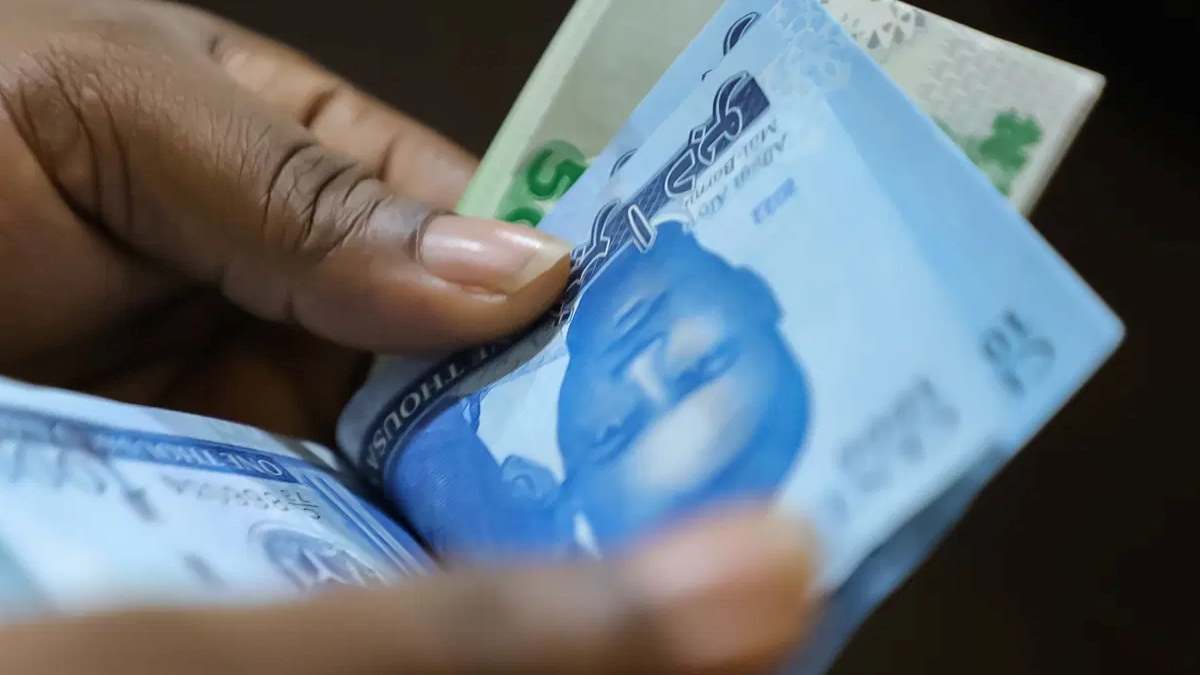
Naira Destiny Ties to Hot Money Equation – High Interest Rate, Foreign Capital
The naira destiny has been successfully tied to hot money equation – high interest rates can only bring foreign capital into one of the top African economies with signficantly low competitive, and comparative cost advantage.
High interest rates continue to attract foreign capital into Nigeria’s financial market, a development most analysts see as less productive for the overall well beign economy compared with direct investment drive.
Offshore investors are chasing yield, not productive capability, and they continue to pull out when the tide switches against them in the market. Their mindset is carved in: “money goes to where it is treated well”.
OMO bills are sold to foreign investors at an average of 20% for an investment horizon of up to 12 months, and this has kept hard currency flowing freely, helping the naira look good despite a lack of a significant production base.
In the foreign exchange market, the naira always suffers when foreign capital leaves. The currency that represents the sovereign authority is not respected even in Benin Republic – major reason why almost all Nigerians want to ‘Japa’.
Forex Market
With the recent rounds of OMO bill auctions, Nigeria’s fx market recalibrated from a weakened position in the previous week. The naira gained against the US dollar in the local foreign exchange market, supported by investors’ confidence and improved FX liquidity.
The local unit was relatively stable in the first half of 2026, and analysts said the outlook remains constructive as Nigeria’s high double-digit interest rates continue to attract hot money in financial markets.
Foreign portfolio investments (FPIs) remained key drivers of FX inflows at the Nigeria Foreign Exchange Market (NFEM) year to date, supported by exporters, non-bank corporates, including individual and other sources.
The Central Bank of Nigeria (CBN) has been supportive of FX inflows, with occasional intervention through dollar sales to banks at a lower-than-market rate. The FX intervention, which has been gradually declining, stabilised the naira in the first half of 2026.
With about $51.5 billion in gross external reserves, the naira outlook remains positive, analysts told MarketForces Africa, adding that elevated interest rates will keep foreign capital in Nigeria until a dovish stance changes the market narrative.
Nigeria’s gross external reserves recorded an accretion, reaching the highest level since 2009 due to oil windfalls and increased oil production.
“… our forward – looking FX outlook remains moderately constructive as Nigeria’s elevated interest rate environment continues supporting foreign portfolio inflows into the fixed – income market”, Zedcrest said in a macroeconomic outlook for the second half of the year.
Analysts said sustained high OMO and fixed-income yields are expected to preserve the attractiveness of Nigeria’s real carry trade opportunities, particularly as the CBN maintains a relatively hawkish liquidity-tightening stance through the second half of 2026.
Combined with elevated crude oil receipts relative to the federal government’s benchmark assumptions, this transmission mechanism should continue to support medium-term FX stability and improve overall market liquidity within the Nigerian Foreign Exchange Market framework.
Last week, the naira appreciated against the U.S. dollar across both foreign exchange market segments. The currency strengthened by 0.78% at the official window, closing at ₦1,370.19/US$, and by 0.36% in the parallel market, closing at ₦1,383.00/US$.
The tide in the global commodity market is turning against Nigeria as the US-Iran peace arrangement has brought oil prices down to pre-war levels.
For most of the week, crude oil prices remained under pressure, with oil futures heading for a fourth consecutive weekly decline amid easing geopolitical tensions and improved global supply.
On Friday, US WTI crude declined by 0.10% to $68.62 per barrel, while Brent crude gained 0.17% to $71.92 per barrel. Similarly, Nigeria’s Bonny Light crude fell by 0.26% week-on-week to $71.63 per barrel.
The naira is expected to remain relatively stable, supported by improved FX liquidity and healthy external reserves. Meanwhile, oil prices are likely to remain volatile amid evolving geopolitical developments, OPEC+ supply decisions, and the global demand outlook. Naira Little Changed as Forex Market Activities Ease
