

2024 Shaping Up to Be a Tricky Year for Policymakers
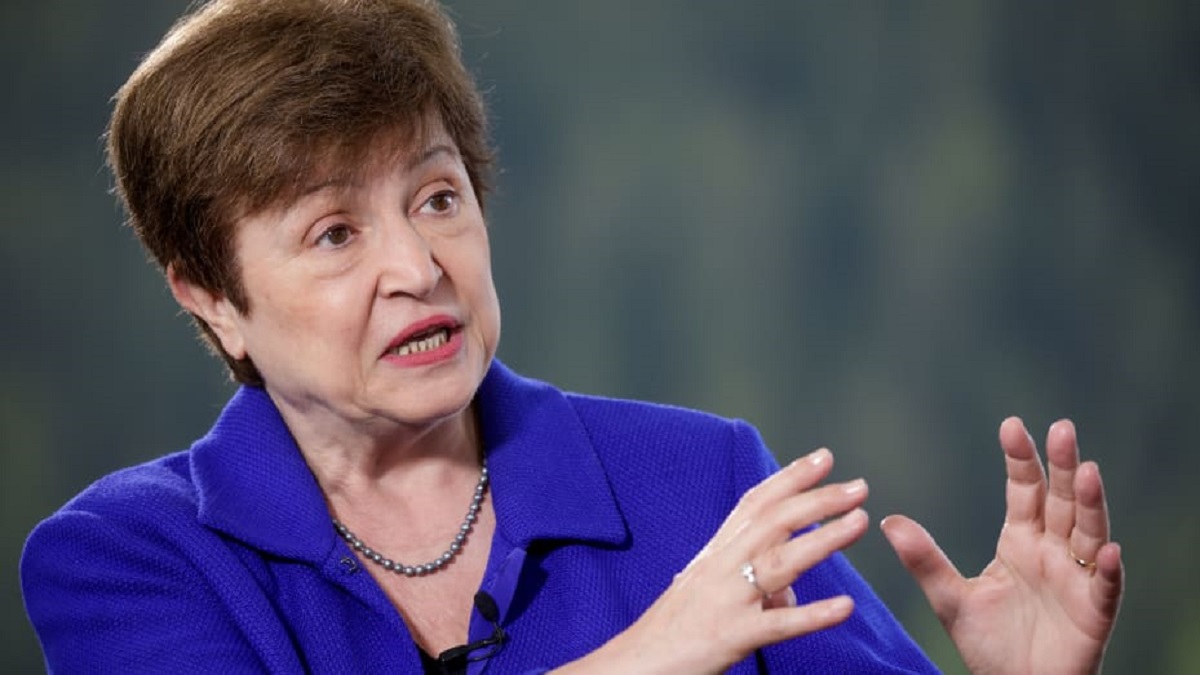
2024 shaping up to be a tricky year for policy makers, the International Monetary Fund (IMF) Managing Director Kristalina Georgieva said during the first meeting of the G20 Finance Ministers and Central Bank Governors in São Paulo, Brazil.
IMF boss thank the Government of Brazil and its key officials for warm welcome and hospitality and for their exceptional commitment to lead an ambitious G20 agenda; to build a more equitable, prosperous, sustainable, and cooperative future, with a strong international monetary system as its foundation.
She said Brazil’s economy continues to perform well, and its policy reforms should help lift Brazilians’ growth prospects and living standards. I applaud the authorities’ plans to steer Brazil’s transformation to a sustainable, inclusive, and green economy.
“I also want to recognize Brazil as a global leader when it comes to financial innovation. I came into these meetings with a clear message: with the recent improvement to the global term outlook, G20 policymakers have an opportunity to rebuild policy momentum and shift their focus to tackling medium-term economic challenges.”
Global outlook, risks and policy challenges
“Globally, we are poised for a soft landing, but the plane is not quite yet on the ground. Growth is projected this year 3.1 percent versus 2.9 percent when we last met. Inflation is down faster than we expected. In our baseline, global headline inflation is expected to fall to 5.8 percent this year, and 4.4 percent next year.
“And this improved outlook also benefits developing economies that were cut off from markets for quite some time – such as Cote D’Ivoire, whose recent bond issuance was several times oversubscribed, followed by Benin and others”.
This is encouraging, yet we must be conscious of three things.
“First, the risks on the downside. One is a more persistent inflation because of new price spikes that could result from geopolitical shocks and other supply disruptions – such as climate events – or from looser financial conditions, which could slow down the normalization of monetary policy. We can also have an upside risk, in which inflation falls even faster than expected. And that, of course, would be great for all of us.
“Second, we should not be complacent because growth is still weak: 3 percent year after year, against an average of 3.8 percent in the pre-COVID decade. And even worse, in many places it is because of low productivity. Countries that are doing well, like the United States and some emerging market countries, have realized productivity gains.
“And third, we must be mindful that if interest rates are to remain higher for longer, financial sector risks could go up. So, they require careful monitoring. We must be vigilant for early signs of stress and systematically address vulnerabilities, especially in non-banking financial institutions.”
“For policymakers, 2024 is shaping up to be a tricky year. Central banks need finish the job on inflation by calibrating carefully whether they cut and how fast they cut, against the risk of being too slow and affecting growth negatively. Government authorities have to pursue fiscal consolidation to rebuild buffers and prepare for shocks that may still come.
“We advise for medium-term fiscal plans to gradually help make this consolidation. When we look around the world, countries are in different places on monetary and fiscal policy, so authorities cannot simply take a cue from somebody else. We need to rely on national data to inform the appropriate policy stance.
“And many officials rightly spoke at this meeting about structural reforms, which they take on for productivity gains, for growth improvements, and for improvements in standards of living. Finally on Artificial Intelligence (AI), IMF staff has produced a very interesting country index on AI preparedness that can help inform governments’ efforts in dealing with the digital transition.”
A Financial Sector for the 21st century
“Innovations are accelerating, and they shape payments and finance. They generate both benefits and risks. We have to be careful to concentrate on both and not only be focused on the risks.
Nonetheless, for us at the Fund, it is the risks to macro financial stability that legitimately take a priority. But we also look into two things: how financial innovations can contribute to financial inclusion, and through it to growth, and how to serve as a transmission line between ‘the best and the rest’. We have a universal membership, and we have the responsibility to not let countries fall behind. Our attention is in three areas:
“First, CBDCs. They have the potential to improve accessibility. They also have the potential to improve the stability and efficiency of payments, both domestically and across borders. And this potential is already being realized. But we must secure interoperability upfront, not try to catch up later.
“And we do need to be aware of the risks of bank dis-intermediation domestically, and capital outflows internationally. At the Fund, our contribution is to aggregate experiences. We have produced a CBDC handbook to help share knowledge and lessons. It is a living document, and we count on your help to make it as useful to the membership as possible.
“Second is the growth of crypto assets. They do require a comprehensive policy and regulatory response. And we’ve heard also about the risks of criminal misuse. We will continue to support countries on implementing the roadmap that was endorsed by the G20. The FSB and standard setting bodies are working on it. What we try to do is be a transmission line to about 150 supervisors across four regions through outreach events and technical assistance.
“And finally, we are very interested in how to move forward on cross-border payments and financial market innovations, including tokenization of assets. Our work here is about making existing payment systems work as well as they possibly can. And, on that, we collaborate closely with the World Bank.
“But in parallel, we see value in new classes of cross-border platforms for payments and the exchange of financial assets in token form. We recognize that the payment infrastructure has to be compatible with all those new assets, so we can actually make best use of it. The work is enormous, and we have no time to waste.”
Inequality
“At the IMF, we focus on sound macroeconomic fundamentals, so that economies can grow and provide more opportunities to their people. But we also look at inequality because it undermines social cohesion, and it also affects productivity and growth. In that regard, we have learned important lessons on the role of social safety nets.
“We hope to recast them into social safety ropes; to help people help themselves. On the role of labour markets and financial inclusion, we pay particular attention to participation of women in the labour force. We also have a policy that establishes a floor for social spending in our programs, so that resources for education and health, which are key social objectives, can be protected.
“I want to also stress the importance of an integrated world economy, because we know trade is good for all countries, but it is particularly good for low-income countries. At the Fund, we take to heart what opportunities there are that we need to capture. Obviously, artificial intelligence is an opportunity. But it is also a risk to increased inequality if it’s not handled right.
Finally, data. Better data means better policies. We play a big role in the G20 Data Gaps Initiative, including on this topic – how to provide comprehensive data to address inequality.”
Financing for development and debt
“I thank the Presidency for highlighting financing for development as the challenge of our time. Unfortunately, we are losing ground rather than gaining. We need an extraordinary package of domestic actions and external support.
“On the domestic policy front, we at the IMF work in strong partnership with the World Bank and other organizations to help our members put in place sound macroeconomic fundamentals. This allows them to achieve higher growth rates and improve standards of living. We are taking to heart the significance of domestic resource mobilization, the most important source of financial capacity of countries to help their people.
“Together with the World Bank, we have started a large domestic resource mobilization initiative, in which we will help our members comprehensively address how to increase resources in the public purse, how to use this money most effectively, how to give the financial sector confidence so that savings can turn into productive investment, and how to build domestic capital markets to increase the efficiency and effectiveness of every penny.
“Concerning external support, our role is to be there for members that need a balance of payments support, and I want to thank members of the G20 for helping to make the IMF financially stronger by supporting a 50 percent quota increase at the Annual Meetings in Marrakech. We now need our member countries to finalize domestic procedures to bring it into effect.
“With the contributions to our Poverty Reduction and Growth Trust (PRGT) subsidy and loan accounts, we have met our first-stage fundraising goal in Marrakech. And the $40 billion pledged for the Resilience and Sustainability Trust (RST) is now delivering 17 programs in one short year. We are working very effectively with the multilateral development banks – the World Bank, the Inter-American Development Bank, the other development institutions – because we recognize that only together, we can make a stronger impact.
“Finally, on debt, as we heard from many, high debt service is a problem for a number of highly vulnerable countries, constraining resources that could go to development. I applaud the efforts that have be put in so far by G20 members to make the Common Framework deliver.
“We now have four countries undertaking debt restructuring, each one faster than the previous one. I am committed to helping advance the work on addressing debt vulnerabilities through the Global Sovereign Debt Roundtable so that we better address issues like timeliness, predictability, and comparability of treatment. Together we can make the difference.” #2024 Shaping Up to Be a Tricky Year for Policymakers
