

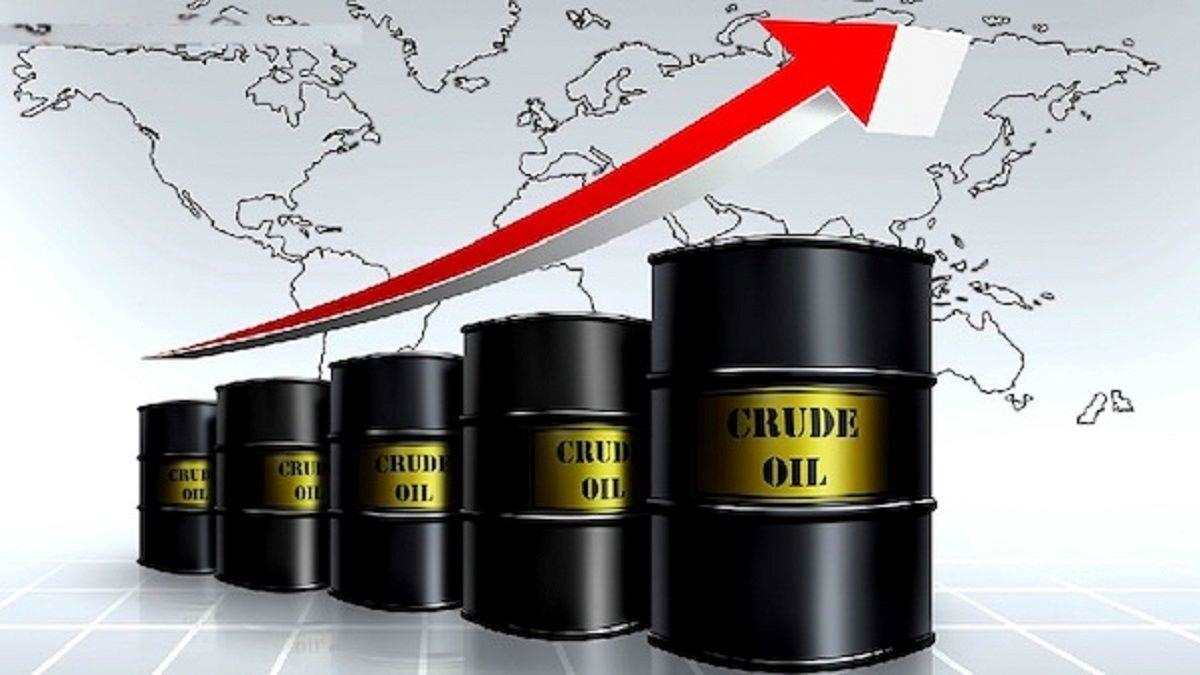
Oil Tops $107 as U.S. Plans to Force Hormuz Reopening
Oil prices climbed on Friday as reports of possible renewed US military action against Iran and rising tensions around the Strait of Hormuz heightened concerns over global supply security.
International benchmark Brent crude traded at $107.41 per barrel, up around 1.6% from the previous close of $105.72. US benchmark West Texas Intermediate (WTI) increased about 2% to $103.19 per barrel, compared with $101.17 in the previous session.
Prices gained after reports suggested US President Donald Trump may reconsider military options against Iran following his visit to China. Israeli and US military officials held talks on possible scenarios for renewed military action against Iran during the past week, with Tel Aviv pushing for a return to the conflict, according to claims on Thursday by Israeli public broadcaster KAN.
The broadcaster said senior Israeli military officials and representatives from US Central Command (CENTCOM) discussed possible renewed operations against Iran, along with other US options, including tightening a maritime blockade in the Strait of Hormuz as part of the so-called “Project Freedom.”
According to the report, Israel conveyed a message to Washington expressing its interest in resuming military action, arguing that the war with Iran had ended “earlier than it should have.”
KAN also claimed that one of the scenarios discussed involved limited US strikes on Iranian fuel and energy facilities aimed at pressuring Tehran to return to negotiations and abandon its nuclear program.
The report added that Israel had prepared for possible Iranian retaliation, including renewed missile attacks on Israeli territory if fighting resumes.
On Thursday, US President Donald Trump said that he is losing patience in ongoing negotiations with Iran. “I’m not going to be much more patient. No, I’m not. They should make a deal,” he told Fox News.
Trump also suggested that Chinese President Xi Jinping also wants a diplomatic agreement. “President Xi would like to see a deal made … He’d like to see the Hormuz Strait open,” he added.
Trump’s visit to China comes amid the ongoing Middle East conflict, triggered after US and Israeli forces launched strikes against Iran on Feb. 28, prompting retaliation against Israel and US allies in the Gulf along with the closure of the Strait of Hormuz. An indefinite ceasefire is currently in effect.
Analysts said geopolitical risks in the Middle East continue to dominate market sentiment, with any disruption to flows through the Strait of Hormuz likely to keep oil prices volatile in the near term.
Meanwhile, the head of US Central Command told lawmakers Thursday that Iran was in the possession of highly enriched uranium before the US and Israel went to war against that country earlier this year,
Asked by a senator on the Senate Armed Services Committee if Iran had uranium enriched up to 60%, Adm. Brad Cooper said, “Yes, sir. They did.”
Cooper maintained that there is no civilian use for uranium enriched to that threshold, and said the war has increased the amount of time it would take for Iran to develop a nuclear weapon.
The senior military official declined to comment when asked if securing the nuclear material would require the US to put boots on the ground in Iran.
Cooper alleged that in late 2025, Iran dramatically increased its ballistic missile program, but maintained that its capabilities across the board have been highly eroded from US and Israeli attacks.
Bitcoin Rises as U.S Names Fed Chair, Boosts Crypto Regulation
