

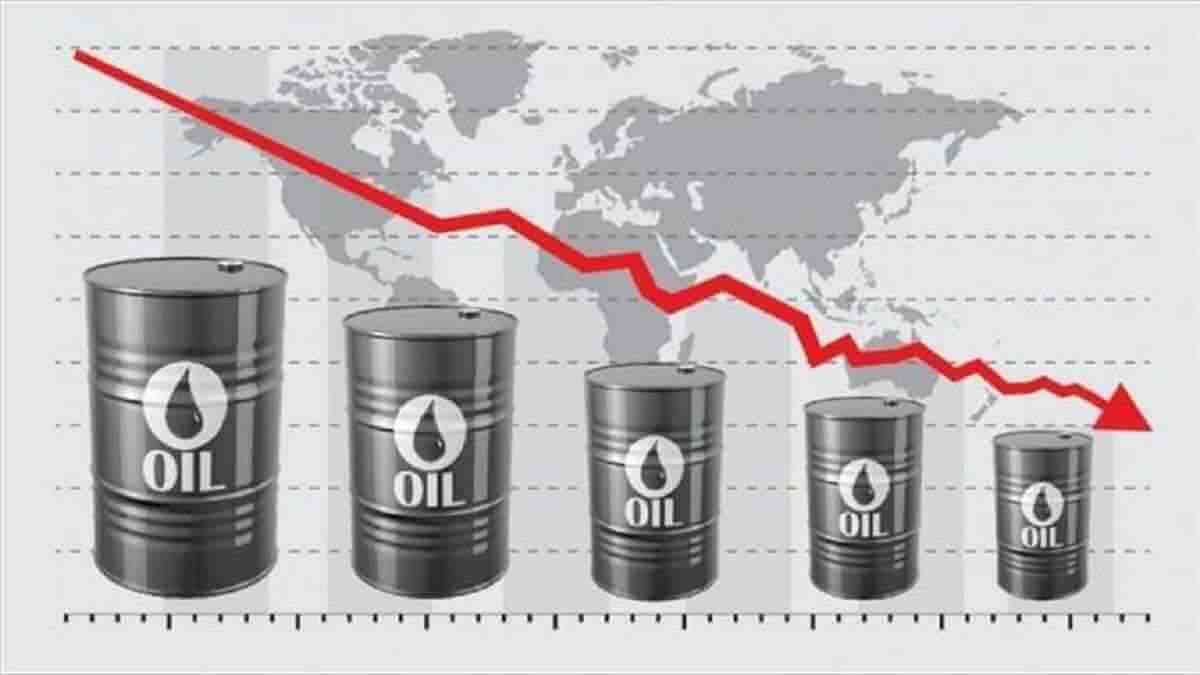
Oil Falls as Protests in China Raised Demand Concerns
Amidst instability in the global economy, oil prices lost almost $2 a barrel on Monday following ongoing China Covid-19 restrictions and protests in several cities, fuel demand concerns in the top oil consuming country.
International benchmark Brent crude traded at $81.33 per barrel, down by 2.84% from the closing price of $83.71 a barrel in the previous trading session.
Also, the American benchmark West Texas Intermediate (WTI) traded at $74.22 per barrel at the same time, a 2.70% loss after the previous session closed at $76.28 a barrel.
Prices began the week on a bearish note, fueled by ongoing covid-19 restrictions in China and concerns about weak demand in the world’s largest oil importing country.
Recall that local media reported protests in several cities late on Saturday against China’s strict coronavirus pandemic policy. In early Asian trade, Brent fell to its lowest level since Jan. 12 at $81.11, while WTI dropped to an 11-month low of $73.84.
Uncertainties in the oil markets are reflected in the oil price forecasts, with Morgan Stanley, a US-based international investment and banking firm, raising its oil price forecast last week for 2023 from $100 to $105. READ: Oil Prices Steady as Libya Supply Disruption offsets China’s Low Demand
The main factors cited were additional Russian supply impacts beginning in May and fading prospects for the Iran deal. Investors are now anticipating the OPEC+ meeting on Dec. 4, when producers are expected to decide on production for January, and the EU ban on Russian oil exports on Dec. 5.
Although the EU failed to reach a deal to cap prices for Russian seaborne oil, the bloc is set to ban Russian oil starting from Dec. 5 and oil products on Feb. 5. The G-7 countries are also planning to impose a cap of $65–$70 a barrel on Russian seaborne oil.
#Oil Falls as Protests in China Raised Demand Concerns
