

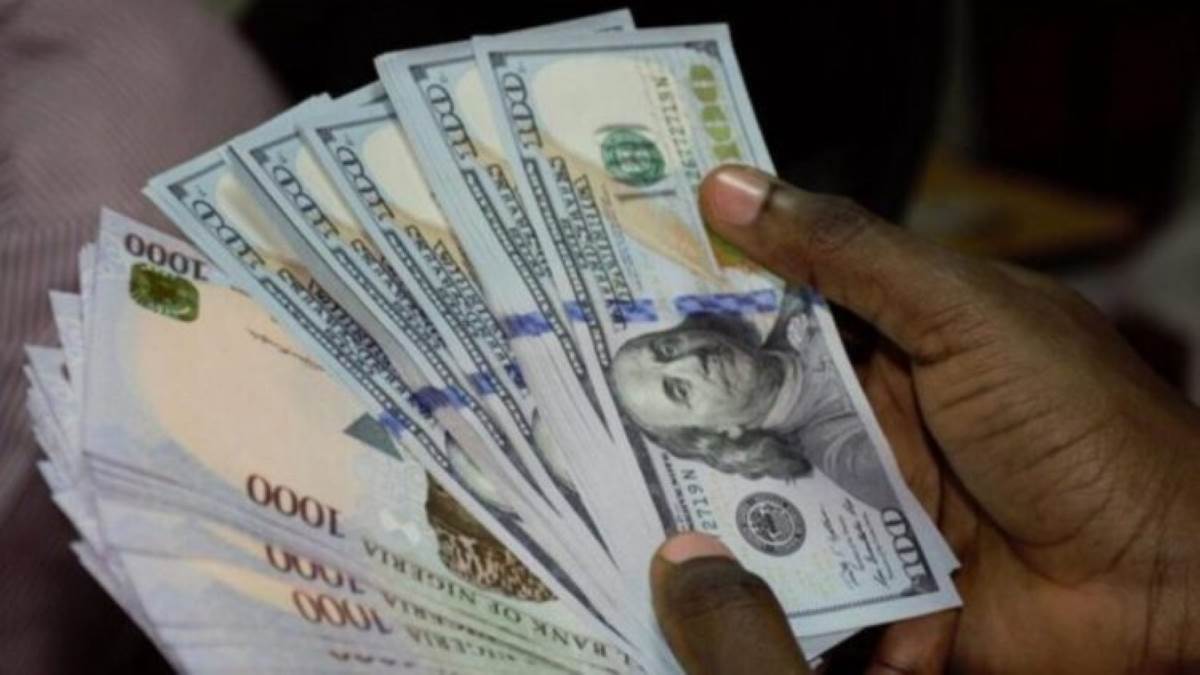
Naira Skids on FX Payment Burden, Foreign Reserve Hits $46bn
The naira skidded against the US dollar at the official window as FX payments weighed on liquidity balance in Nigeria’s forex market, amidst growing external reserves.
According to data obtained from the Central Bank, spot fx rate weakened, falling by 0.21% in the official window to N1,421.63 and 0.72% at the close of the trading session on Friday.
In the parallel market, the naira dell to N1,475, reflecting persistent demand pressures and structural FX imbalances. The market is seeing a growing naira bear on the back of geoeconomic concerns across the globe, driven by the U.S. global trade-distorting stance.
Some projections signal the naira will face significant pressure with some financial market development that could force naira assets selloffs, citing capital gain tax.
Cowry Asset Limited said the naira is expected to remain under pressure in the near term due to FX demand pressures and structural imbalances, though rising external reserves may provide some support.
Nigeria’s external reserves rose slightly by 0.20% to $45.99 billion, supported by steady oil receipts, stronger non-oil inflows, and a trade surplus.
Global Oil prices settled at their highest in over a week on Friday after U.S. President Donald Trump ratcheted up pressure against Iran through more sanctions on vessels that transport its oil, and announced an armada was heading towards the Middle Eastern nation.
Oil prices increase after U.S. President Donald Trump’s remarks about a naval “armada” heading to Iran heightened geopolitical risks.
Brent crude traded at $64.50 per barrel and U.S. West Texas Intermediate at $59.78, reversing earlier declines linked to easing U.S.–Europe tensions and tariff decisions.
Bonny Light crude, however, fell 1.21% to $67.61 amid concerns over potential supply disruptions from Iran. Oil prices are likely to stay volatile, driven by geopolitical risks in the Middle East and OPEC supply factors, analysts said.
Gold rallied sharply as safe-haven inflows intensified amid geopolitical uncertainty, a softening dollar, policy risks, and ongoing central-bank accumulation, pushing the metal closer to the key $5,000 threshold.
Geopolitics have been at the forefront of investors’ attention in the new year. The most consequential development has most likely been the sea change underway in Venezuela’s oil sector, with potentially far-reaching and unforeseen ramifications for the U.S. oil industry and, within that, for the value of the WTI/Brent arbitrage, CME Group said in a report.
As the United States has effectively become the sole protector and manager of the Latin American OPEC members’ oil production and exports, the prevailing belief is that refiners along the U.S. Gulf Coast will receive a steadily increasing volume of heavy-grade crude oil from Venezuela, the very type these refiners were built to process decades ago. First Holdco Gains 12.8% as Investors Tag Along with Otedola
