

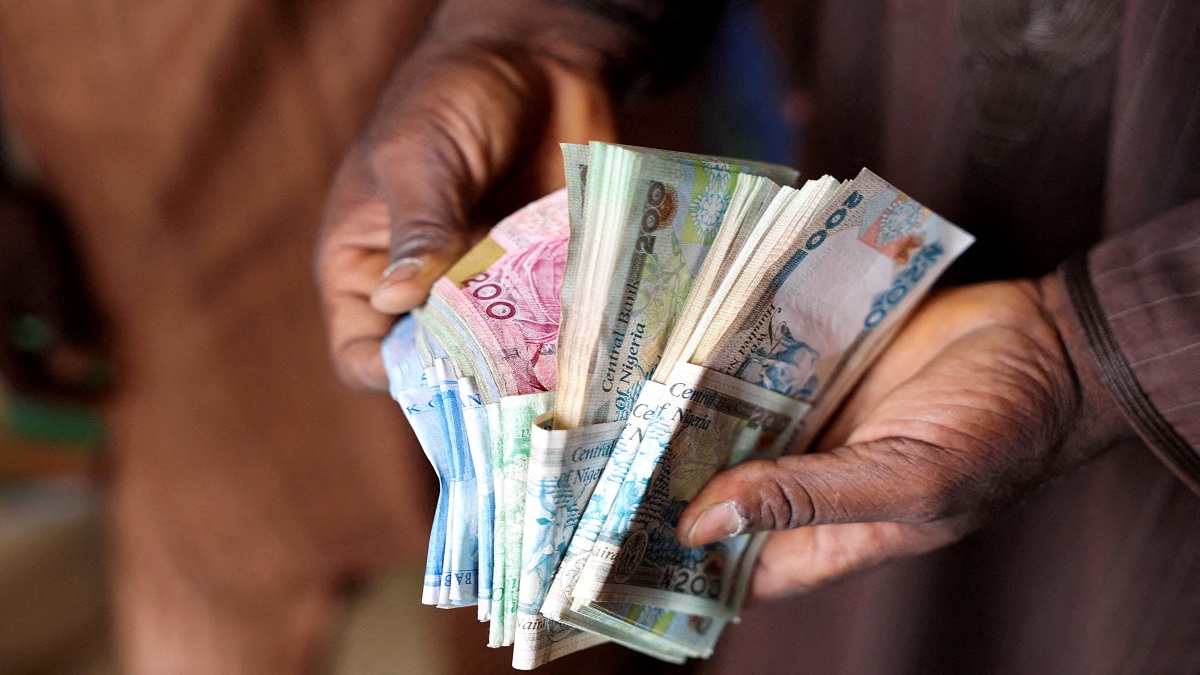
Naira Falls, Official Rate Surpasses Black Market by N30
The Nigerian naira fell as US dollar demand weighed on the exchange rate at the official window. In contrast, the exchange rate at the alternative market strengthened further.
The gap between official and parallel market rates surged to N30 due to diverging rate movements; exchange rate data reviewed show.
MarketForces Africa reported that the foreign currency market experienced a unified rate yesterday but the feat was lost quickly as the apex bank slowed down forex market intervention.
The Central Bank of Nigeria (CBN) failed to inject the US dollar despite accretion into the nation’s external reserves. The apex bank announced its reform has attracted foreign investors’ interest in the economy. The CBN went further ahead to offer higher interest rates on borrowing instruments to attract hot money.
These steps yielded, though Fitch Ratings said in a note that despite all the CBN reform moves; it will take time for foreign investors’ confidence in Nigeria to return. Still, the FX challenge has persisted, causing the naira to lose value.
Upside potential has been limited at the official window since the adjustment to FX pricing methodology by FMDQ early in the year. This, and official devaluation has kept the naira hovering at N1600 on the average over a month.
Currency traders said the future of the naira depends solely on its ability to attract foreign inflows. For Nigerians, imports appear to be demand-inelastic. It would take some time for FX users to adjust to new rates in the currency market.
Demand has always been high, meaning there are other behavioural aspects to naira pressure. Government officials recently attended foreign training abroad, spending huge amounts despite foreign currency scarcity.
In the foreign exchange market, the Naira depreciated by 0.78%, closing at ₦1,615.94 per US dollar at the official market, according to information from the FMDQ website. Meanwhile, the exchange rate closed at ₦1,585 to the US dollar in the parallel market.
The price of oil saw an uptick in the global commodity market. Brent crude climbed 1.97% to reach $83.53 per barrel, and WTI crude also experienced a 2.29% increase, reaching $79.34 per barrel.
According to data from FMDQ, average NAFEM turnover decreased by -18.0% or -USD280 million week on week to USD1.2 billion on Friday.
In its market update, Coronation Research said the autonomous foreign exchange window recorded an inflow of USD 705.9 million. Analysts highlighted that there was no inflow from the CBN in the previous week.
Foreign portfolio investors (FPIs) accounted for 52.2%, non-bank corporates accounted for 26.0%, exporters accounted for 19.0%, and others accounted for 2.8%, according to a Coronation Research note. #Naira Falls, Official Rate Surpasses Black Market by N30
Stanbic IBTC Transforms Education Landscape with Adoption of Four Schools
