

Naira Falls as CBN Says Petroleum Imports Gulp 40% of Dollar Inflows
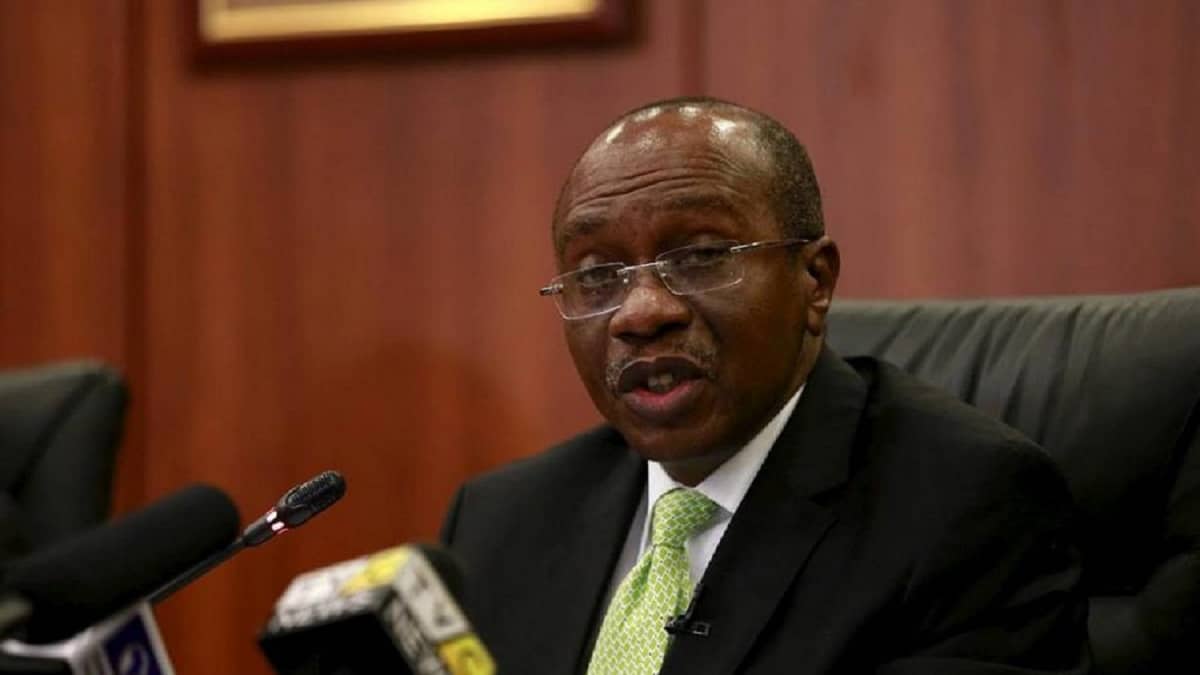
The Nigerian local currency, naira, drops as the Governor of the Central Bank of Nigeria (CBN), Godwin Emefiele, said 40% of its foreign exchange receipts go into payment for petroleum and petrochemical importations.
Emefiele, the CBN Chief made the disclosure at the World Bank /International Monetary Fund annual meetings in Washington D.C.
Naira faced stronger pressure in the just concluded week at official and parallel market segment amidst dollar shortage, though global prices of crude oil remained stable while Brent crossed $80 per barrel amidst a global energy crisis.
The local currency crossed N422 to a dollar at the investors and exporters’ foreign exchange window mid-week as demand for imports settlement rise at the national autonomous foreign exchange fixing.
Some analysts told MarketForces Africa the only way out for Nigeria is to strengthen exports in non-oil commodities and boost crude production to meet the Organisation of the Petroleum Exporting Countries as the first step to reducing fiscal slippage.
“Nigerian budgets have been on deficits because Federal Government’s revenues expectations have constantly underperformed and this would always lead to borrowings”, a source in the government told MarketForces Africa.
Analysts added that drive for revenue growth is not at the same level as the drive for spending in the government. This has cast doubts on rising pubic debts in the country and devaluation would add pressure to the misery index in the country.
According to data from the FMDQ Exchange platform, Naira depreciated against the greenback by 0.19% to close at N415.07 at the weekend in the Investors and Exporters FX window despite the 3.77% accretion to the external reserves.
Also, Naira depreciated by 0.79% at the Parallel market to close at N572.00 with rising currency speculation amidst a wider spread between the official and black-market quotes.
The exchange rate however closed flat at N380.69 to a dollar at the Interbank Foreign Exchange market amid weekly injections of US$210 million by CBN into the forex market.
From the total sum injected, US$100 million was allocated to Wholesale Secondary Market Intervention Sales (SMIS), US$55 million was allocated to Small and Medium Scale Enterprises and US$55 million was sold for Invisibles.
Elsewhere, the Naira for dollar exchange rate increased -Naira depreciated- for most of the foreign exchange forward contracts. In the new week, analysts at Cowry Asset indicate an expectation that Naira will stabilise against the dollar amid rising crude oil prices and external reserves.
Data from the Central Bank shows that Nigeria’s gross reserve position closed higher, rising by US$1.03 billion during the week to USD39.42 billion.
At the investors and exporters foreign exchange window, the total volume of dollars transacted declined by 19.8% from the beginning of the week to US$786.40 million.
Analysts at Cordros Capital hinted that trades were consummated within the N404.00 – 447.60 per dollar band.
In the forwards market, the rates on the 1-month dropped 0.1% to N416.07, 3-month dipped 0.3% to N421.01, 6-month declined -0.5% to N431.47, and 1-year plunged -1.1% to N450.61 per contract, reflected the depreciation of the naira to a dollar.
“We expect improved liquidity in the Investors and Exporters FX window over the medium term, given our expectation of increased oil receipts in line with the rise in crude oil prices and inflows from foreign currency borrowings”, Cordros Capital said in a market report.
Accordingly, analysts maintained the expectation that the naira will remain relatively range-bound at N410.00 – N415.00 per dollar at the Investors and Exporters FX window.
Emefiele, at the International Monetary Fund /World Bank annual meetings in Washington DC, stated that Nigeria spent almost 40% of its foreign earnings on the importation of petroleum products and petrochemicals.
However, the apex bank governor was optimistic that the Dangote Refinery, which is expected to begin operations sometime in July 2022, would ease the country the pressure of the humongous foreign currency that is expended on importation. # Naira Falls as CBN Says Petroleum Imports Gulp 40% of Dollar Inflows
Read Also: T-Bill Records Upward Yield Repricing as Naira Falls
