

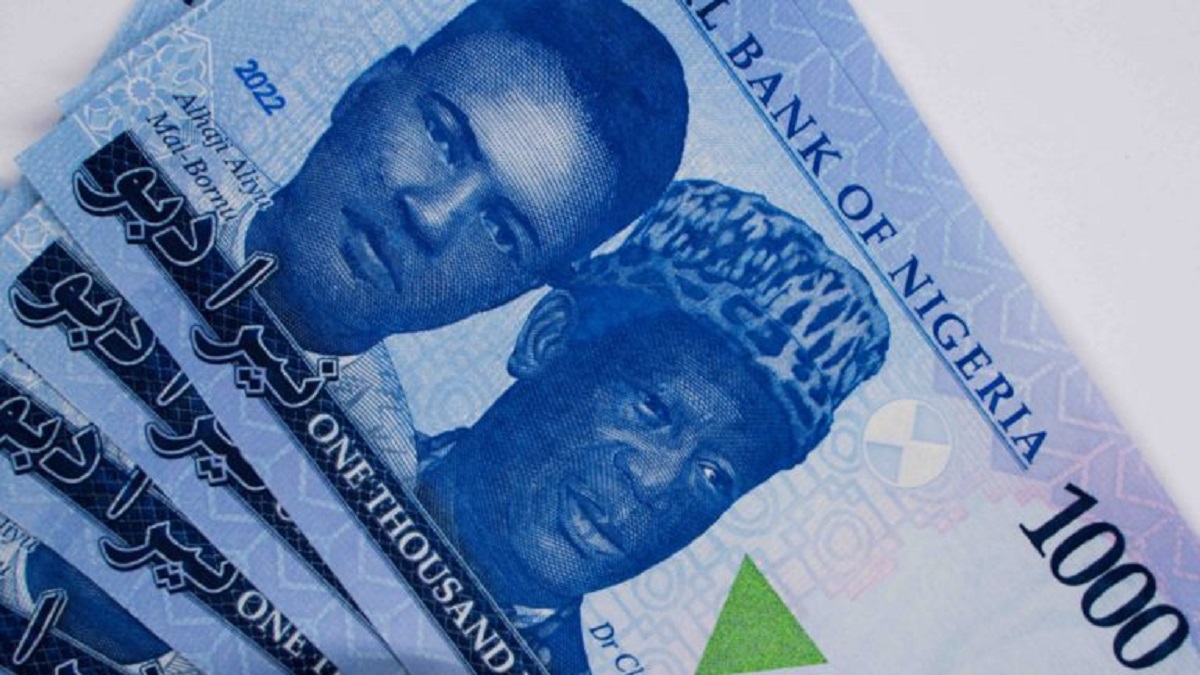
Naira Diverges as Cheaper Unofficial Rate Spurs Demand
The Nigerian naira reclaimed further value at the autonomous foreign exchange market at the beginning of the week amidst multiple efforts to stabilise the local currency. Data showed that the close of business on Monday, exchange rates moved in diffierent directions.
There was short-run demand at the parallel market due to positive FX gap. This caused fresh naira depreciation after FX users noticed it was cheaper to buy from unofficial market while the official rate attracted higher quotes.
The apex bank has revealed a plan to clear about $2.2 billion FX backlog it owed to banks currently hanging due to reconciliation from five local lenders. The authority hinted that its reform has started yielding results as foreign investors flocked open market operations (OMO bills) auction conducted just last week.
The Central Bank of Nigeria (CBN) has continued to take decisive steps to ensure the naira regains its strength. Yemi Cardoso, CBN Governor, has maintained the naira is grossly undervalued.
Analysts said for the local currency to reclaim its losses and trade steadily, there will be a need for the supply side to improve strongly – perhaps to a level seen before the pandemic.
“It is important that there are enough US dollars and other foreign currencies supply in the economy for the naira to stabilise”, research analysts at LSintelligence Associates said in an email correspondence.
Data from FMDQ platform where exchange rate data are publicised showed that the naira appreciated by 0.91% to close at ₦1,534.19 per US dollar in the official market.
In the parallel market, Naira closed at N1,585 against the US dollar on Friday. Now, the gap between the two exchange rates has inched to N51 versus N28 at the beginning of the week due to renewed demand pressures in the parallel market.
The CBN has announced that it will sell $20,000 to eligible Bureau De Change Operators while it has withdrawn more than 4100 licences from regulatory breaches. The CBN has also shown a move to recommence FX market intervention after a long holiday from FX injection.
A slew of analysts told MarketForces Africa that the decision to stop FX market intervention by the monetary authority was a result of a low external buffer.
The foreign reserve has remained tight amidst questions on allowable spending. Unfortunately, Nigeria’s oil swap deal has reduced level of inflows to boost Nigeria’s foreign reserves to a level sufficient to support the naira – sufficiently.
In the global commodity market, Brent crude increased by 0.62% to close at $84.07 per barrel on Monday. Similarly, WTI crude advanced by 0.46% to $80.34 per barrel. #Naira Diverges as Cheaper Unofficial Rate Spurs Demand Naira Suffers Big, CBN Goes Ballistic Against FX Whales
